Industry News/·5 min read·OraCore Editors

Figma Stock Dips as Claude Design Redraws the Design Tool Battlefield

Figma's stock dropped the day Anthropic launched Claude Design. Figma is defending collaborative-design territory, Canva chose partnership (Claude Design exports directly to Canva), and Adobe leans on Firefly for generative design. The AI-native design tool era has arrived—and the design industry must grapple with workflows being redefined, not just a new tool on the shelf.

Share LinkedIn
Figma Stock Dips as Claude Design Redraws the Design Tool Battlefield

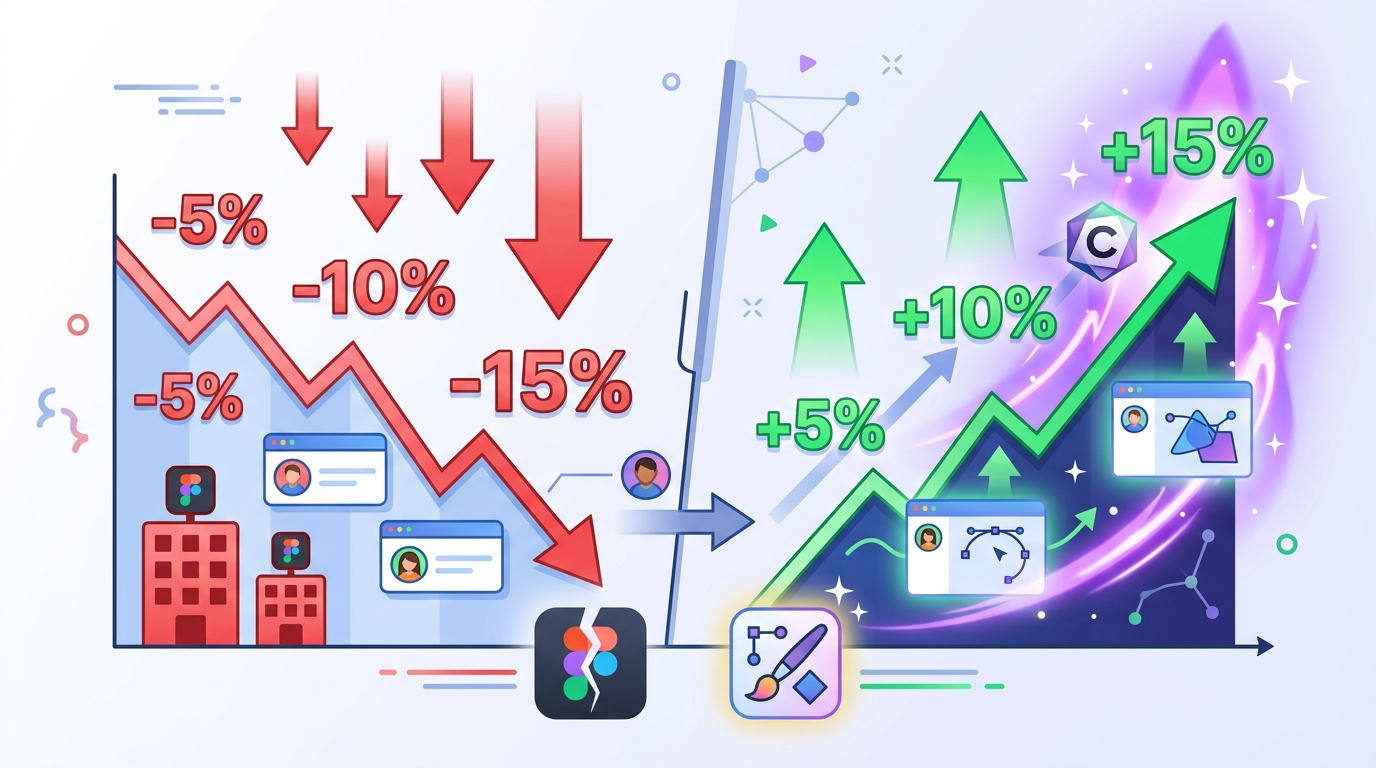
On April 17, 2026, Anthropic Labs launched Claude Design. The same day, Figma's stock fell. The market reaction was sharper than it has been for prior Anthropic announcements. This was not an API upgrade—it was a SaaS product that steps squarely into Figma and Canva's workflows.

The interesting question is not whether Claude Design is a good product. It is why the market decided this launch was worth repricing the entire design tool sector.

Why the Market Reacted That Hard

Figma's business rests on two pillars: the network effect of collaborative design, and a product line that grew from pure design into FigJam, Dev Mode, and Config. Claude Design is the first credible "describe it, get a prototype" product that is also bundled directly into a Claude subscription. For Figma's paying seat-holders, the overlapping use cases are larger than they look at first glance.

Figma Stock Dips as Claude Design Redraws the Design Tool Battlefield

The market is not pricing in "Claude Design replaces Figma tomorrow." It is pricing in "over the next three years, some percentage of Figma seats migrate." Even if that number is only 10%, the valuation impact shows up immediately.

Canva Chose Partnership

Canva, the other category leader, went in the opposite direction. Claude Design exports directly to Canva, and according to The Next Web this is an active partnership, not a one-way API tap.

Canva's logic is clean. Rather than fight Anthropic on generative capability, position Canva as the downstream processing layer for whatever Claude Design produces. That turns Canva from competitor into complement, preserving its advantage in templates, print, and social-ready assets. It is the classic "if you cannot beat them, unbundle the value chain" play.

Adobe Takes the Firefly Path

Adobe stayed quiet on launch day, but its direction is already legible through Firefly. Adobe treats AI as an assistant embedded inside Photoshop, Illustrator, and Premiere—not as a standalone product. The upside is that it protects a massive base of creative professionals. The downside is that it cannot reach the "non-designer" market Claude Design is targeting.

Figma Stock Dips as Claude Design Redraws the Design Tool Battlefield

Put together, Adobe, Figma, Canva, and Anthropic now represent four distinct bets: tool augmentation, collaboration, non-professional creation, and conversational-native generation. Which one wins is open. What is certain is that the market will fragment into more pieces than it had before.

The Three Traits of an AI-Native Design Tool

Claude Design crystallizes what "AI-native design tool" actually means. Three traits stand out:

  • Conversation-first: the primary input is natural language, not cursor actions
  • Automated design systems: the tool reads and maintains a team's visual vocabulary
  • Format-agnostic export: one session outputs to slide, PDF, HTML, and Canva

Together, these traits shift the learning curve from "learn this software" to "learn how to describe what you want." For users previously locked out of design software, that is a large unlock.

What Changes for Designers

The impact on designers splits two ways. On the downside, non-designers now ship passable output, which compresses the market for junior production work. On the upside, designer work moves up the stack—defining design tokens, maintaining component libraries, training AI to produce brand-compliant output.

The punchline is familiar. AI is not replacing designers. It is replacing the low-leverage execution slice of design work. Designers with systems thinking become more valuable, not less, in this new ecosystem.

What Happens Next

Claude Design's launch is not one tool hitting the market. It is the opening move in a repricing of the entire design tool industry. Figma's stock drop was the first signal. The real contest plays out over the next two years: whoever can integrate AI into existing workflows most cleanly will hold their slice of the market.

Related Reading