Cursor data shows AI code review is fading
Cursor says more AI-generated code is reaching production without manual review, signaling growing trust in coding agents.

Cursor says more AI-generated code is reaching production without manual review.
AI coding agents are moving from helper status to something closer to a trusted coworker. Cursor says the share of AI-generated code changes that reach production without a separate manual review step has risen sharply over the past six months.
That shift matters because code review has long been one of the last human checkpoints in software delivery. If teams are skipping it more often, they are making a clear bet that agent-written code is good enough to ship with less friction.
| Metric | What Cursor reported | Why it matters |
|---|---|---|
| Time window | Past 6 months | Shows the change is recent, not a slow multi-year trend |
| Review step | Separate manual review skipped more often | Signals higher trust in agent output |
| Production outcome | AI-generated changes reach production more often | Suggests teams are shipping agent-written code with less human gating |
Human review is losing its default status
Get the latest AI news in your inbox
Weekly picks of model releases, tools, and deep dives — no spam, unsubscribe anytime.
No spam. Unsubscribe at any time.
For years, software teams treated review as the safety net between a pull request and production. That habit is still common, but the Cursor data suggests it is no longer automatic when an AI agent wrote the change.
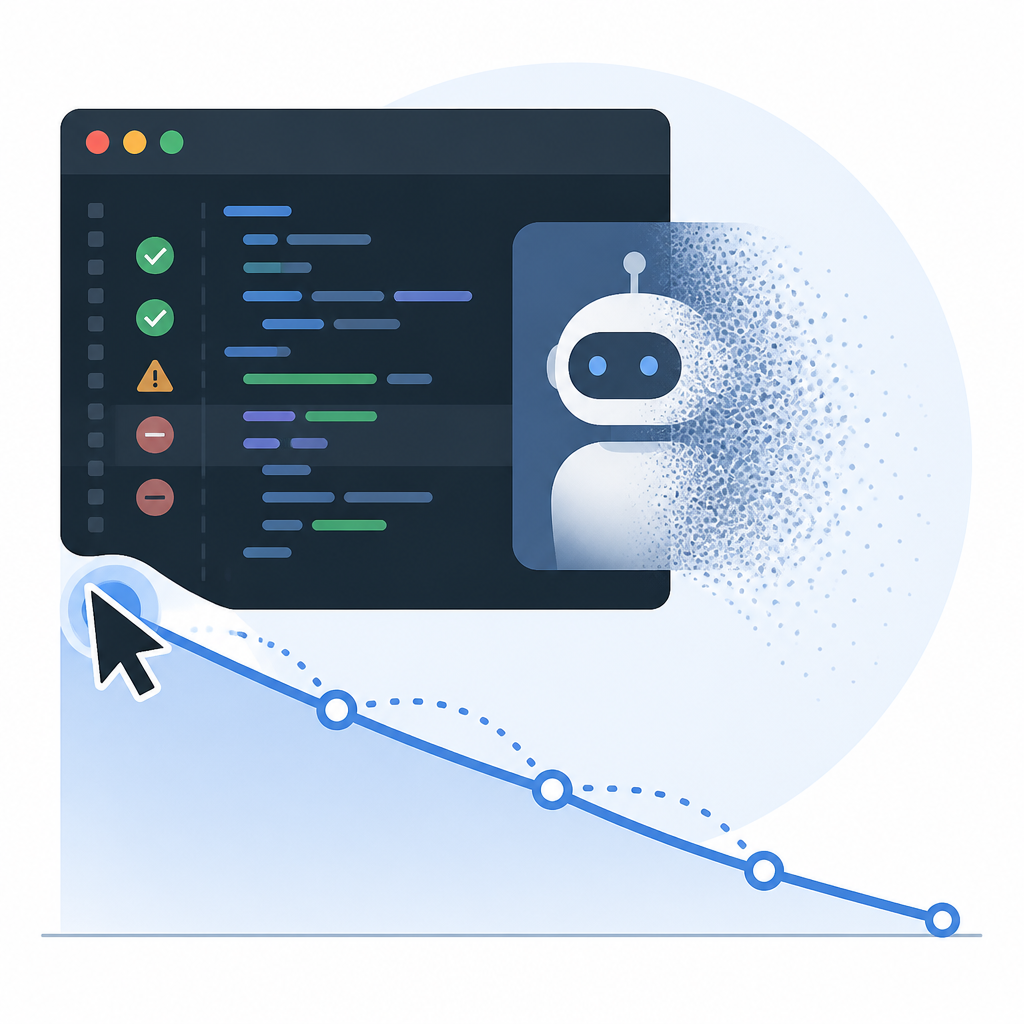
This is a big behavioral change, even if the article does not claim the code is perfect. Cursor is measuring survival in the wild, and that is often more meaningful than lab benchmarks. If a change makes it to production without getting bounced, the team has already decided the risk is acceptable.
The pattern fits what many developers have been saying privately: once an agent has written enough small fixes, tests, and boilerplate, the human reviewer becomes less of a gatekeeper and more of a spot-checker.
- AI output is moving from draft quality toward ship-ready quality in some teams.
- Review time gets shorter when developers trust the agent’s first pass.
- Production approval becomes less about authorship and more about risk.
- Teams that already use strong tests can skip more manual inspection.
Cursor’s signal is about trust, not perfection
Cursor is careful about what it is and is not measuring. The company is not claiming that fully autonomous code is always correct or that human review is obsolete. It is saying that AI-generated code is surviving at higher rates than before, which points to better output and more confidence from developers.
That distinction matters. A code change can make it to production for many reasons: a small blast radius, a good test suite, a low-risk refactor, or a team that knows the codebase well. Still, the broad trend is hard to ignore. Developers are increasingly willing to let the agent take the first shot and trust the result enough to ship it.
“The way to get started is to quit talking and begin doing.” — Walt Disney
That quote is old, but it fits the mood around AI coding agents right now. Teams are moving from discussion about whether agents can write code to the practical question of how much they can be trusted to ship.
What this means for software teams
The real business impact is not just faster coding. It is a change in how engineering organizations allocate attention. If an AI agent handles more routine changes without a full review, senior engineers can spend more time on architecture, security, and the messy bugs that still need human judgment.
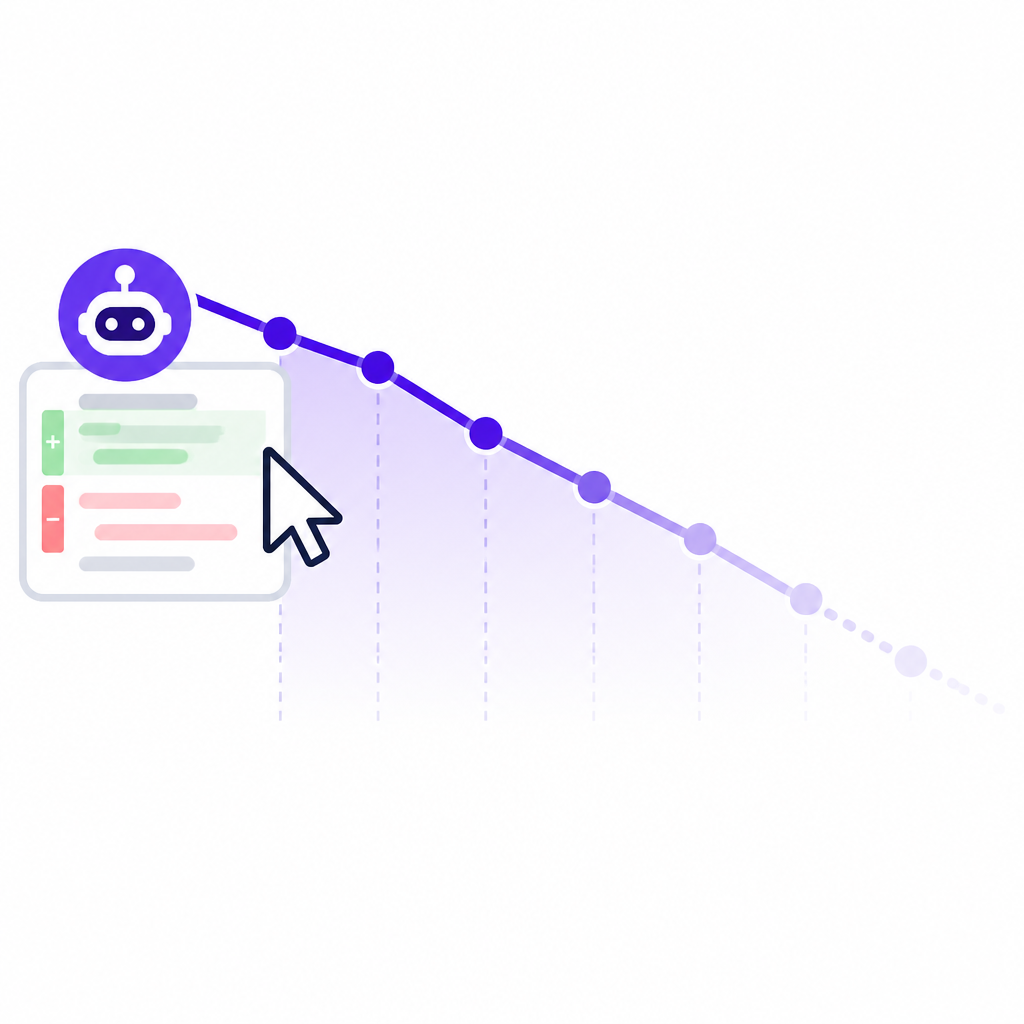
It also raises the bar for tooling around tests, observability, and rollback. If review becomes lighter, the rest of the delivery pipeline has to catch more mistakes. That means better CI, tighter alerts, and clearer guardrails around what an agent can change on its own.
- Teams with mature test coverage can afford more automation.
- Startups may move faster because fewer changes wait in review queues.
- Enterprise teams will likely keep stricter approvals for sensitive systems.
- Security and compliance teams may push back if autonomy grows faster than controls.
There is also a hiring angle. If junior engineers spend less time on manual review and more time supervising agent output, the skills that matter shift toward judgment, debugging, and systems thinking. That changes onboarding, code ownership, and the way teams define productivity.
The next question is where the line gets drawn
The important question now is not whether AI can write code. It already can. The question is which kinds of changes teams will trust enough to ship without human review, and which ones will always need a person in the loop.
If Cursor’s trend keeps climbing, the next six months will tell us whether this is a narrow workflow change or the start of a much bigger rewrite of software delivery. For now, the clearest takeaway is simple: human review is still alive, but it no longer has a guaranteed seat at the end of every AI-generated pull request.
// Related Articles
- [AGENT]
Agent Plugins 1.0.0 turns skills into folders
- [AGENT]
FaithEyes lets you train tool-faithful vision agents
- [AGENT]
Connect Qwen 3.8 Max to CLI Agents
- [AGENT]
Fine-tune a small LLM for legal labeling
- [AGENT]
SALA Boosts Long Context on Edge AI
- [AGENT]
Anthropic’s breach proves AI agents need hard security limits