Kimi K2 turns Moonshot into a model stack
I break down Moonshot AI’s GitHub into a copyable playbook for open-source models, agent tooling, and serving decisions.

Moonshot AI’s GitHub shows how to package open models, agents, and infra into one stack.
I’ve been staring at a lot of model repos lately, and most of them have the same problem: one flashy model card, a couple of half-finished demos, and a README that feels like it was written by committee. Moonshot AI’s GitHub page felt different, but not in the glossy way. It felt like a team that actually ships. I clicked in expecting another “we built a big model” announcement and instead found a pile of connected pieces: Kimi K2, Kimi K2.5, Kimi Linear, Mooncake, Kimi-Dev, Kimi Code, checkpoint-engine, FlashKDA, and more. That’s the part that got my attention. They’re not just bragging about a model. They’re showing the surrounding machinery, which is the part most teams ignore until the system starts falling apart.
That matters because in practice, the model is never the whole story. If your serving layer is clumsy, your agent stack is brittle, or your attention architecture can’t survive long context, the “best model” turns into a demo artifact. I’ve seen this in internal projects: the model looks great on paper, then the first real workflow lands and everything gets slower, noisier, and harder to debug. Moonshot’s repo layout reads like someone learned that lesson the hard way and decided to publish the whole stack instead of pretending the model alone is magic.
The source that triggered this breakdown is Moonshot AI’s GitHub organization page, especially the README and pinned repositories at github.com/moonshotai. I’m not pulling this from a launch post or a polished blog. I’m reading their own repo index, which is better anyway because it tells me what they think is worth keeping public. I’m only using the numbers they actually show there, like the organization’s 6.1k followers and the visible repo star counts on the page.
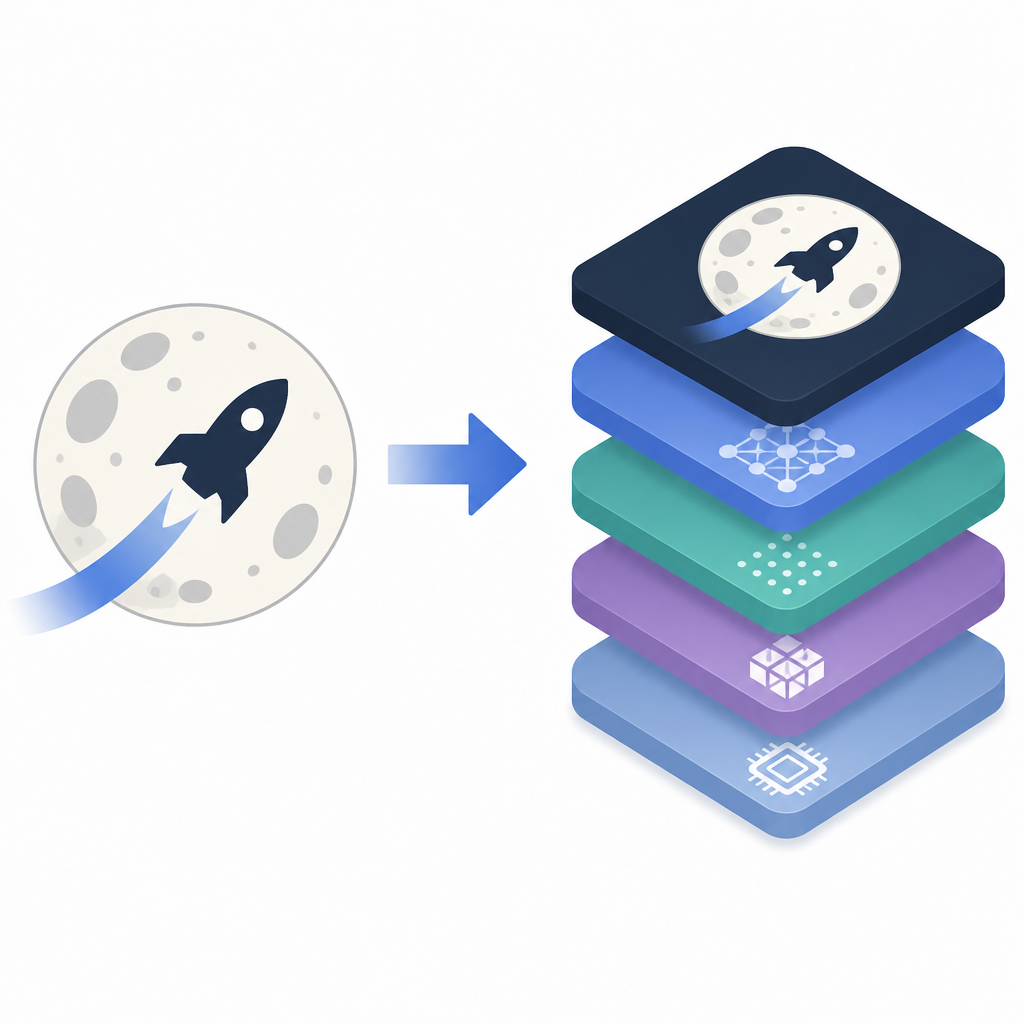
They’re not selling one model, they’re selling a stack
Get the latest AI news in your inbox
Weekly picks of model releases, tools, and deep dives — no spam, unsubscribe anytime.
No spam. Unsubscribe at any time.
Moonshot AI is committed to solving ambitious "moonshot" problems that will lead humanity to AGI. We embrace open source, and contributed the following projects to the community.
What this actually means is that Moonshot is trying to make the whole workflow legible: research, model training, inference, agent tooling, and developer-facing product surfaces. The README doesn’t isolate Kimi K2 as a lone hero. It places it beside Kimi Linear, Mooncake, Kimi-Dev, Kimi Code, and infra projects like checkpoint-engine. That tells me they want you to see the dependencies, not just the headline model.

I’ve run into the opposite pattern too many times. A team drops a model, then later you discover the serving assumptions were never documented, the agent layer is a separate pile of scripts, and the long-context story is basically “good luck.” That creates a mess for adopters because they’re forced to reverse-engineer the operating model from scattered repos. Moonshot is doing the less annoying thing: they’re making the stack explicit.
If you’re building your own AI platform, I’d copy that structure before I copy any benchmark claims. Start with a top-level narrative that names the layers: model, attention, serving, agent, and support tooling. Then make sure each public repo maps to one of those layers. That way your docs stop feeling like a product brochure and start feeling like an engineering map.
- Publish the model, yes, but also publish the serving and agent pieces that make it usable.
- Group repos by function so people can understand where to start.
- Use the organization README as a system diagram in prose.
For a reference point on how GitHub orgs can be used as a public engineering surface, compare Moonshot’s layout with the broader GitHub org pattern and with a model-centric repo like Mistral AI’s GitHub. The difference is obvious once you look at the surrounding infrastructure, not just the model card.
Kimi K2 is the headline, but the wording matters
Kimi K2: an open-source Mixture-of-Experts model with 32B activated parameters and 1T total parameters. It achieves state-of-the-art performance in frontier knowledge, math, and coding among non-thinking models.
What this actually means is that Moonshot is making a very specific claim: Kimi K2 is not presented as a reasoning model that “thinks” through every answer, but as a non-thinking model that still performs extremely well in knowledge, math, and coding. That distinction matters because it sets expectations. They’re not trying to win every benchmark category with one abstract claim. They’re defining the operating mode and then attaching the performance claim to that mode.
I like that because it’s honest in a way most model marketing isn’t. A lot of teams blur together “reasoning,” “agentic,” “coding,” and “general chat” until nobody knows what the model is actually optimized for. Then you get weird adoption failures. Engineers use the model in a context it wasn’t meant for, and when it underperforms, everyone blames the model instead of the mismatch.
If I were applying this in my own docs, I’d do two things. First, I’d state the model class in one sentence: what it is, what it isn’t, and where it’s strong. Second, I’d put the parameter story next to the usage story, not buried in a benchmark table. “32B activated, 1T total” is useful because it tells me something about cost and behavior. But the real value is the pairing of architecture with task profile.
- Define the model mode clearly: non-thinking, reasoning, multimodal, coding, etc.
- Put parameter counts in context with expected cost and latency implications.
- State the strongest task areas without pretending the model is universal.
Moonshot also links out to the model repo itself, which is where I’d expect the real implementation details to live: Kimi-K2. That’s the right place for weights, configs, and usage notes. The org page should be the map; the repo should be the machine.
The attention work is the part I’d actually study
Kimi Linear: a hybrid linear attention architecture that outperforms traditional full attention methods across various contexts.
What this actually means is that Moonshot is not treating attention as a solved commodity. They’re still experimenting with the core math of how tokens interact, which is exactly where the real performance and scalability tradeoffs live. The same goes for MoBA, their mixture of block attention work for long-context models, and Attention Residuals, which they describe as a drop-in replacement for residual connections with consistent scaling gains.
I’ve had enough “just use standard attention” conversations to know how quickly that advice breaks when context gets long or inference costs start hurting. Long-context systems are where theory gets expensive. You can’t hand-wave memory, throughput, or kernel efficiency forever. Eventually the bill shows up, usually in latency or GPU spend, and then everyone gets very interested in architecture again.
Moonshot’s public research list tells me they’re treating architecture as product infrastructure, not academic side work. That’s the right instinct. If you’re building anything that has to handle agents, documents, multimodal inputs, or long conversations, your attention strategy is not a footnote. It’s the thing deciding whether your system feels usable or sluggish.
How to apply it: if you’re designing an AI product, separate “model quality” from “context handling.” Don’t assume a larger model fixes memory problems. Evaluate attention variants, residual strategies, and long-context behavior as first-class engineering choices. If you don’t have the team to invent new kernels, at least know what you’re buying when you pick a model family.
For readers who want the underlying research trail, Moonshot links to the relevant repos from the org page, including Kimi-Linear, MoBA, and Attention-Residuals. That’s a lot more useful than a generic “we care about efficiency” claim.
Mooncake is the serving clue everyone should steal
Mooncake: pioneered the idea of KV-centric disaggregated LLM serving, winning the Best Paper award at FAST 2025. We released code and data corresponding to our paper.
What this actually means is that Moonshot is thinking about serving as a storage and systems problem, not just a model API problem. KV-centric disaggregated serving is a mouthful, but the practical point is simple: if you can separate and manage the expensive state of inference better, you can make large models less painful to run. That’s not glamorous. It’s also where a lot of real-world wins happen.
I’ve been in enough infra discussions to know this is where teams either get serious or start lying to themselves. Everyone loves talking about model quality. Fewer people want to talk about caching, memory movement, and service decomposition. But once traffic grows, those are the details that decide whether your product stays alive or becomes a cost center with a pretty demo.
Mooncake is worth paying attention to because it shows Moonshot publishing systems work alongside model work. That’s a healthy sign. It means they understand that inference is part of the product, not an afterthought. If you’re building on top of LLMs, copy that mindset. Your serving architecture should be documented with the same care as your prompt format.
How to apply it: write down where your model state lives, how it moves, and what gets cached. If you’re not ready for a disaggregated setup, fine, but at least make the state boundaries explicit. That will save you from the classic “why did latency explode after launch?” postmortem.
Moonshot’s own repo name for this work is Mooncake, and the FAST conference itself is a useful anchor if you want to understand the kind of systems work they’re referencing: FAST 2025. I’m not saying everyone needs to chase papers. I am saying product teams should stop pretending serving is trivial.
Agents are where the public repos start to feel practical
Kimi Code: A fast, versatile, and extensible AI coding agent that brings Kimi into your projects and development workflow.
What this actually means is that Moonshot is trying to move from model-as-a-service into workflow-native tooling. Kimi Code, kimi-cli, and kimi-agent-sdk are the kind of repos that tell me the team wants developers to interact with the model through tools, not just chat windows. That’s a big difference. It means the model is being shaped into something that can sit inside a real engineering loop.
I care about this because agent products fail when they stay too abstract. If a tool can’t fit into the way developers already work, adoption gets flimsy fast. People might try it once, maybe twice, then they go back to their editor, terminal, and issue tracker. The Moonshot repos suggest they know this. The existence of a CLI and an SDK is a very unsexy but very useful signal.
If you’re building agent tooling, don’t lead with “autonomy.” Lead with integration points. Can I run it from the terminal? Can I script it? Can I embed it in an internal workflow? Can I inspect what it did? Those questions matter more than a polished demo where the agent writes a toy app in one shot.
- Ship a CLI before you ship a grand agent dashboard.
- Expose an SDK so teams can wire the agent into their own systems.
- Make the agent useful in a workflow, not just impressive in a demo.
Moonshot’s public repos here are kimi-code, kimi-cli, and kimi-agent-sdk. If you want a broader reference for agent tooling patterns, compare them to Model Context Protocol as a standardization effort. Different layer, same lesson: tooling wins when it plugs into existing developer behavior.
The repo list is the real product spec
Kimi-Dev: A Strong and Open-source Coding LLM for Issue Resolution. Kimi-Dev-72B achieves 60.4% performance on SWE-bench Verified.
What this actually means is that Moonshot is publishing a portfolio, not a single model brand. Kimi-Dev targets issue resolution, Kimi-Audio targets speech and audio tasks, Kimi-VL covers multimodal reasoning, and Kimina-Prover is aimed at formal reasoning. That spread tells me they’re not trying to force one model into every job. They’re building specialized tools around a shared platform identity.
I think that’s the part most teams miss when they copy “multi-model strategy” language. It’s not about piling on more model names because it sounds ambitious. It’s about matching capability to workload. Coding, audio, formal proofs, and multimodal reasoning are different problems. Moonshot’s repo structure makes that distinction visible.
How to apply it: if you’re organizing your own AI work, stop naming everything after the same generic assistant. Break the portfolio into capability-based projects. That makes internal ownership clearer and helps users understand which tool to reach for. It also keeps you honest about evaluation. A coding model should be judged on coding tasks, not vague generality.
There’s also a subtle branding lesson here. The organization page doesn’t hide behind a single flagship. It lets the repo names do the explanation. That’s cleaner than writing a giant marketing page that tries to compress every use case into one slogan. Developers don’t need slogans. They need to know what’s there and what it’s for.
For the record, the public repos I’m pointing to are Kimi-Dev, Kimi-Audio, Kimi-VL, and Kimina-Prover. That’s the kind of naming scheme I’d rather inherit than invent from scratch.
The template you can copy
# [Your Org Name]

We build [one-line mission].

## What we publish
- **Model research**: [model names + what they’re good at]
- **Architecture work**: [attention, residuals, kernels, scaling]
- **Serving and infra**: [KV cache, disaggregation, inference tools]
- **Agent tooling**: [CLI, SDK, workflow integrations]
- **Specialized models**: [coding, audio, vision-language, reasoning]

## Current projects

### [Model Name]
[Short, specific description]

- **Type**: [MoE / multimodal / coding / reasoning / etc.]
- **Strengths**: [task areas]
- **Notes**: [what makes it different]
- **Repo**: https://github.com/[org]/[repo]

### [Architecture Project]
[Short, specific description]

- **Problem**: [what bottleneck it solves]
- **Approach**: [what you changed]
- **Why it matters**: [latency, context, cost, quality]
- **Repo**: https://github.com/[org]/[repo]

### [Agent Tooling]
[Short, specific description]

- **CLI**: [yes/no]
- **SDK**: [yes/no]
- **Workflow fit**: [terminal / editor / issue tracker / CI]
- **Repo**: https://github.com/[org]/[repo]

## How to use this stack
1. Pick the model that matches the task.
2. Use the serving layer that matches the load.
3. Integrate the agent into the developer workflow.
4. Evaluate each component on its own benchmark.

## What we care about
- Clear task boundaries
- Public code when possible
- Honest evaluation
- Infrastructure that scales with usage
- Tools developers can actually plug into

## Links
- Website: https://[your-domain]
- GitHub: https://github.com/[org]
- Docs: https://[your-docs]
If I were copying Moonshot’s approach, I’d keep this structure and fill it with real repo links instead of vague claims. The point is to make the organization page read like an engineering index, not a slogan wall.
I’m being explicit here because this is the part people can actually use tomorrow. You do not need Moonshot’s exact models to copy the pattern. You need the discipline of naming the stack, splitting the layers, and publishing the tooling that makes the models usable.
Source attribution: this breakdown is based on Moonshot AI’s GitHub organization page at https://github.com/moonshotai. My template and commentary are original; the repo names, descriptions, and quoted claims come from Moonshot AI’s public README and repository listings.
// Related Articles
- [TOOLS]
Rustup is Rust’s official toolchain installer
- [TOOLS]
Rust CLI Project in 5 Practical Steps
- [TOOLS]
Launch Site turns Rust loot runs into routes
- [TOOLS]
Open Source RAG Stack Turns Chaos Into a Build Plan
- [TOOLS]
49 stars for GitHub’s RAG production list
- [TOOLS]
How to build AkiraOS WASM apps for Zephyr