Ollama is the best free AI path in 2026 for real work
Ollama is the strongest free AI option in 2026 for teams that need private, unlimited, local inference.

Ollama is the strongest free AI option in 2026 for private, unlimited local inference.
Ollama is the best free AI choice in 2026 for anyone who wants real work done without API bills, subscription caps, or data leaving the machine. The free chat tiers from OpenAI, Anthropic, Google, and xAI are useful, but they are rationed. The free API tiers from Google AI Studio, Groq, OpenRouter, and Cloudflare Workers AI are even better for prototyping, but they still impose request ceilings, traffic shaping, and model-by-model limits. Ollama is the only option in this landscape that converts a one-time hardware decision into ongoing, uncapped use.
Free chat and free API tiers are useful, but they are not free in the way teams need
Get the latest AI news in your inbox
Weekly picks of model releases, tools, and deep dives — no spam, unsubscribe anytime.
No spam. Unsubscribe at any time.
OpenAI, Anthropic, and Google all offer strong free chat products, and the headline models are genuinely capable. ChatGPT free includes GPT-5.4 mini with limited GPT-4o access, Claude free gives access to Sonnet 4.6 with a large context window, and Gemini free offers generous quotas with deep Google integration. For a single person asking a few questions a day, these tools are excellent.
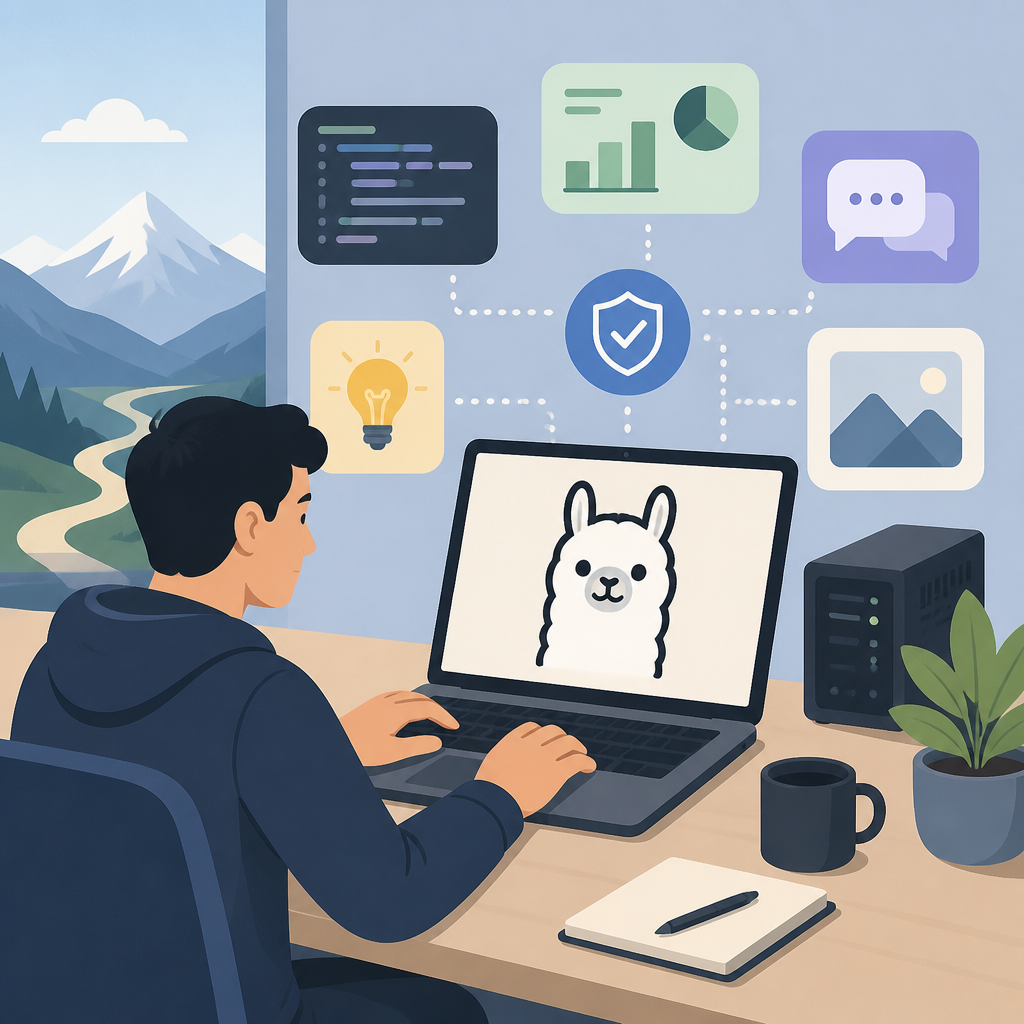
But the limits matter the moment usage becomes operational. Claude free runs at roughly 30 to 100 messages per day, Grok free is capped far lower, and ChatGPT free throttles based on load and message length. Free API tiers are better for builders, yet they still stop being free when reliability matters. Google AI Studio’s Gemini 2.5 Pro tier is capped at 100 requests per day, Groq’s larger models are constrained, and OpenRouter free models are deprioritized during peak traffic. That is not a durable production plan.
Local inference wins on control, privacy, and predictability
Self-hosting removes the most important risk in AI adoption: external dependency. Once a model is downloaded, it runs on your own hardware with no per-request billing, no rate limits, and no content sent to a third-party API. For engineering teams handling customer data, internal docs, code, or regulated workflows, that is not a nice-to-have. It is the difference between using AI casually and using it safely.
The article’s hardware table makes the tradeoff clear. A 16 GB MacBook Air can run a 9B model for personal productivity. A 12 to 18 GB GPU or Apple Silicon machine can handle 27B class models. A 24 GB workstation can support serious local inference. Those numbers are not trivial, but they are finite and predictable. Compare that with free cloud tiers, where the cost is hidden in throttling, queueing, and sudden policy changes. The local model might be slower than a hosted frontier model, but it is always there.
Ollama is the practical center of the local AI stack
Ollama matters because it removes most of the friction that used to make local AI annoying. It handles model download, quantization, and inference in one command, and it exposes an OpenAI-compatible API. That compatibility is the killer feature: applications built for OpenAI can often point at Ollama instead and keep working. For teams, that means local AI is no longer a separate universe with a separate integration path.
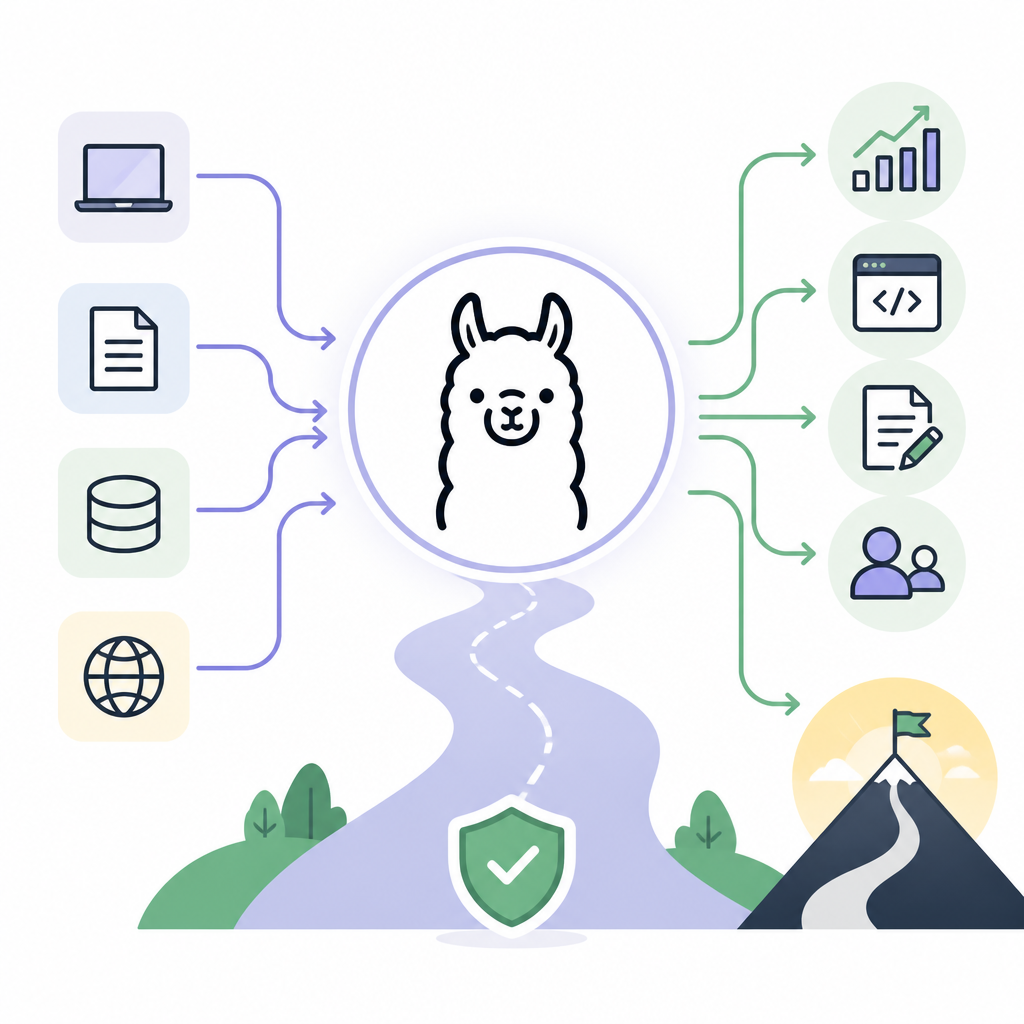
The model ecosystem around Ollama is already broad enough to be useful in daily work. The guide highlights Llama 3.3 8B for general-purpose use on modest hardware, Qwen3.5 9B for writing and reasoning, Gemma 3 27B as a stronger all-rounder, and Qwen3-Coder for coding tasks. Installation is fast, and the startup flow is simple enough for non-specialists: install, serve, pull, run. That simplicity is why Ollama is the dominant tool rather than just another local runtime.
The counter-argument
The strongest case against Ollama is that hosted models are better and easier. That is true. GPT-5.4 mini, Claude Sonnet 4.6, and Gemini 2.5 Pro are stronger than most local models on reasoning, tool use, and multimodal tasks. Free cloud tiers also remove hardware costs, which matters for students, hobbyists, and early-stage founders. If you only need occasional help, a browser tab beats buying a GPU.
There is also a real operational cost to local AI. Hardware has to be bought, maintained, and sized correctly. Quantized models can trail frontier models, and CPU-only setups can feel slow. Teams that want maximum quality with zero setup should not pretend local inference is magically better. The counter-argument is strongest when the user is casual, budget-constrained, or chasing the highest possible capability on day one.
That objection fails for the use cases that actually justify “best free AI.” If your work depends on repeatable access, private data, or API-like integration, cloud free tiers are not free enough. They are promotional access with guardrails. Ollama accepts a real limitation, upfront hardware, and then delivers the only thing the others do not: stable, unlimited, local use. For engineers and product teams, that trade is rational.
What to do with this
If you are an engineer or founder, use free cloud models for evaluation and then move serious workflows to Ollama as soon as privacy, cost, or usage volume matters. Start with a 9B or 8B model on the hardware you already own, wire it through the OpenAI-compatible API, and benchmark it against your real tasks before buying more compute. If the model is good enough, keep the stack local. If it is not, you have learned that the bottleneck is capability, not access.
// Related Articles
- [TOOLS]
Use Consensus AI for faster literature scouting
- [TOOLS]
15 Perplexity prompts for better research decisions
- [TOOLS]
Mistral AI Models 2026 for Builders
- [TOOLS]
RustRover 2026.2 turns Rust setup into one file
- [TOOLS]
Geekbench 7 setup for realistic CPU and GPU tests
- [TOOLS]
Spark 4.2 turns AI search into SQL