PewDiePie launches Odysseus, a free local AI workspace
PewDiePie released Odysseus, a free self-hosted AI workspace for chat, agents, research, and local model control.
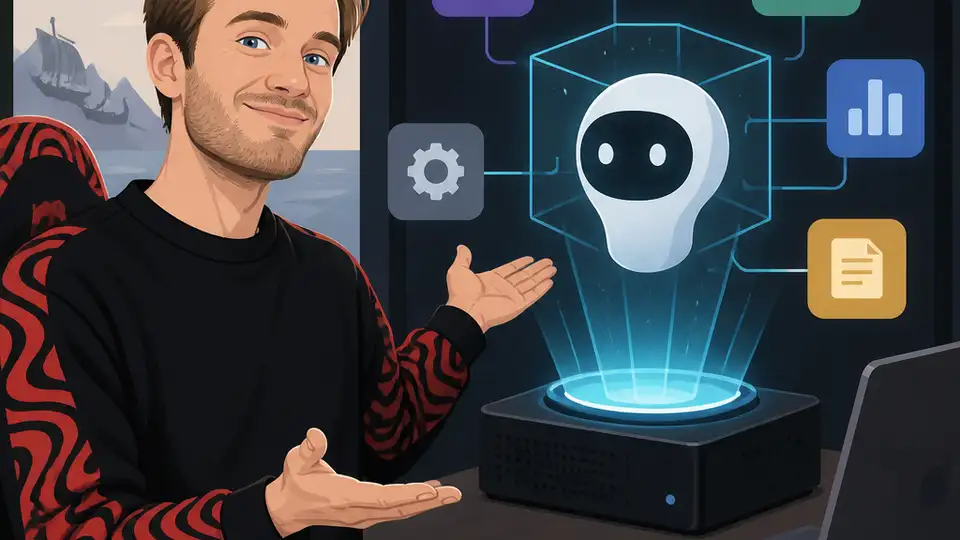
PewDiePie has released Odysseus, a free self-hosted AI workspace for local models, chat, and agents.
PewDiePie has turned months of AI tinkering into a public product: Odysseus, a free workspace for talking to language models, running agents, and keeping data on hardware you control. In the launch video, he framed it as an alternative to ChatGPT and Claude, with a strong privacy pitch and no signup wall.
The headline is simple, but the product is more interesting than the headline suggests. Odysseus is not a single chatbot clone; it is trying to be a control panel for local AI, external APIs, research workflows, document handling, and autonomous tasks, all in one place.
| Fact | Detail |
|---|---|
| Product name | Odysseus |
| Availability | Free and open source |
| Deployment model | Self-hosted, local-first |
| Privacy claim | No telemetry |
| Launch framing | Alternative to ChatGPT and Claude |
What Odysseus actually does
Get the latest AI news in your inbox
Weekly picks of model releases, tools, and deep dives — no spam, unsubscribe anytime.
No spam. Unsubscribe at any time.
According to the project description, Odysseus is “a self-hosted interface for talking to language models - chat, autonomous agents, tools, model serving, email, research, and more. Local-first, privacy-first, and no telemetry. Just you and your models.” That wording matters, because it tells you this is aimed at people who want more control than a hosted chatbot gives them.
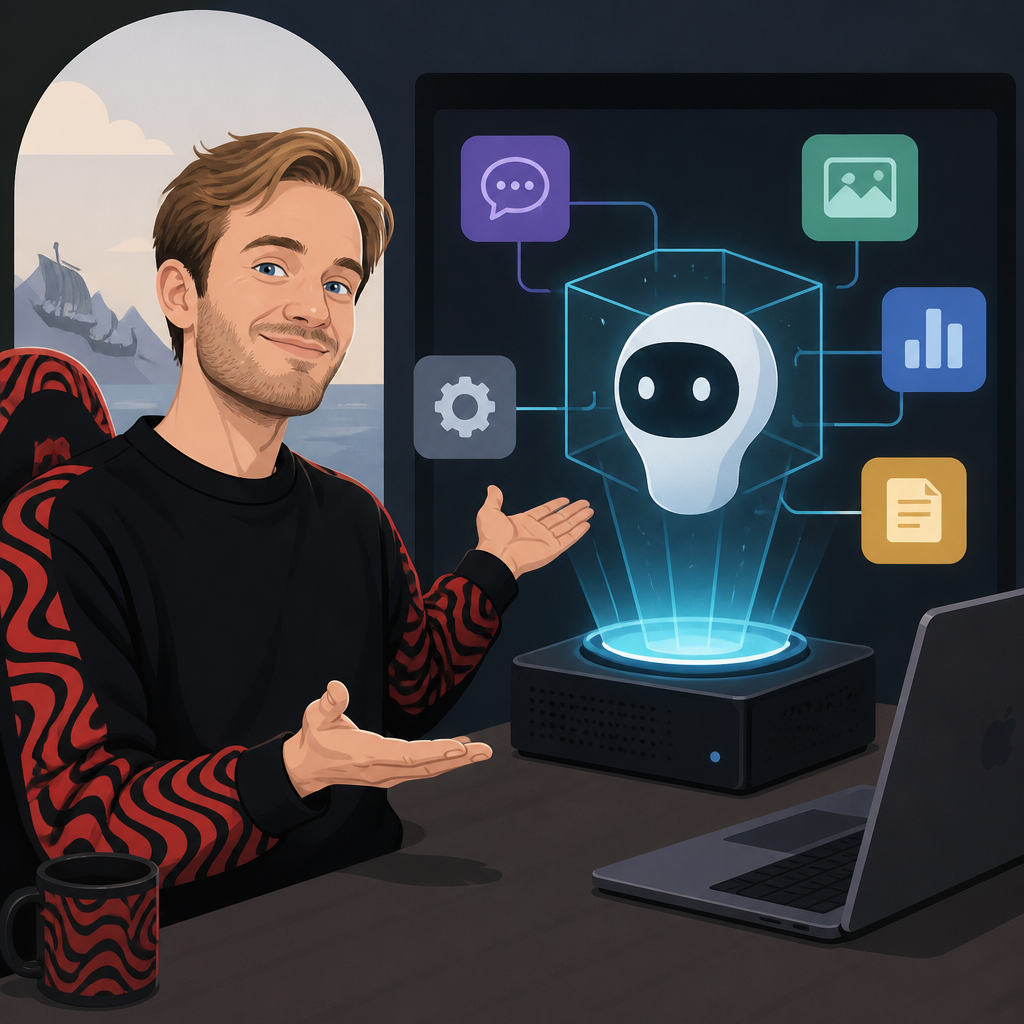
In practice, that means the interface is built for users who want to connect local models or external APIs, then use those models in a workspace that feels closer to an operating environment than a simple prompt box. PewDiePie’s launch video shows tasks like research, multi-model comparisons, and assistant-style workflows happening inside the same tool.
- Self-hosted, so you run it on your own setup
- Open source, so users can inspect and modify the code
- Local-first, so data can stay off third-party servers
- No telemetry, which is a direct selling point for privacy-conscious users
That combination puts Odysseus in a different category from the polished consumer products most people know. It is less about a friendly chat window and more about turning your machine into an AI workstation.
Why PewDiePie’s angle matters
PewDiePie has spent the last year documenting his own AI experiments, including custom setups for running open source models on his hardware. This launch feels like the natural endpoint of that process: he is not selling a theory, he is shipping the tool he wanted.
That gives the project a kind of credibility that a typical creator side project does not always get. He has a huge audience, but the pitch is still technical and opinionated. The message is basically: if you care about privacy, ownership, and local control, you do not need to rent every AI interaction from a giant cloud provider.
“The war on big tech has just begun.”
That line from the launch is blunt, and it tells you exactly how PewDiePie wants the project to be read. Odysseus is a product launch, but it is also a statement about who should control AI tools and where the data should live.
How it compares with ChatGPT and Claude
Odysseus is not trying to beat ChatGPT or Claude on raw model quality. Those products have massive infrastructure, polished UX, and tightly integrated cloud services. Odysseus is trying to win on control, transparency, and the ability to keep your work local.
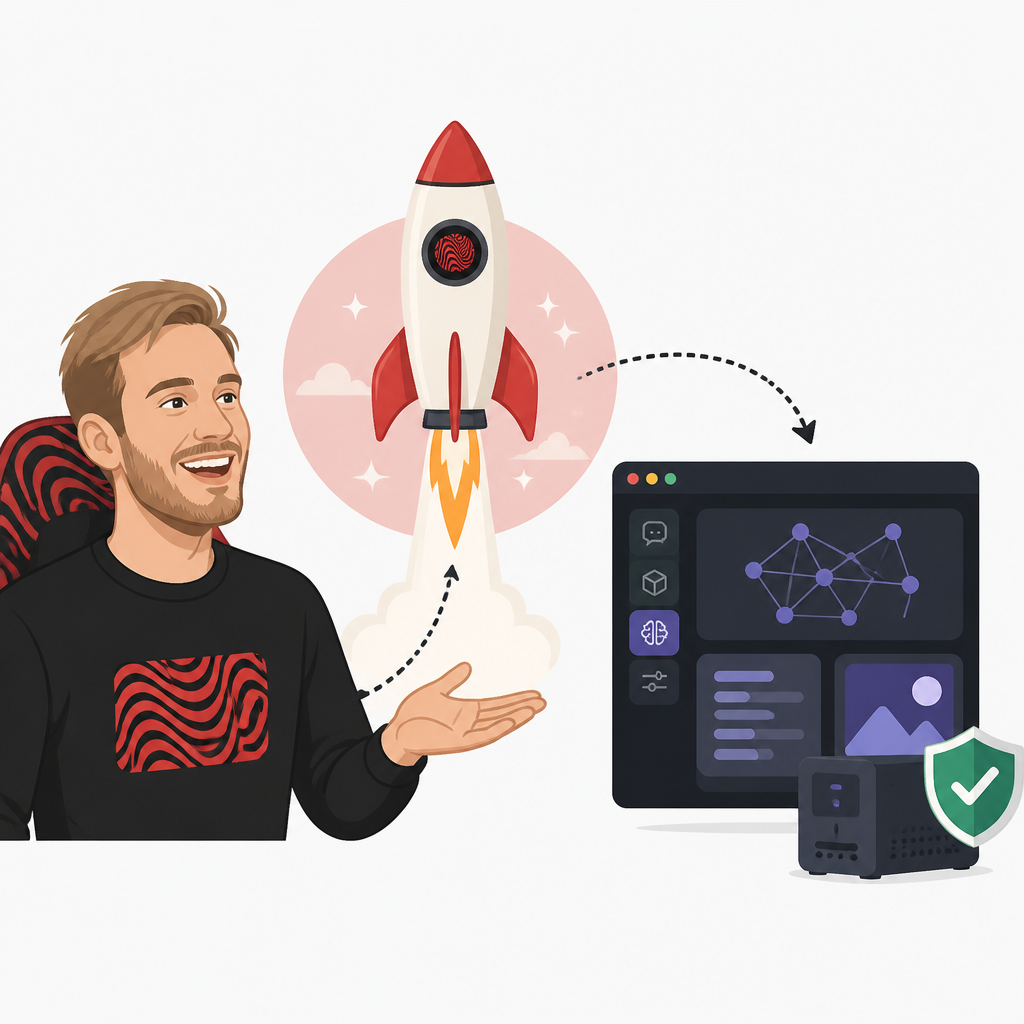
That tradeoff is the whole story. If you want the easiest possible experience, hosted AI still wins. If you want to run your own models, inspect the stack, and avoid sending every prompt to a vendor, Odysseus is much closer to what you want.
- ChatGPT: hosted, polished, broad consumer adoption
- Claude: hosted, strong writing and analysis workflows
- Odysseus: self-hosted, open source, privacy-first
- Local AI tools: more setup, more control, less vendor dependence
That comparison also explains why the project is getting attention outside PewDiePie’s usual fan base. It sits at the intersection of creator culture and the growing DIY AI crowd, a group that wants more than another chatbot with a subscription button.
What to watch next
The biggest question is whether Odysseus can stay useful once the launch buzz fades. Open source AI tools often get attention for a week, then disappear into the pile of half-finished experiments. If PewDiePie keeps iterating and if the community actually adopts it, this could become a real reference point for creator-led AI software.
For developers, the practical takeaway is worth paying attention to: the demand for local-first AI tools is real, and the audience is widening beyond hobbyists. If you build in this space, expect more products that treat privacy, self-hosting, and model choice as default expectations rather than niche extras.
Odysseus is available now, free to download and modify, which makes the next test simple: can it become the kind of tool people keep installed after the novelty wears off?
// Related Articles
- [TOOLS]
Rustup is Rust’s official toolchain installer
- [TOOLS]
Rust CLI Project in 5 Practical Steps
- [TOOLS]
Launch Site turns Rust loot runs into routes
- [TOOLS]
Open Source RAG Stack Turns Chaos Into a Build Plan
- [TOOLS]
49 stars for GitHub’s RAG production list
- [TOOLS]
How to build AkiraOS WASM apps for Zephyr