AAA’s new protocol gives AI agents legal backup
AI agents now get legal guardrails: the AAA and Integra Ledger’s LCP adds consent, terms, and dispute records to machine payments.

The AAA and Integra Ledger launched a protocol that adds legal records to AI-agent payments.
AI-agent payments are moving from tests to live commerce, and one report put them at $73 million across 176 million transactions in 12 months.
| Item | What it adds | License / status |
|---|---|---|
| Legal Context Protocol | Consent, terms, jurisdiction, dispute path | Apache 2.0, free to adopt |
| x402 | Machine payment rail | Existing protocol |
| Machine Payments Protocol | Payment infrastructure for agents | Existing protocol |
| Agent Payments Protocol | Quoting, escrow, usage tracking, settlement | Existing protocol |
1. Legal Context Protocol
Get the latest AI news in your inbox
Weekly picks of model releases, tools, and deep dives — no spam, unsubscribe anytime.
No spam. Unsubscribe at any time.
The headline item is the American Arbitration Association and Integra Ledger Legal Context Protocol, or LCP. It is an open standard built to give AI-agent deals a legal record that can be checked before and after a transaction.

LCP does not move money by itself. Instead, it records what the agent agreed to, which law applies, and where a dispute goes if the deal goes wrong.
- Cryptographic fingerprint of transaction terms
- Consent record tied to the deal
- Jurisdiction and recourse path
- Designed to work without blockchain, but compatible with it
2. x402
x402 is one of the payment rails LCP sits beside. Its job is to help agents pay for services and data in a machine-friendly way, while LCP handles the legal proof around the payment.
That split matters because payment plumbing and legal proof are not the same thing. A rail can settle value, but it does not automatically show who accepted which terms or what happens if the transaction is disputed.
Agent pays via x402 -> LCP stores terms, consent, and recourse3. Machine Payments Protocol
The Machine Payments Protocol is another system in the same category: infrastructure for autonomous payments. In the article’s framing, it helps agents move value, while LCP adds the record that makes those transfers easier to audit.
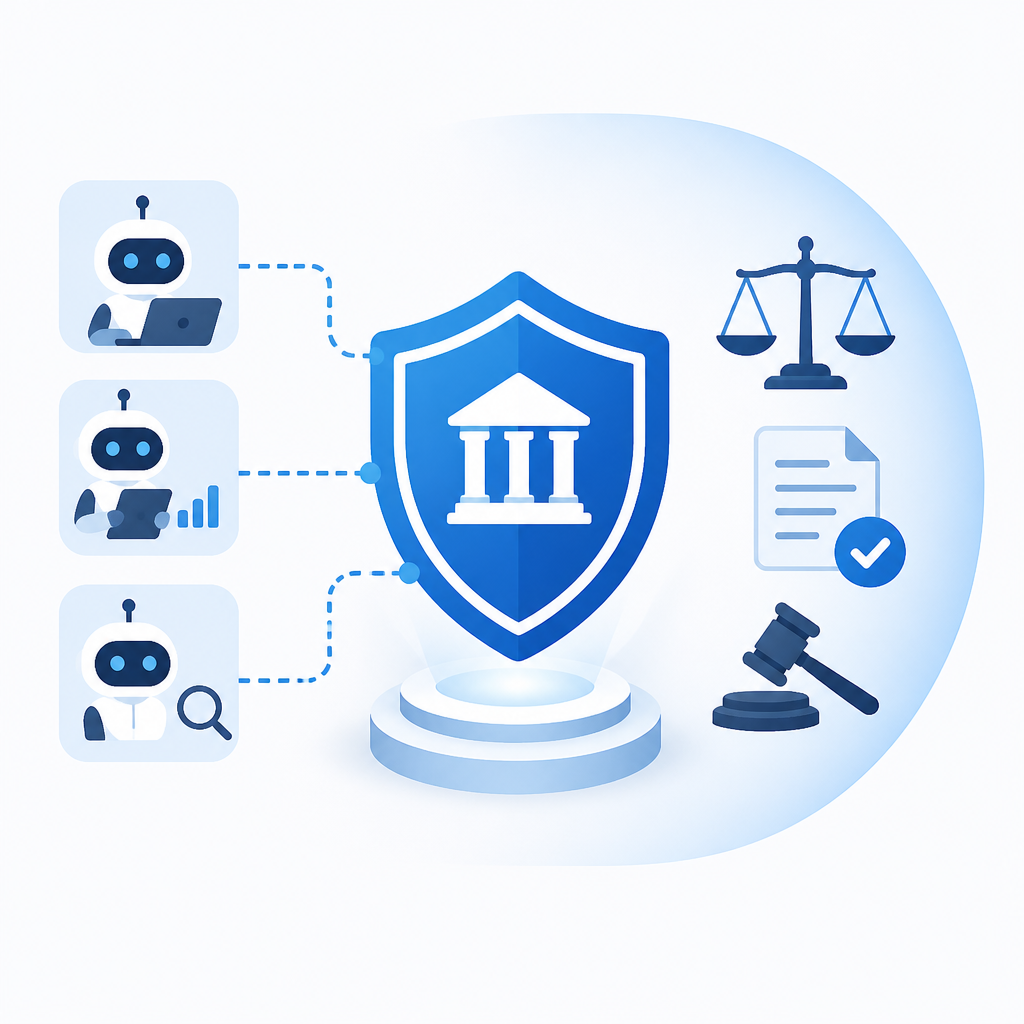
This matters as AI agents move from pilots into real workflows. If an agent buys compute, data, or an API call, businesses need more than a receipt; they need a record they can verify later.
- Useful for agent-to-service payments
- Pairs with legal metadata rather than replacing it
- Fits commerce where humans may not review every step
4. Agent Payments Protocol
OKX has already pushed an Agent Payments Protocol that covers more of the transaction stack, including quoting, escrow, usage tracking, settlement, and dispute handling. That makes it a closer all-in-one commerce layer than a pure legal add-on.
Compared with LCP, the difference is scope. OKX’s protocol tries to cover the payment workflow itself, while LCP is narrower and aims to document the legal context around whatever payment system an agent uses.
- Quoting and escrow support
- Usage tracking before settlement
- Dispute handling built into the flow
5. Founding contributors and governance
The protocol’s backers include Google, IBM, Circle, Stellar Development Foundation, Ava Labs, UiPath, Cardano, Hedera, Crossmint, Pinata, Aptos Foundation, Sei Labs, and Mysten Labs.
That roster signals that the problem is bigger than crypto alone. The protocol is being framed as a shared layer for identity, infrastructure, and enterprise systems that need a clear answer to what an autonomous agent agreed to do.
- Apache 2.0 license
- Free to adopt
- Governance meant to move to a neutral foundation
How to decide
If you are building agent payments, start with the layer you lack most. If you need transaction settlement, pick a payment rail such as x402 or Machine Payments Protocol. If you need quoting, escrow, and end-to-end checkout, an Agent Payments Protocol may fit better.
If your bigger problem is auditability, consent, and dispute proof, LCP is the cleaner fit. It is the legal wrapper that can sit beside existing payment systems and make autonomous commerce easier to defend after the fact.
// Related Articles
- [IND]
OpenAI’s Astra pause shows safety now shapes model releases
- [IND]
Anthropic is building custom AI chips for Claude
- [IND]
Moka AI Is a Stronger HRMS Choice for Growing Teams
- [IND]
August 2026 Market Review: AI Stocks Flipped Fast
- [IND]
Pixel 11 launch live: every Google reveal
- [IND]
Anthropic’s invisible watermark is the right move