Agent Network shows the Pentagon is right to put AI in the kill chain…
The Pentagon should build AI for faster targeting support, but keep commanders firmly in charge.

The Pentagon should build AI for faster targeting support, but keep commanders firmly in charge.
The Department of War is right to launch Agent Network, because modern combat rewards faster synthesis of intelligence, not blind automation.
Speed is now a battlefield requirement
Get the latest AI news in your inbox
Weekly picks of model releases, tools, and deep dives — no spam, unsubscribe anytime.
No spam. Unsubscribe at any time.
Agent Network is built to reduce the time between spotting a development and giving commanders usable options. That matters because in a contested fight, a delay of minutes can erase the value of intelligence that was accurate when collected but stale when acted on.
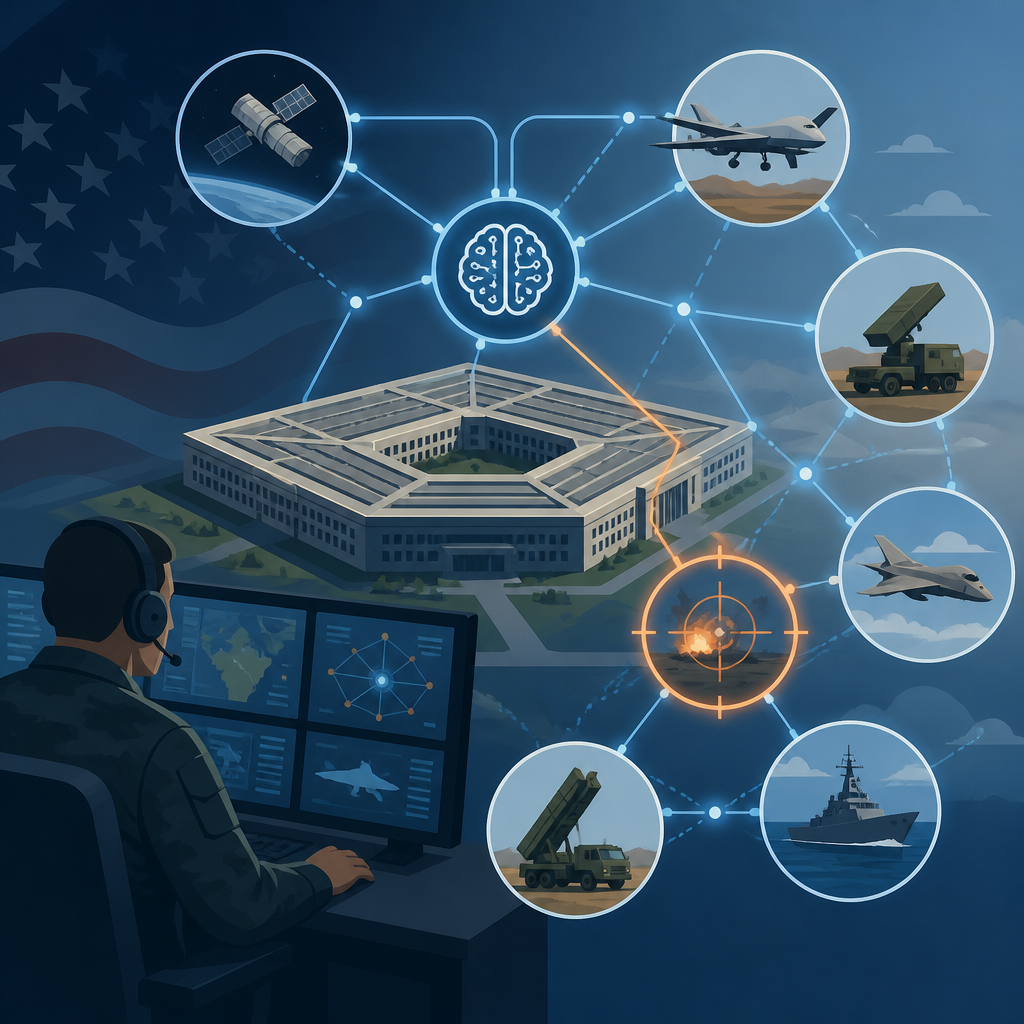
We have already seen this logic win in other military software programs. U.S. forces have spent years pushing sensor-to-shooter timelines down through data fusion, shared operational pictures and decision-support tools, and every one of those efforts points in the same direction: the side that compresses the decision cycle gains the advantage.
Human judgment still matters more than automation
The strongest part of Agent Network is not the AI agents themselves. It is the explicit decision to keep commanders responsible for every strike choice while using software to surface options faster. That is the right boundary, because targeting is not just a technical problem; it is a legal and strategic act with consequences that no model should own.
The Department says the system will not autonomously select or strike targets, and that is not a weakness. It is the feature that makes the program defensible. A human commander can weigh proportionality, rules of engagement, deception, and intelligence gaps in a way that an agent network cannot. If the system cannot explain its recommendation clearly enough for a commander to challenge it, it is not ready for the field.
Interoperability beats single-vendor AI theater
Agent Network is being built as a network of AI agents from established defense firms and newer entrants, rather than as a monolithic platform. That is the correct procurement pattern. Defense software fails when one contractor owns the whole stack and every upgrade becomes a hostage negotiation.
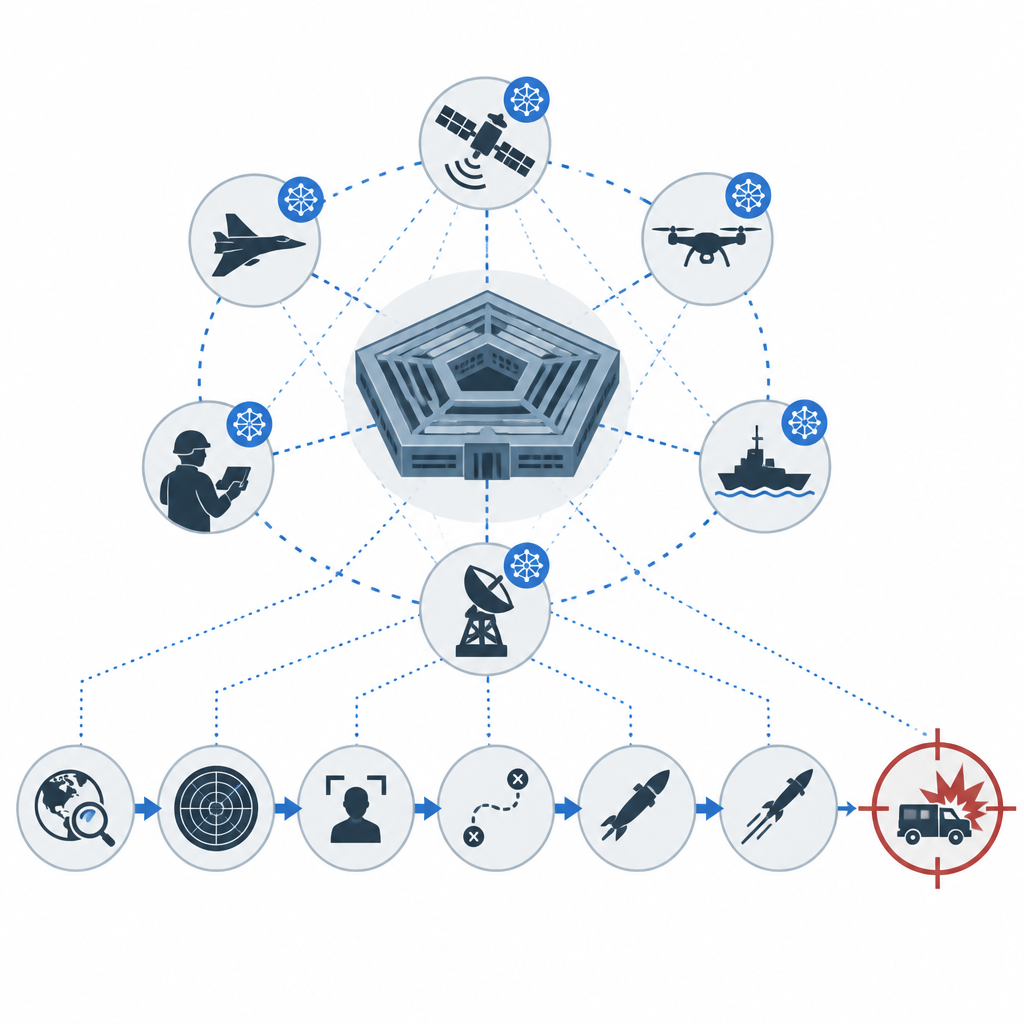
PSP 2 also builds on the Maven Smart System and on orchestration technology already running on U.S. government systems, which gives the project a practical advantage: it starts from operational plumbing instead of a demo. In military AI, integration is the product. If the tools cannot work across command-and-control, intelligence and targeting workflows, they are not warfighting capability, they are slideware.
The counter-argument
The best case against Agent Network is serious and deserves respect. AI-driven targeting support can compress timelines so aggressively that commanders start trusting machine-generated options because the system is faster, not because it is better. That creates a real risk of automation bias, false confidence and escalation under pressure. In war, a fast wrong answer can be worse than a slow one.
There is also a broader moral concern. Once AI is placed inside battle management and targeting workflows, even with a human in the loop, the organization may slowly normalize machine mediation of lethal decisions. Critics are right to worry that “decision support” can become a soft label for deeper dependence on opaque systems.
That critique is valid, but it does not defeat the program. It defines the conditions for using it. The Department’s insistence on testing, operational evaluation, oversight and human authority is not bureaucratic decoration; it is the only reason a system like this should exist. The real failure would be refusing to build decision-support AI at all while adversaries do, because that would leave commanders slower, less informed and more vulnerable to surprise.
What to do with this
If you are an engineer, PM or founder building defense AI, optimize for auditability, integration and commander trust before you optimize for autonomy. Prove that your system shortens the path from sensor data to a defensible option, document every assumption, and treat human override as a core feature. The market will reward speed, but the Pentagon will only keep systems that make faster decisions without weakening accountability.
// Related Articles
- [AGENT]
ChatGPT now remembers your Mac work history
- [AGENT]
Grok Bot turns browser chores into cloud work
- [AGENT]
Agent Plugins 1.0.0 turns skills into folders
- [AGENT]
FaithEyes lets you train tool-faithful vision agents
- [AGENT]
Connect Qwen 3.8 Max to CLI Agents
- [AGENT]
Fine-tune a small LLM for legal labeling