Agent Skills: the next layer for LLM agents
This survey argues that agent skills are a distinct abstraction layer for building the next generation of LLM agents.

This survey argues that agent skills are a distinct abstraction layer for building the next generation of LLM agents.
- Research org: Unspecified in arXiv abstract
- Core data: No benchmark numbers in abstract
- Breakthrough: Focuses on the skill abstraction layer for agentic systems
Large language model agents have moved from simple tool calls to more structured workflows, but the abstraction layer between raw model behavior and reusable agent behavior is still fuzzy. This paper zooms in on that missing layer: skills. For developers, that matters because skills are where you would expect reuse, composition, governance, and security to become easier to reason about.
The paper is a survey, not an empirical system paper, so its value is in framing the problem rather than reporting a new benchmark. It argues that prior surveys mostly cover LLM agents or tool use broadly, while this work focuses specifically on the emerging skill abstraction layer and what it means for future agentic systems.
What problem this paper is trying to fix
Get the latest AI news in your inbox
Weekly picks of model releases, tools, and deep dives — no spam, unsubscribe anytime.
No spam. Unsubscribe at any time.
Agent systems are getting more capable, but they are also becoming harder to organize. If every task is handled as an ad hoc prompt or one-off tool sequence, teams end up with brittle logic that is difficult to reuse across products and domains. The paper treats “skills” as the missing middle layer: something more structured than a prompt, but more flexible than a full application.

That framing is useful because it gives engineers a vocabulary for asking practical questions. What should count as a skill? How should skills be acquired? How do they fit into an agent architecture? And how do you keep them safe when they can trigger actions, call tools, or chain into other skills?
How the method works in plain English
The abstract does not describe a new algorithm or a trained model. Instead, it says the paper examines the skill abstraction layer from four angles: architecture, acquisition, security, and the path forward. In other words, it is trying to map the design space rather than claim a single implementation.
In practical terms, that means the paper is likely organizing the conversation around how skills are represented, how they are learned or created, how they are plugged into agent systems, and what new attack surfaces appear once skills become first-class building blocks. The contribution here is conceptual clarity: a shared way to think about the layer that sits between model outputs and agent behavior.
For developers, that kind of structure can be more valuable than a narrow demo. If the field converges on a skill abstraction, teams can start standardizing interfaces, debugging boundaries, and deciding where policy checks belong. If it does not, agent stacks may stay fragmented and hard to maintain.
What the paper actually shows
The abstract does not include benchmark numbers, evaluation tables, or comparative results. It also does not claim performance gains, latency improvements, or cost reductions. That is important: this is not presented as a system that beats a baseline, but as a survey that defines and analyzes a new layer in the agent stack.
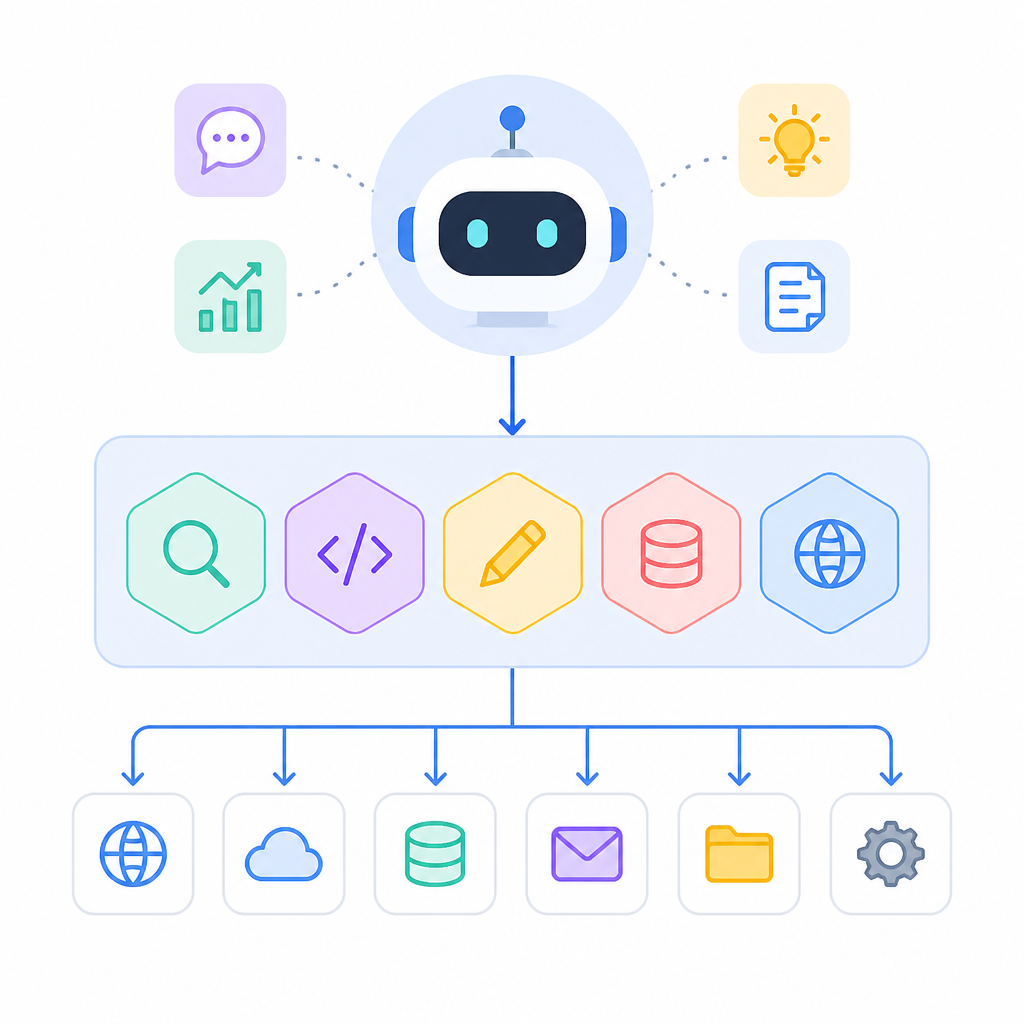
What it does show, at least from the abstract, is a shift in focus. Instead of treating agents and tools as the whole story, the paper argues that skills are becoming a meaningful abstraction on their own. That alone signals where the field may be heading: away from one-off orchestration and toward reusable agent capabilities.
Because the source text is short, the exact taxonomy and examples are not visible here. So the safest reading is that the paper is a map of the problem space, not a proof of a specific technical approach.
Why developers should care
If you build agentic systems, the skill abstraction layer is where a lot of the messy engineering questions live. It is the layer where you would want to package behavior for reuse, control what a model is allowed to do, and decide how much autonomy to give a subcomponent. A clearer theory of skills could make agent stacks easier to design and safer to operate.
Security is especially relevant. The abstract explicitly includes security as one of the paper’s focus areas, which suggests the authors see skills as a new place where misuse, prompt injection, or unsafe action chaining could show up. Even without implementation details, that is a useful warning: once skills are composable, they also become composable attack surfaces.
There is also a product angle. Teams working on assistants, copilots, and workflow automation need a way to move from “the model can do this once” to “the system can reliably do this many times.” A skill layer is one plausible answer, and this paper helps frame what that layer should look like.
Limitations and open questions
The biggest limitation is simply that the abstract is sparse. It does not tell us which architectures are compared, how skills are acquired in practice, or what security model the paper recommends. It also does not provide any benchmark numbers, so there is no empirical claim to validate here from the abstract alone.
That leaves several open questions for practitioners. How are skills represented so they can be discovered and reused? How are they validated before deployment? Can they be composed without creating unpredictable behavior? And what guardrails are needed when a skill can call external tools or trigger side effects?
Those are the questions an engineering team would need answered before turning the idea into production infrastructure. The paper appears to be valuable precisely because it names the layer and organizes the discussion, even if the abstract does not yet give the implementation details.
Bottom line
This paper is a survey about a likely next step in agent design: treating skills as a first-class abstraction. It does not give benchmark wins in the abstract, but it does give developers a useful lens for thinking about reuse, architecture, and security in LLM agents.
If the field keeps moving in this direction, the teams that understand how to structure skills will probably have an easier time building agent systems that are maintainable, auditable, and safer to extend.
- Skills may become the reusable unit of agent behavior.
- The abstract emphasizes architecture, acquisition, security, and future directions.
- No benchmark results are provided in the abstract, so this is a framing paper.
// Related Articles