How persona steering changes LLM behavior
This paper studies how persona steering changes LLM capabilities, but the provided abstract does not include benchmark numbers.

What does persona steering do to LLM capabilities?
This paper examines how persona steering affects LLM capabilities, but the abstract gives no benchmark numbers.
- Research org: Unspecified in arXiv abstract
- Core data: No benchmark numbers in abstract
- Breakthrough: Systematic analysis of persona steering across LLM capabilities
For engineers, this matters because persona prompts are not just stylistic sugar. They can change how a model responds, and that means the same base model may behave differently depending on how it is framed.
The paper is about measuring that effect instead of assuming it away. In practical terms, it asks whether steering a model into a persona changes only tone and framing, or whether it also shifts the model’s underlying ability on tasks.
What problem this paper is trying to fix
Get the latest AI news in your inbox
Weekly picks of model releases, tools, and deep dives — no spam, unsubscribe anytime.
No spam. Unsubscribe at any time.
Persona steering is common in LLM apps. Teams use it to make assistants sound formal, friendly, expert, or domain-specific. But once you start layering personas into prompts, it becomes harder to tell whether you are improving the experience or quietly changing the model’s performance characteristics.

That distinction matters for product behavior, evaluation, and safety. If a persona improves one task while hurting another, then prompt design is no longer just a UX choice. It becomes part of the model’s operational profile.
The abstract does not spell out the full experimental setup, so we should not overclaim about scope or coverage. What it does make clear is that the authors are taking a systematic look at the capability impact of persona steering, rather than treating it as a cosmetic prompt trick.
How the method works in plain English
From the title and abstract alone, the method is straightforward at a high level: compare LLM behavior with and without persona steering, then analyze how capabilities change. The key idea is to isolate the effect of persona instructions from the rest of the prompt.
That kind of analysis usually means holding the task constant while varying the persona framing. If the model’s answers shift, the researchers can inspect whether the shift is about style, reasoning, accuracy, or broader task competence. The abstract does not provide the exact tasks, model list, or evaluation protocol, so those details remain unspecified here.
What is useful about this framing is that it turns a vague prompt-engineering question into something testable. Instead of asking whether personas “feel better,” the paper asks whether they measurably alter capabilities.
What the paper actually shows
The source material available here does not include benchmark numbers, task scores, or a results table. So there are no concrete metrics to quote, and it would be misleading to invent any.
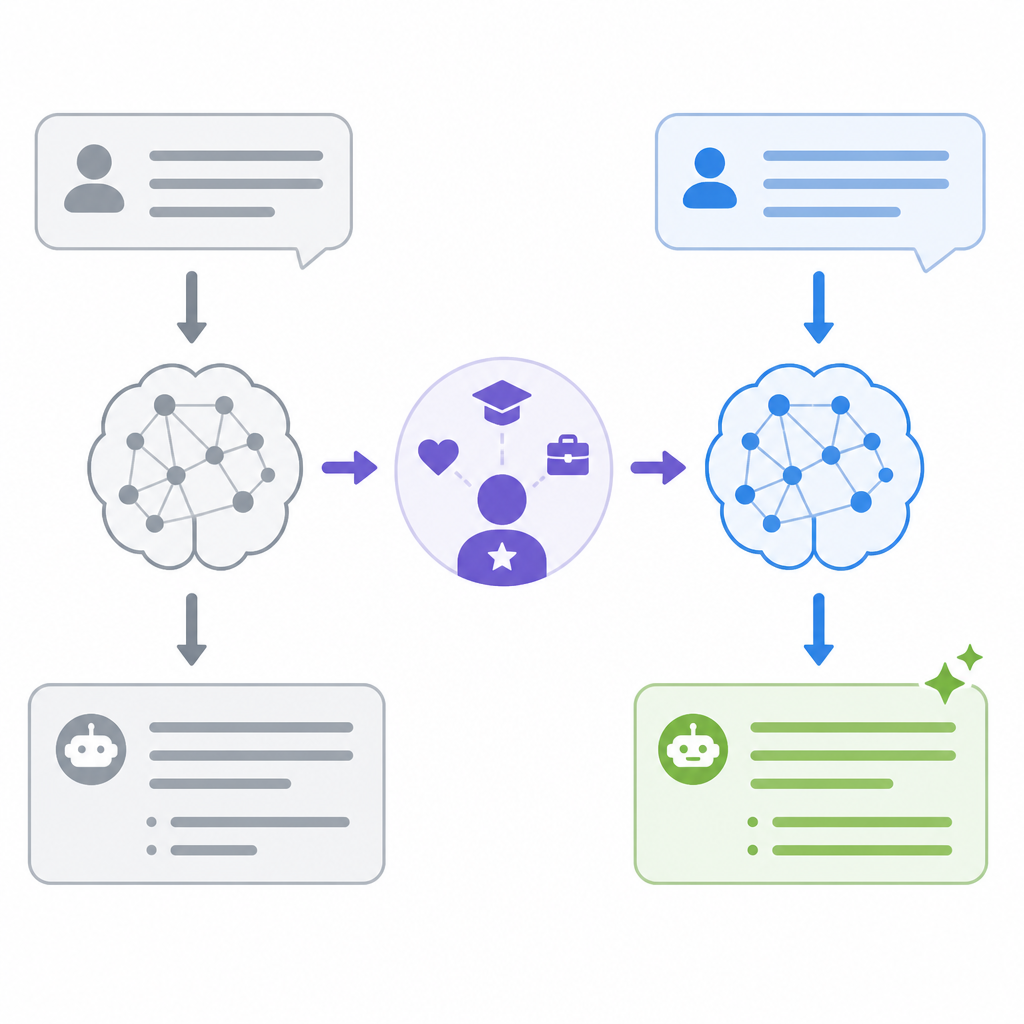
Even without numbers, the paper’s contribution is still easy to understand: it treats persona steering as a variable that can affect capability, not just presentation. That is a useful lens for anyone building evaluation pipelines or prompt templates.
Because the abstract is thin, we cannot say whether the paper finds positive, negative, or mixed effects overall. We also cannot say which abilities are most affected, or whether the impact differs by model family. Those are exactly the details a reader would want from the full paper.
- Capability changes should be evaluated separately from persona style.
- Prompt framing can become part of the model’s behavior surface.
- The abstract provided here does not include enough results to quantify the effect.
Why developers should care
If you ship LLM features, persona steering is already part of your stack, whether you call it that or not. It appears in system prompts, assistant instructions, role conditioning, and branded chat experiences. A paper like this is a reminder that those instructions may change more than voice.
That has a few practical consequences. First, prompt changes should be regression-tested like code changes. Second, evaluation suites should include persona variants if your product uses them. Third, teams should be careful about assuming that a “better-sounding” assistant is also a better-performing one.
There is also a safety angle. If a persona nudges the model toward different behaviors, then policy enforcement and guardrails may need to be checked under multiple prompt styles, not just a neutral baseline.
Limitations and open questions
The biggest limitation here is the source itself: the abstract does not provide benchmark numbers, experimental details, or specific findings. That means we can talk about the paper’s question and framing, but not its measured outcomes.
Open questions remain. Which capabilities are most sensitive to persona steering? Do some personas help reasoning while hurting factuality? Are the effects consistent across models, or do they depend on architecture and instruction tuning?
Those are the kinds of answers practitioners need before they can turn persona design into a reliable engineering practice. Until then, the safest takeaway is simple: persona prompts should be treated as behavioral interventions, not just cosmetic tweaks.
For a development team, that means testing persona changes with the same discipline you would apply to model swaps or prompt rewrites. The paper’s title suggests the right mindset even though the abstract does not yet expose the full evidence.
A Systematic Analysis of the Impact of Persona Steering on LLM Capabilities is therefore most useful as a warning label: persona steering may alter capability, and you should measure it before you rely on it.
// Related Articles