How to test memory in LLM agents
This paper proposes incremental multi-turn interactions to evaluate whether LLM agents remember across tasks.

This paper proposes incremental multi-turn interactions to evaluate whether LLM agents remember across tasks.
- Research org: Unspecified in arXiv abstract
- Core data: No benchmark numbers in abstract
- Breakthrough: Incremental multi-turn interactions for memory evaluation
Most agent benchmarks still reward reasoning, planning, and execution. That leaves a gap: an agent can look strong in a short session and still fail when it has to retain context, carry state forward, or use earlier turns correctly. This paper is trying to close that gap by making memory itself something you can evaluate directly.
The paper is titled Evaluating Memory in LLM Agents via Incremental Multi-Turn Interactions, and the core idea is straightforward: instead of treating memory as a side effect of a long conversation, turn it into the main thing the benchmark stresses. For engineers building assistants, copilots, or multi-step workflows, that matters because memory failures are often the difference between a demo that looks good and a system that actually survives real usage.
What problem this paper is trying to fix
Get the latest AI news in your inbox
Weekly picks of model releases, tools, and deep dives — no spam, unsubscribe anytime.
No spam. Unsubscribe at any time.
According to the abstract, recent LLM-agent benchmarks mostly focus on reasoning, planning, and execution. That is useful, but incomplete. Real agents do not operate in a vacuum: they accumulate facts, revisit earlier instructions, and need to preserve state across multiple turns. If a benchmark only measures one-shot performance or short-horizon task completion, it can miss whether the agent can actually remember what happened before.
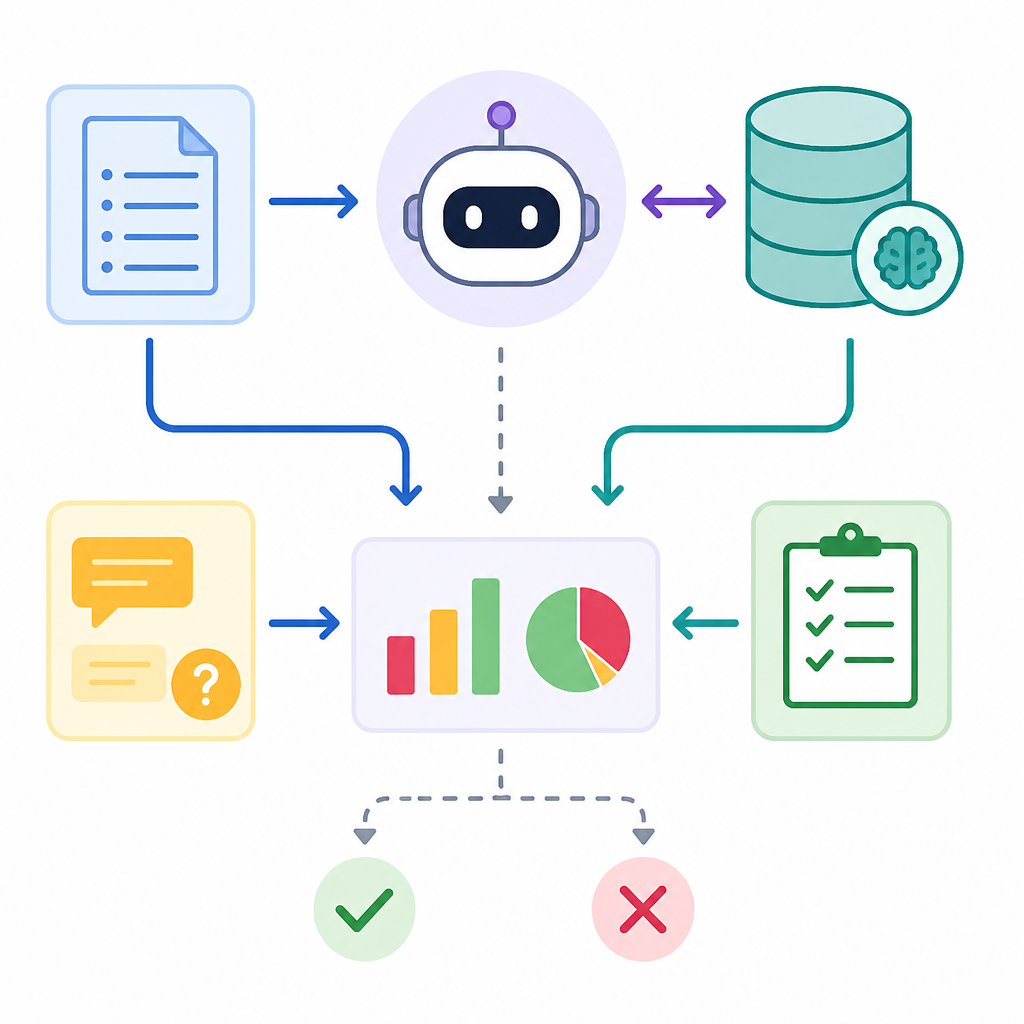
This is a practical problem, not just a research one. Developers who deploy agents in customer support, research workflows, coding helpers, or internal automation usually care about whether the system can keep track of prior context without drifting. A model that answers correctly in isolation may still break when the task is stretched over time. The paper positions memory as a critical capability that existing benchmarks do not fully capture.
How the method works in plain English
The abstract says the paper evaluates memory in LLM agents via incremental multi-turn interactions. In plain terms, that means the benchmark unfolds step by step, with each turn building on the previous one. Rather than giving the agent a single prompt and scoring the final answer, the evaluation introduces information gradually and checks whether the agent can use what it has already seen.
That incremental setup is important because it creates pressure on the agent to store and retrieve context as the interaction grows. It is a more natural way to test memory than a static prompt, because memory in real systems is usually not a single blob of text. It is a sequence of state updates, earlier instructions, and prior observations that must remain available when the next decision arrives.
The abstract does not spell out the full benchmark design, task types, or scoring rules, so we should not pretend it does. What it does make clear is the evaluation lens: memory is being tested through repeated interactions, not just through a final answer. That alone is a useful shift for anyone designing agent evaluations.
What the paper actually shows
The source material available here does not include benchmark numbers, dataset size, or reported scores. So there is no evidence in the abstract for claims like a percentage improvement, an exact pass rate, or a specific ranking over competing agents. If you are looking for hard metrics, you will need the full paper.
What we can say from the abstract is narrower but still meaningful: the paper argues that memory deserves dedicated evaluation and proposes a concrete way to do that. The contribution is methodological rather than performance-oriented, at least in the material provided. In other words, the paper is about how to measure memory, not about announcing a new model that wins a benchmark.
That distinction matters. A lot of agent work gets judged by end-task success, but the failure modes developers actually hit are often memory-related: forgetting user preferences, losing task state, or mishandling earlier constraints. A benchmark that makes those failures visible can be more valuable than one that only measures whether the agent eventually gets the right answer.
Why developers should care
If you are building with LLM agents, memory is one of the hardest parts to reason about because it is easy to overestimate. A model may seem coherent in short chats and still collapse when the conversation gets longer or the task gets incremental. A benchmark built around multi-turn memory can help teams test whether their agent architecture actually preserves the right information over time.
That has implications for product design too. It can influence whether you rely on the model’s context window alone, add external memory, summarize state between turns, or design workflows that explicitly re-inject key facts. Even without reported numbers in the abstract, the paper points to an evaluation gap that most production teams eventually run into.
There is also a broader engineering benefit: better evaluation usually leads to better debugging. If memory is measured directly, teams can isolate whether failures come from retrieval, summarization, context management, or the model’s own use of prior turns. That makes it easier to improve agent behavior systematically instead of guessing.
Limitations and open questions
The biggest limitation here is simple: the abstract is thin on specifics. It does not provide benchmark numbers, does not name the organization behind the work, and does not describe the full experimental setup. That means we cannot assess how broad the benchmark is, how difficult the tasks are, or whether the method generalizes beyond the paper’s own setting.
There is also an open question about what kind of memory is being tested. In agent systems, “memory” can mean several different things: short-term conversational continuity, long-term user preference retention, task state management, or retrieval from an external store. The abstract suggests a general memory evaluation framework, but not the exact breakdown. That matters because different memory failures need different fixes.
Still, the direction is clear. If the field keeps optimizing only for reasoning and planning, it will keep missing a core part of agent reliability. This paper argues that memory should be evaluated as a first-class capability, and incremental multi-turn interactions are the mechanism it proposes to make that possible.
Bottom line
For developers, the practical takeaway is that agent quality is not just about getting the right final answer. It is also about whether the system can remember what happened earlier and use it correctly later. This paper offers a benchmark-oriented way to test that, even though the abstract does not yet give the numbers needed to judge its empirical strength.
- Memory should be evaluated directly, not inferred from reasoning scores.
- Incremental multi-turn setups are a more realistic stress test for agents.
- The abstract provides a method, but not benchmark results or full implementation details.
In short, this is a paper about making memory visible in LLM-agent evaluation. That is useful if you are building anything that has to survive beyond a single prompt.
// Related Articles
- [RSCH]
A Survey of Large Language Models
- [RSCH]
How persona steering changes LLM behavior
- [RSCH]
LLM Inference Hardware Needs Memory, Not More FLOPs
- [RSCH]
Agent Skills: the next layer for LLM agents
- [RSCH]
Offline-First LLMs for Low-Connectivity Learning
- [RSCH]
How LLMs are changing US research funding