LLM Inference Hardware Needs Memory, Not More FLOPs
This paper argues that LLM inference is bottlenecked by memory and interconnect, not raw compute.

LLM inference is bottlenecked by memory and interconnect, not raw compute.
- Research org: Unspecified in arXiv abstract
- Core data: No benchmark numbers in abstract
- Breakthrough: Reframes decode-phase hardware around memory and interconnect limits
Most teams still talk about LLM hardware as if faster compute is the main lever. This paper says the opposite: for inference, especially the autoregressive decode phase, the hard parts are memory movement and interconnect bandwidth.
That matters because decode is where models generate tokens one by one, and that workflow behaves very differently from training. If you are building inference systems, accelerator stacks, or serving infrastructure, the bottleneck is not just how many math units you can pack onto a chip. It is how quickly you can move data and keep the system fed.
What problem this paper is trying to fix
Get the latest AI news in your inbox
Weekly picks of model releases, tools, and deep dives — no spam, unsubscribe anytime.
No spam. Unsubscribe at any time.
The paper starts from a simple but important point: the decode phase of a Transformer-based LLM makes inference fundamentally different from training. In training, hardware can lean on large, dense compute workloads. In decode, the model produces outputs autoregressively, which changes the resource profile.
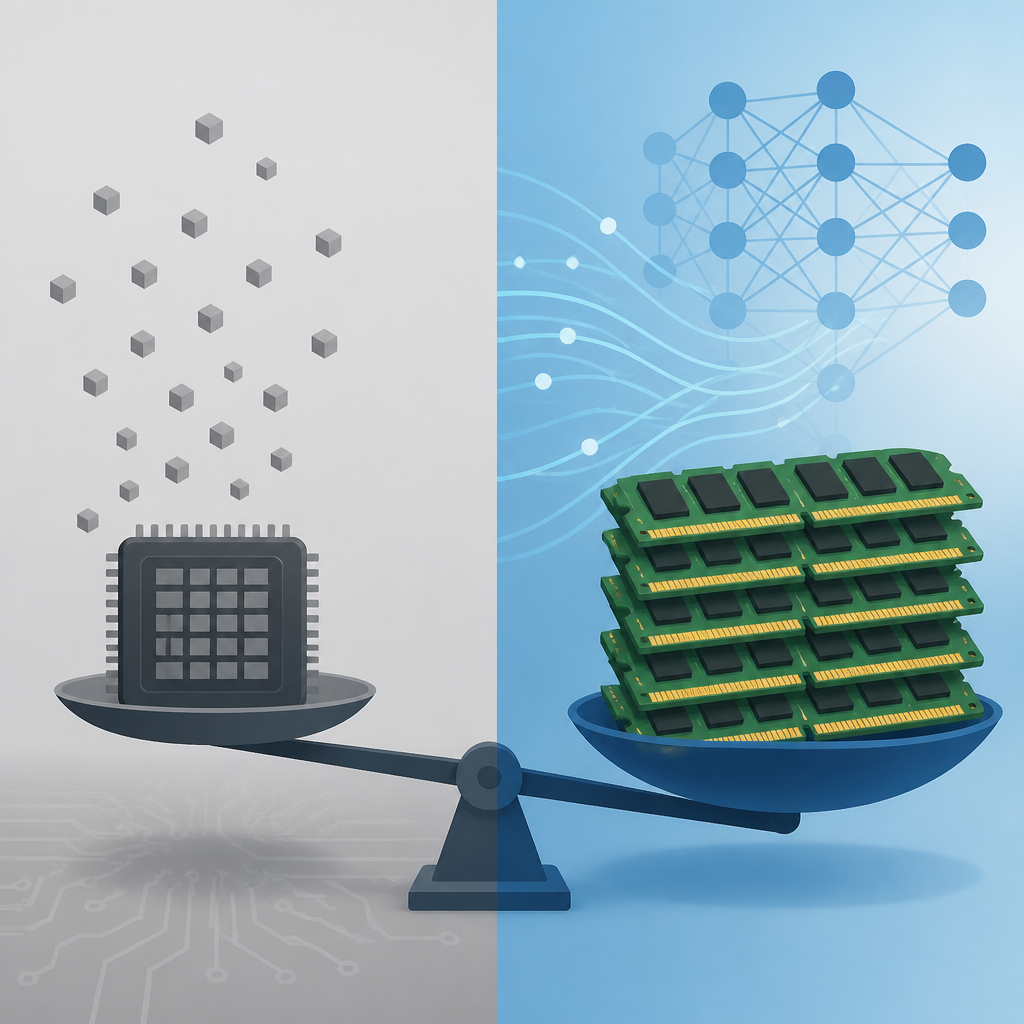
According to the abstract, recent AI trends have made this problem worse. The result is that the main challenges in LLM inference hardware are memory and interconnect rather than compute. That is the core shift the paper wants readers to internalize.
For engineers, this is a useful correction to a common instinct. If latency or throughput is poor, the answer is not always “add more FLOPs.” Sometimes the real issue is whether the hardware can store and fetch model state efficiently, and whether the interconnect can move data without becoming the choke point.
How the method works in plain English
This paper is framed as a challenges-and-research-directions note, so it is not presenting a single system or model. Instead, it maps the decode phase onto the hardware problems that matter most and uses that to organize future work.
The key technical idea in the abstract is the distinction between compute and the data path around compute. During inference, especially decode, the system must repeatedly access model state and exchange information across components. That means the architecture of the memory hierarchy and the interconnect can dominate performance.
In practical terms, the paper is pushing hardware designers to treat inference as a systems problem. The question is not only how fast a chip can compute, but how well the full stack supports token-by-token generation under real serving conditions.
What the paper actually shows
The abstract does not provide benchmark numbers, experimental results, or a comparison against prior hardware designs. So there are no reported throughput, latency, energy, or cost figures to cite here.
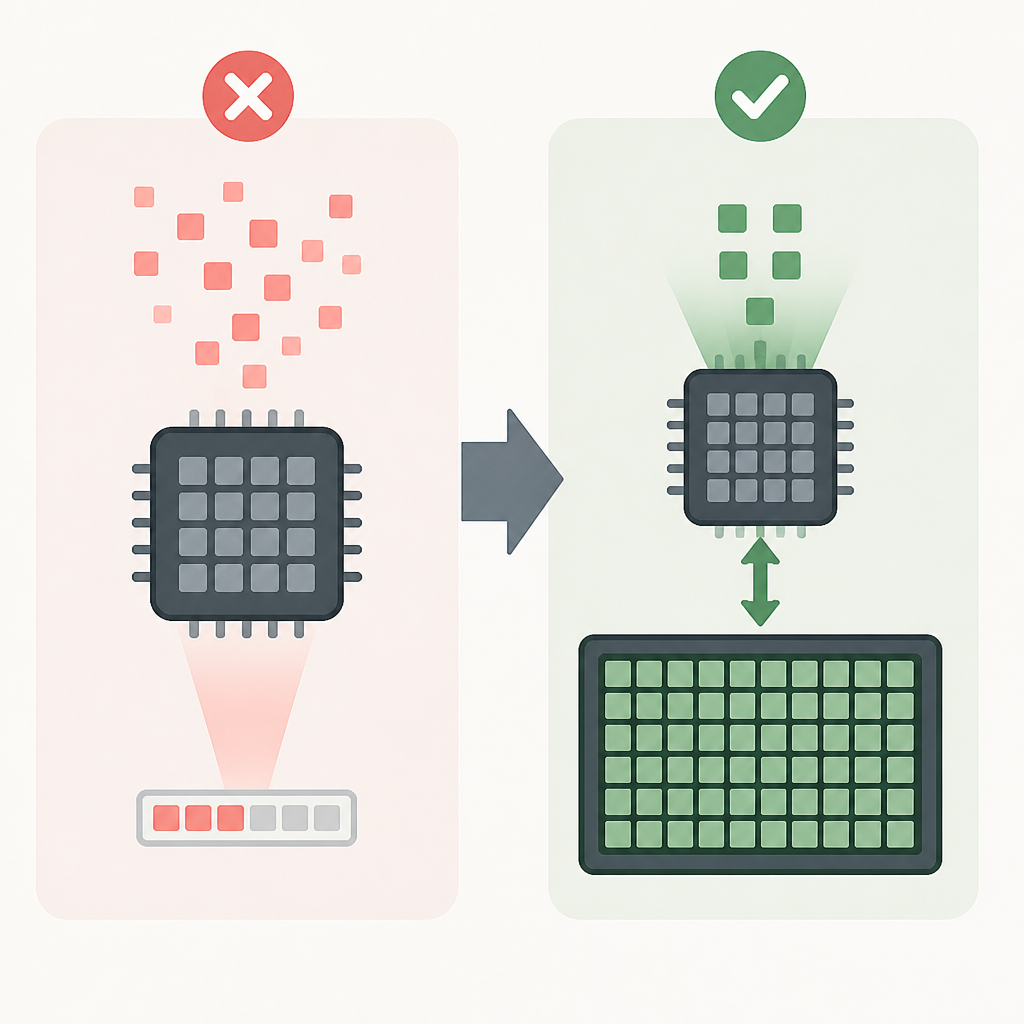
What it does provide is a clear claim about where the bottlenecks live. The paper argues that decode-phase inference shifts the center of gravity away from compute and toward memory and interconnect. That is the main finding available from the source material.
Because this is a research-direction paper, the value is in the framing. It tells practitioners and hardware teams which constraints deserve the most attention when designing or evaluating LLM inference platforms.
- Decode-phase behavior is the central reason inference differs from training.
- Memory and interconnect are identified as the primary hardware challenges.
- No quantitative benchmarks are included in the abstract.
Why developers should care
If you are building or tuning an LLM serving stack, this paper is a reminder to profile the whole path, not just the model kernel. A system can look compute-rich on paper and still underperform if memory access patterns or network links cannot keep up.
That is especially relevant as models get larger and serving gets more demanding. The abstract explicitly says recent AI trends exacerbate the problem, which suggests the gap between “peak compute” and “real inference performance” is likely to keep widening unless hardware and system design follow the actual workload.
For infrastructure teams, the practical takeaway is to think in terms of data movement first. For chip designers, it means inference hardware may need different priorities than training accelerators. For researchers, it points to a broader agenda around memory systems, interconnect design, and decode-aware architectures.
Limitations and open questions
The biggest limitation is that the abstract is high level. It does not name a specific architecture, propose a concrete hardware design, or report measurements. That means the paper is best read as a roadmap for the field rather than a finished solution.
It also leaves several engineering questions open. How should memory capacity, bandwidth, and locality be balanced for different model sizes? What interconnect topologies work best when decode becomes the bottleneck? Which parts of the stack can be optimized independently, and which need co-design?
Those are exactly the kinds of questions that matter when turning LLM inference from a lab demo into a production service. Even without benchmark data, the paper’s main contribution is useful: it gives hardware teams a more accurate mental model of where inference performance is actually lost.
In short, this paper says LLM inference hardware should be judged less by raw compute and more by how well it handles decode-time data movement. That is a practical shift, and it should influence how developers evaluate accelerators, plan deployments, and think about future serving systems.
// Related Articles