AI Weekly: 2026-06-08 ~ 2026-06-15
Agentic systems are moving from demos to transactions, while OpenAI’s IPO filing and bank tokenization plans show AI money flows are getting real.

AI this week shifted from assistants that talk to systems that act. The clearest signal is agentic software starting to move money, place trades, and touch real infrastructure, while the market around frontier AI gets more financial and more contested.
At the same time, the center of gravity is splitting: open-source tools are closing feature gaps on paid products, and the biggest labs are now being judged as much by capital structure and governance as by model quality.
Trend Radar
Get the latest AI news in your inbox
Weekly picks of model releases, tools, and deep dives — no spam, unsubscribe anytime.
No spam. Unsubscribe at any time.
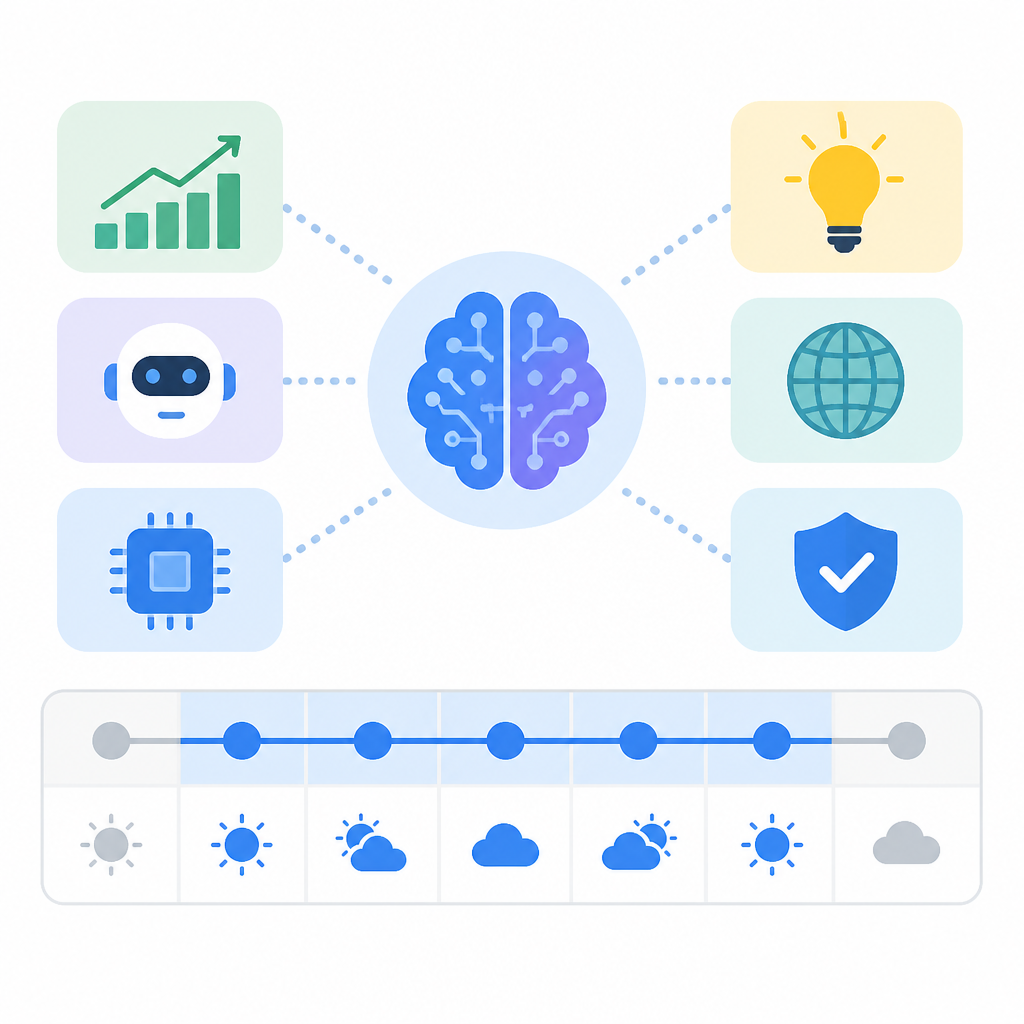
| Dimension | Signal | This Week | What's at Stake |
|---|---|---|---|
| Models | Weak | Google Magenta RealTime 2 shipped for live use inside Logic and GarageBand. | Model progress is showing up in workflow-specific tools, which matters more for adoption than benchmark chatter. |
| Agents | Strong | MetaMask launched Agent Wallet for autonomous AI trading, and Vibe-Trading added broker access, swarms, and better caching. | Agents are crossing into execution, so reliability, permissions, and auditability become product requirements, not extras. |
| Open Source | Strong | Open-source AI tools now cover much of Claude’s paid feature set, while Rustup remains the official Rust toolchain installer. | Open ecosystems are winning on control and cost, which pressures premium assistants to justify lock-in with real differentiation. |
| Compute & Infra | Medium | OpenAI filed confidentially for an IPO, and four major US banks backed a tokenized deposit network for 2027. | AI infrastructure is being priced like core financial plumbing, which could reshape who funds, hosts, and settles AI systems. |
| Applications | Strong | Open Code Review says deterministic rules cut AI review misses, and Alibaba reports 1 million defects found. | Enterprise AI is moving toward hybrid systems that combine model output with hard checks where mistakes are expensive. |
| Policy & Regulation | Medium | Anthropic argued advanced AI needs a real pause mechanism as frontier governance becomes harder to hand-wave away. | Safety debates are shifting from abstract risk talk to operational controls that labs may have to prove they can use. |
Key Stories
AI agents are starting to touch money, not just APIs
What happened. MetaMask’s Agent Wallet launched for autonomous AI trading, while Vibe-Trading added broker access, swarms, compare tools, caching, and a cleaner CLI for agentic trading workflows.

Why it matters. This is the week AI agents moved closer to execution environments where mistakes have financial consequences. Once an agent can trade or route orders, the product question changes from “can it act?” to “can it be trusted under pressure?”
Who's affected and next to watch. Crypto wallets, trading tool builders, and retail quant users are the first audience. Watch for permissioning features, audit logs, and whether any major exchange or broker limits or supports these agent workflows.
OpenAI’s IPO filing makes AI a capital markets story
What happened. OpenAI’s confidential IPO filing puts the company on a path to public-market scrutiny, while the reported drift with Microsoft suggests the old partnership structure is already under strain.
Why it matters. The filing is not just about fundraising; it is a signal that AI leadership will be judged against public-company discipline, disclosure, and growth expectations. If the Microsoft relationship keeps loosening, the market may start pricing AI labs more like independent platforms than bundled cloud partners.
Who's affected and next to watch. OpenAI, Microsoft, and investors in frontier-model companies should watch for filing details, governance terms, and any changes in exclusivity or distribution rights.
Open-source tools are closing the value gap on paid assistants
What happened. Open-source AI tools now cover most of Claude’s paid-tier features with less lock-in, and Rustup continues to show how a clean official distribution path can anchor an ecosystem.
Why it matters. The pricing story is getting harder for premium AI products: if users can assemble comparable workflows from open components, the burden shifts to reliability, support, and integration depth. The Rustup example is a reminder that ecosystem control can come from tooling and defaults, not only from model quality.
Who's affected and next to watch. SaaS AI vendors, developer-tool startups, and teams standardizing internal AI stacks should watch adoption of open alternatives and whether paid suites respond with stronger enterprise controls or usage-based packaging.
AI code review is moving toward deterministic guardrails
What happened. Open Code Review uses deterministic rules to reduce AI code review misses, and Alibaba says the system has identified 1 million defects.
Why it matters. This is a practical answer to a common failure mode: models are useful, but they miss edge cases that rules catch reliably. The likely pattern for enterprise software is a layered review stack where AI drafts and prioritizes, then deterministic checks decide what ships.
Who's affected and next to watch. Engineering teams, DevSecOps vendors, and platform owners should watch whether similar systems show up in CI/CD tools, plus whether defect counts translate into lower post-release incident rates.
AI governance is moving from principle statements to control mechanisms
What happened. Anthropic argued that advanced AI needs a coordinated, verifiable pause mechanism as frontier systems get harder to supervise with informal norms alone.
Why it matters. The important shift is not the warning itself; it is the push toward mechanisms that can be checked, not just promised. That raises the bar for labs, because safety claims may need process evidence and technical enforcement rather than policy language.
Who's affected and next to watch. Frontier labs, regulators, and standards groups should watch for concrete proposals on pause triggers, verification methods, and whether any company tries to implement a testable shutdown or escalation protocol.
Watch Next Week
- OpenAI: watch for any follow-up filing details after the confidential IPO submission.
- Microsoft: look for changes in product bundling or distribution language tied to OpenAI.
- MetaMask: monitor whether Agent Wallet expands beyond early crypto trading use cases.
- JPMorgan, Citi, Wells Fargo, and Bank of America: track updates on the 2027 tokenized deposit network through The Clearing House.
- Anthropic: watch for a concrete pause-mechanism proposal or technical note.
// Related Articles
- [IND]
Midjourney V8.1 now ships as default model
- [IND]
Midjourney Free Methods vs Paid Access
- [IND]
Anthropic’s $35 billion buildout proves AI now runs on finance and ch…
- [IND]
OpenAI Partner Network widens enterprise AI access
- [IND]
Anthropic’s offline move turns policy into code
- [IND]
89.2k-star MCP server directory for tool builders