OpenAI Partner Network widens enterprise AI access
5 ways the OpenAI Partner Network helps companies deploy AI faster, with partners spanning advisory, implementation, and operations.

The OpenAI Partner Network connects companies with partners that help plan, build, and run AI projects.
OpenAI says the network is built to help enterprises move from AI interest to deployment, and it already includes 5 partner categories that cover strategy, implementation, and support.
| Item | Role | Best for |
|---|---|---|
| Advisory partners | Strategy and readiness | Teams defining use cases |
| Implementation partners | Build and deploy | Projects that need delivery help |
| Cloud partners | Infrastructure and scaling | Workloads that need enterprise hosting |
| System integrators | Workflow integration | Complex internal systems |
| Service partners | Ongoing operations | Teams that need long-term support |
1. Advisory partners
Get the latest AI news in your inbox
Weekly picks of model releases, tools, and deep dives — no spam, unsubscribe anytime.
No spam. Unsubscribe at any time.
Advisory partners help companies decide where AI fits, which use cases are worth funding, and what internal changes are needed before rollout. That matters when the main blocker is not model access but planning.
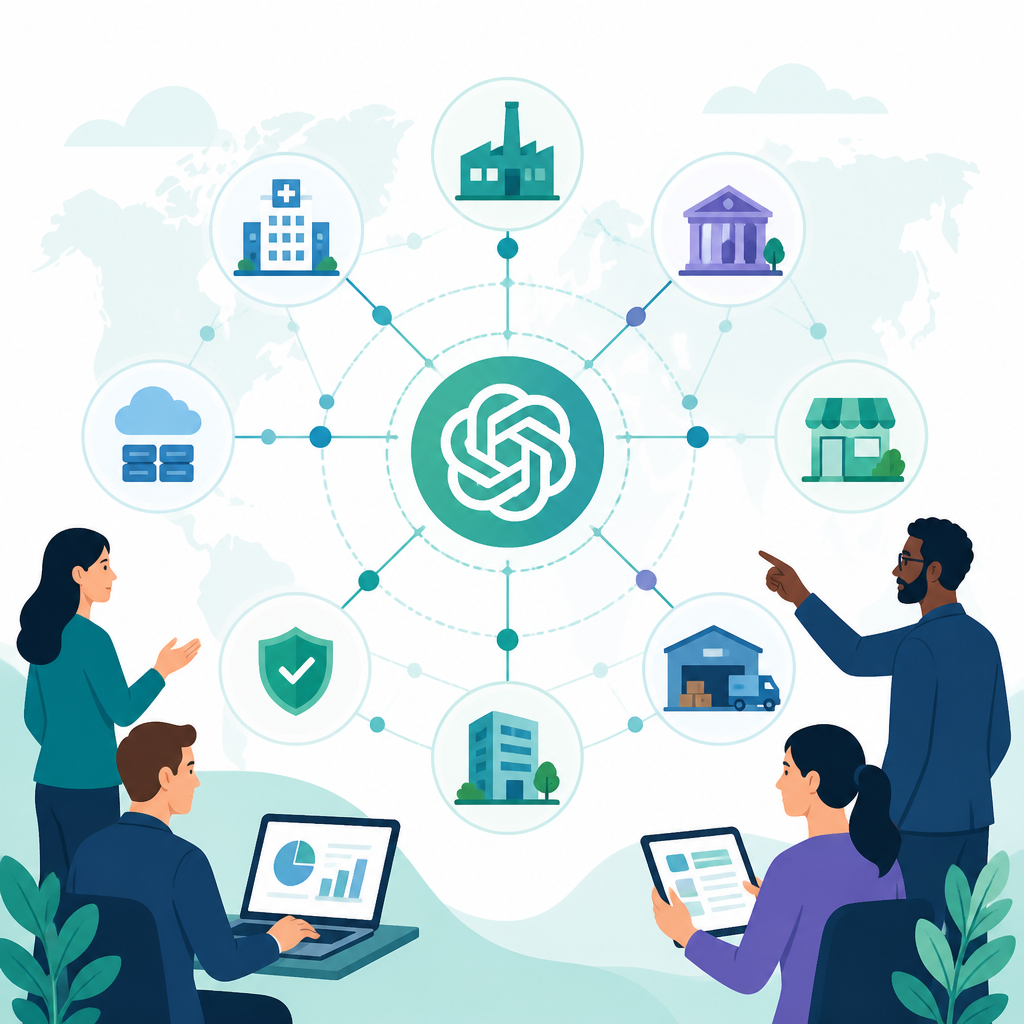
For enterprise buyers, this is the first stop when AI work is still a set of ideas rather than a delivery plan. It can shorten the gap between executive interest and a scoped project.
- Use case discovery
- Readiness assessments
- Roadmap planning
2. Implementation partners
Implementation partners take a project from design to working product. They help teams connect models to real workflows, user interfaces, and internal data sources.
This category is useful when a company has a clear goal but lacks in-house capacity to ship quickly. OpenAI’s announcement frames the network as a way to turn ambition into enterprise-wide transformation, and implementation partners are the group most likely to make that happen.
- Prototype development
- Production deployment
- Workflow integration
3. Cloud partners
Cloud partners provide the infrastructure layer that enterprises need for scale, security, and reliability. They are the fit for organizations that want AI systems to sit inside existing cloud operations.
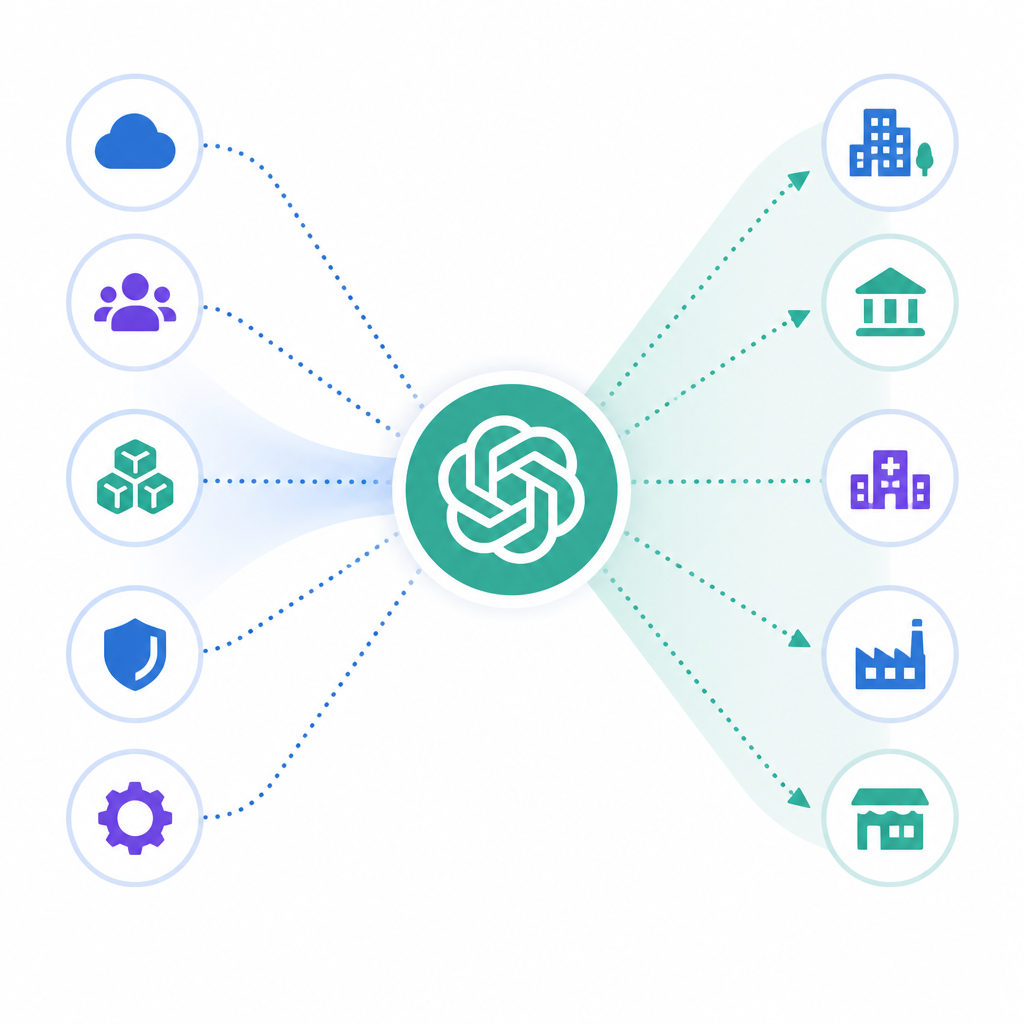
For buyers, this reduces the amount of custom infrastructure work needed before launch. It also gives IT teams a familiar path for governance, access controls, and monitoring.
- Hosting and compute
- Security controls
- Operational monitoring
4. System integrators
System integrators focus on connecting AI tools to the software and processes a company already uses. That can include CRM, support platforms, finance systems, or internal knowledge bases.
This category matters when the hardest part is not model quality but fit with the rest of the stack. If a team needs AI to work inside existing business logic, integrators can reduce the amount of manual glue code and process redesign.
Example fit: support automation + CRM + internal knowledge search- Legacy system connection
- Process redesign
- Cross-team workflow setup
5. Service partners
Service partners help with ongoing operation after launch. They are the people to call when a deployment needs tuning, user support, or regular updates as business needs change.
That makes them a good match for companies that do not want a one-time build. In enterprise AI, the real work often starts after the first demo, and service partners are built for that phase.
- Post-launch support
- Model and workflow updates
- Operational maintenance
How to decide
If you are still choosing use cases, start with advisory partners. If you already know what to build, implementation partners are the fastest route. If your blocker is infrastructure or enterprise integration, cloud partners and system integrators are the better fit.
Service partners make sense when the goal is not just launch, but long-term operation. The network is most useful when companies need different kinds of help at different stages, rather than one vendor for everything.
// Related Articles
- [IND]
Midjourney V8.1 now ships as default model
- [IND]
Midjourney Free Methods vs Paid Access
- [IND]
Anthropic’s $35 billion buildout proves AI now runs on finance and ch…
- [IND]
AI Weekly: 2026-06-08 ~ 2026-06-15
- [IND]
Anthropic’s offline move turns policy into code
- [IND]
89.2k-star MCP server directory for tool builders