AI will split workforces, but not into a permanent caste system
AI will widen the workforce gap, but the real divide is skill adoption, not a fixed caste system.

AI will widen the workforce gap, but the real divide is skill adoption, not a fixed caste system.
AI is already changing who gets hired, who gets promoted, and who gets left behind, but it is not creating a permanent tech caste. The stronger claim is simpler: workers who learn to direct AI will outpace those who ignore it, and companies that treat AI as optional will lose to those that make it routine.
AI changes labor faster than institutions do
Get the latest AI news in your inbox
Weekly picks of model releases, tools, and deep dives — no spam, unsubscribe anytime.
No spam. Unsubscribe at any time.
The first reason Huang’s warning matters is that AI adoption is moving faster than the systems built to protect workers. A spreadsheet task, a contract review, or a first-pass marketing draft can now be done in minutes by one person with a decent prompt, while many firms still train employees as if those tasks were scarce human labor. That gap between tool capability and workplace practice is where displacement starts.
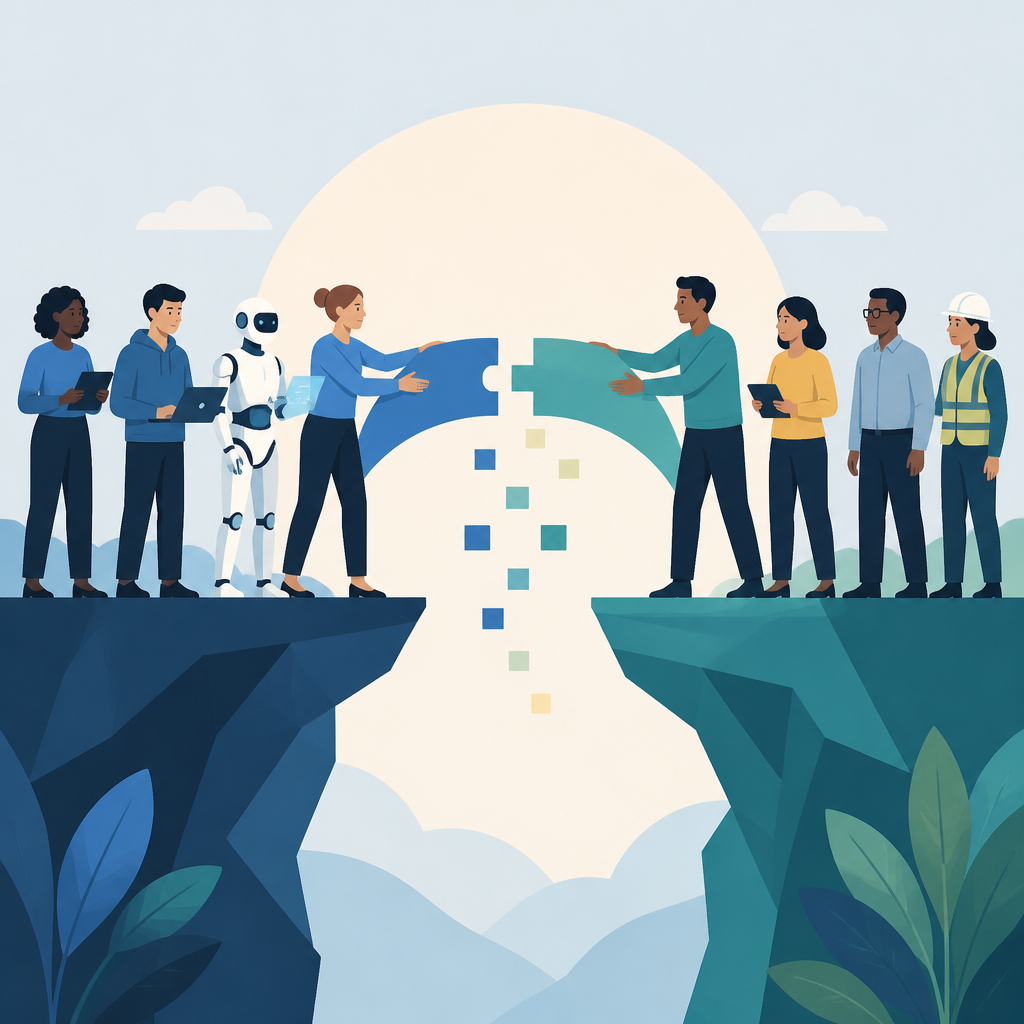
We have seen this pattern before. The internet did not eliminate office work, but it did crush roles built around information bottlenecks, from travel agents to catalog clerks to basic research assistants. AI is doing the same thing to white-collar routine work, only faster. The worker who refuses to use it is not preserving craftsmanship; he is volunteering to be slower than the market.
AI turns general competence into leverage
The second reason is that AI makes ordinary workers dramatically more productive without requiring them to become engineers. A founder can use a model to write customer support macros, summarize investor notes, draft code, and test messaging in a single afternoon. That is not a niche advantage. It is a force multiplier that raises the floor for anyone willing to learn the basics.
This is why the divide is not really between technical and non-technical people. It is between people who can direct software and people who cannot. A middle manager who knows how to use AI for analysis, planning, and communication will outperform a more credentialed peer who still works manually. Once that becomes normal, promotions will reward AI fluency the way earlier eras rewarded email, spreadsheets, and search.
The counter-argument
The best objection is that this fear overstates the speed and depth of change. AI still hallucinates, still needs oversight, and still fails in high-stakes settings where accuracy matters more than speed. In law, medicine, finance, and public policy, the cost of a wrong answer is high enough that human judgment remains central. That means AI augments work instead of dividing society into winners and losers.
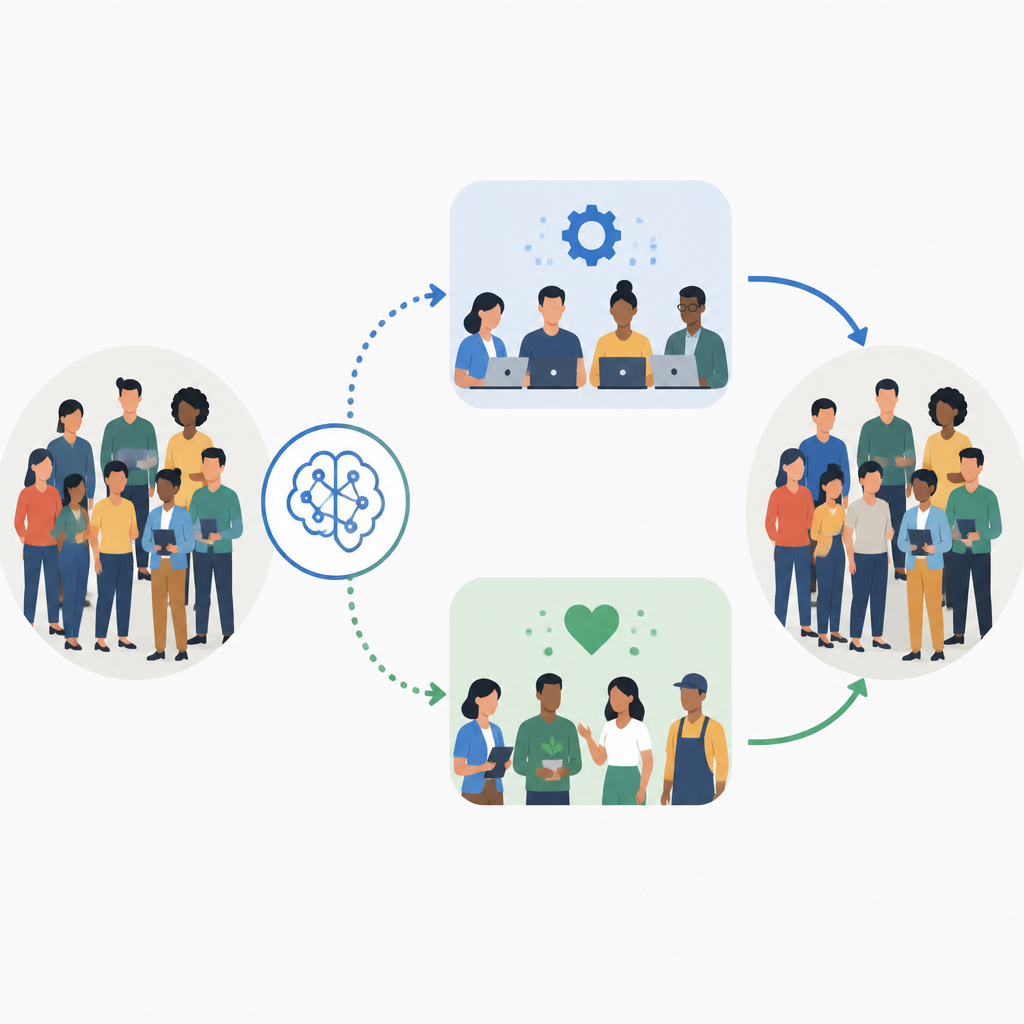
There is also a real risk in treating AI fluency as a universal cure. Not every job benefits equally, and not every worker has equal access to training, time, or stable internet. If leaders pretend that “just use AI” is a complete labor strategy, they will excuse bad management and shift responsibility onto workers who are already under pressure.
That objection is right about one limit: AI does not erase the need for judgment, domain expertise, or accountability. But it fails as a rebuttal because the labor market does not reward perfect safety, it rewards speed, output, and adaptability. The worker using AI with human oversight will still beat the worker refusing to use it at all. The technology does not need to be flawless to change the hierarchy.
What to do with this
If you are an engineer, PM, or founder, stop treating AI as a side experiment and make it part of the workflow. Pick the three tasks your team repeats most, automate the first draft or first pass, and train everyone to review outputs instead of generating everything from scratch. The goal is not to replace expertise. The goal is to make AI literacy a baseline job skill, because the market already is.
// Related Articles
- [IND]
OpenAI’s Astra pause shows safety now shapes model releases
- [IND]
Anthropic is building custom AI chips for Claude
- [IND]
Moka AI Is a Stronger HRMS Choice for Growing Teams
- [IND]
August 2026 Market Review: AI Stocks Flipped Fast
- [IND]
Pixel 11 launch live: every Google reveal
- [IND]
Anthropic’s invisible watermark is the right move