AMD+Helios lets Cerebras widen inference throughput
I break down how Cerebras and AMD are pairing Helios with WSE, and give you a copy-ready template for workload-optimized inference.

Cerebras is pairing AMD Helios with WSE to split inference work by workload.
I've been watching Cerebras for a while, and the thing that kept bugging me was simple: they kept talking like one chip could be the whole answer. Great story, sure. But real inference traffic is messy. Some requests are tiny and latency-sensitive. Others are huge context dumps that chew through bandwidth and memory. If you try to force all of that through one architecture, you end up paying for the wrong thing half the time.
That is why this AMD deal caught my attention. It is not just another “strategic partnership” press line. It is Cerebras admitting, in a practical way, that AI infrastructure is becoming a routing problem as much as a compute problem. I saw the same pattern when I first started wiring model serving stacks: the cleanest single-box answer always looked elegant in demos, then got ugly the moment product asked for longer contexts, lower latency, and better cost per token at the same time.
The source that kicked this off is a Yahoo Finance article republishing Zacks Research: Can AMD Partnership Strengthen Cerebras' AI Infrastructure Leadership? The piece says Cerebras plans to deploy AMD Helios systems across its data centers, with the joint offering rolling out through Cerebras Cloud in the second half of 2026. It also gives the useful numbers: the combined platform is expected to hit up to five times higher tokens-per-second-per-watt than a Cerebras-only setup, and Cerebras raised 2026 core revenue guidance to $855-$865 million.
Cerebras is not selling a chip story anymore, it is selling traffic control
Get the latest AI news in your inbox
Weekly picks of model releases, tools, and deep dives — no spam, unsubscribe anytime.
No spam. Unsubscribe at any time.
“AMD Helios will handle high-throughput prompt processing and large context windows, while the Cerebras WSE will accelerate token generation with ultra-low latency.”
What this actually means is that Cerebras is splitting the inference path into two jobs instead of pretending one accelerator should do everything. AMD handles the wide, heavy front end. Cerebras handles the fast token emission on the back end. That is a cleaner mental model than “faster AI hardware” because it maps to how real requests behave.
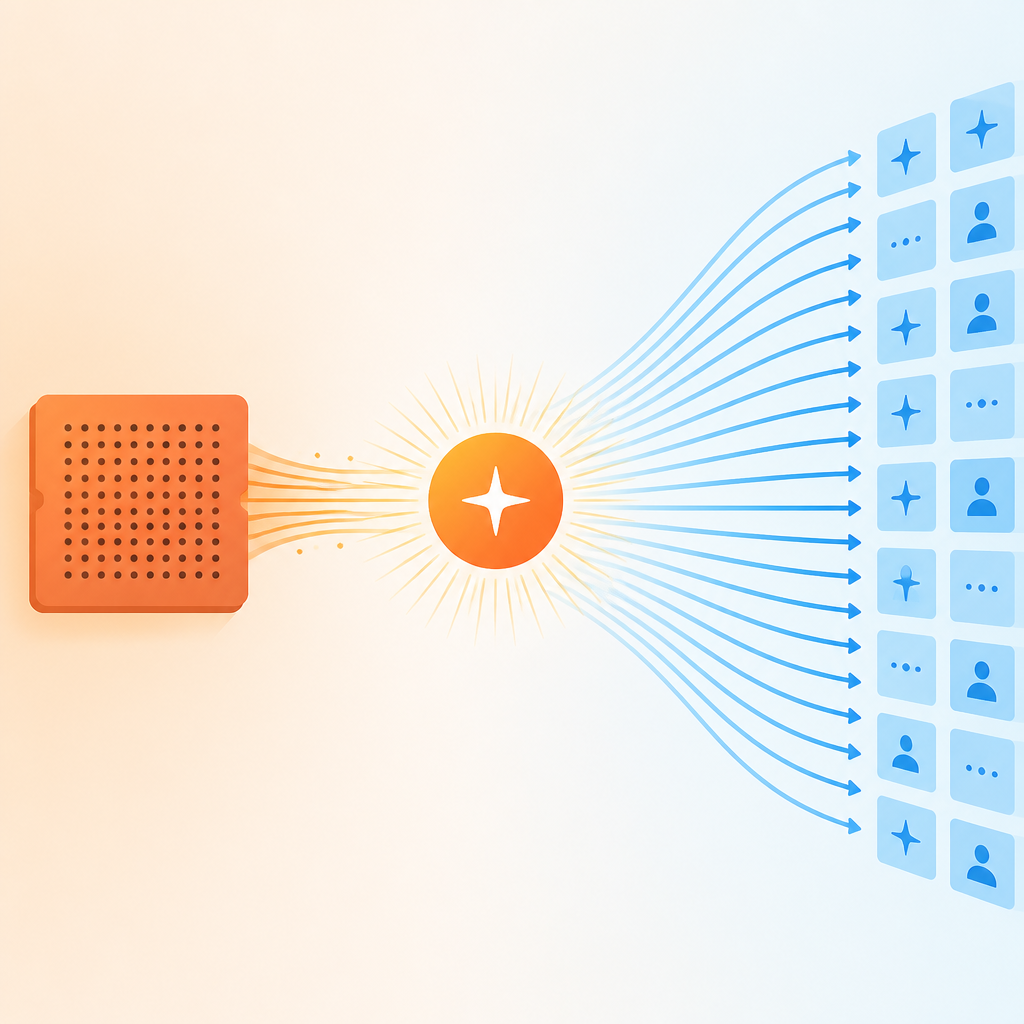
I ran into this exact issue when I built a serving pipeline for long-context assistants. The first token was always the pain point, but so was everything before it: prompt ingestion, retrieval, context packing, and the ugly little pauses where your system is technically alive but feels slow. Once I separated those stages, latency stopped being a single number and became a set of decisions.
How to apply it: stop designing inference as one monolithic lane. Break it into prompt processing, context handling, generation, and post-processing. Then decide which hardware class is best for each stage. If your stack is still “one model, one GPU pool, one queue,” you are probably wasting money and hiding bottlenecks.
- Use a high-throughput path for prompt ingestion and context assembly.
- Use a low-latency path for token generation and interactive responses.
- Measure each stage separately instead of averaging everything into one SLA.
This is the part that makes the AMD partnership interesting instead of cosmetic. Cerebras is not just adding another logo. It is building an argument that inference infrastructure should be workload-shaped. That is a much better pitch than “we have the fastest thing,” because AI buyers are no longer buying fastest. They are buying least painful under real traffic.
The token-per-watt number is the real headline, not the press-release fluff
The article says the combined platform could deliver up to five times higher tokens-per-second-per-watt than a Cerebras-only configuration. That is the kind of number I actually care about, because it tells you the deal is about operating economics, not just benchmark theater.
Tokens per second is nice. Tokens per watt is better. It forces you to ask what your throughput costs when the racks are actually running. I have seen too many teams celebrate raw throughput while quietly ignoring power, cooling, and cluster utilization. Then the finance team shows up, and suddenly the “best” system is the one that is easiest to keep fed without burning the budget.
What this actually means is that Cerebras and AMD are trying to make the serving stack denser in value, not just denser in compute. The more you can extract from each watt, the more room you have for lower prices, higher margins, or both. And in a market where cloud AI pricing is under pressure, that matters a lot more than shiny demo graphs.
How to apply it: when you evaluate an inference platform, do not stop at latency and throughput. Add power, rack density, and utilization into the same spreadsheet. If a vendor cannot tell you how their system behaves under sustained load, they are probably selling you a peak number, not an operating system.
- Track tokens/sec, tokens/sec/watt, and p95 latency together.
- Compare sustained performance over hours, not short burst tests.
- Model the total cost of ownership with power and cooling included.
That is also why the AMD angle matters. AMD is not some random accessory here. Their Instinct and rack-scale push gives Cerebras another way to cover the front half of the request path. Cerebras keeps its wafer-scale identity, but it no longer has to pretend that identity is enough for every workload.
Disaggregation is just a nicer word for admitting the workload is split
The article keeps using “disaggregated AI inference platform,” which is a mouthful, but the idea is straightforward. Different stages of inference do different jobs, and those jobs do not need the same silicon.
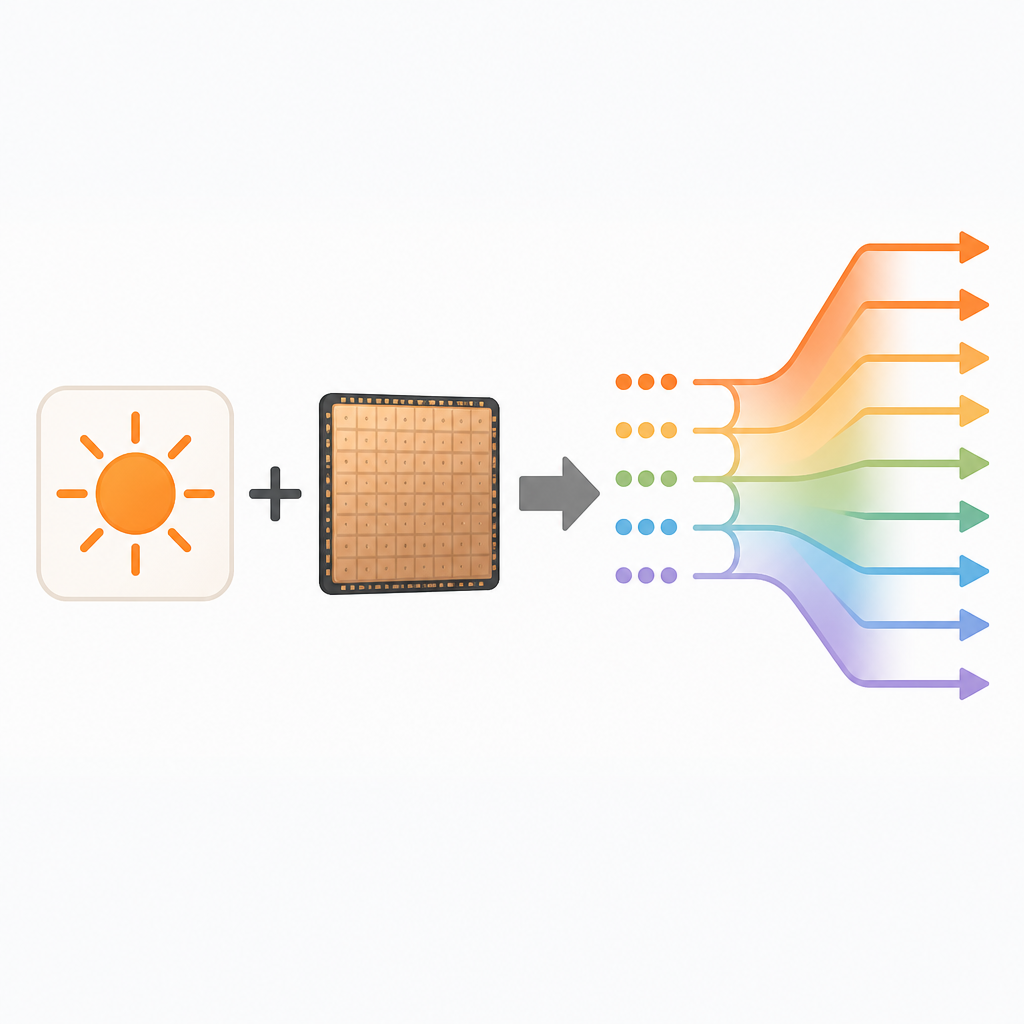
I like this framing because it matches what I see in production systems. Retrieval is memory hungry. Prompt preprocessing is bursty. Generation is latency-sensitive. Safety filters and routing are their own little bottlenecks. If you glue all of that onto one architecture, you get a system that is easy to explain and annoying to operate.
What this actually means is that Cerebras is moving away from the old “pick your accelerator and pray” mindset. It is trying to become the orchestrator of a multi-architecture stack. That is a bigger business than selling one box, but it also means the company has to prove it can integrate cleanly with other vendors instead of competing on purity.
I ran into this when I tried to optimize a multi-model assistant. The first mistake was assuming the model was the bottleneck. It usually was not. The real issue was that every request took the same path, even when the request shape was completely different. Once we routed short interactive queries differently from long analytical jobs, the whole system got cheaper and easier to tune.
How to apply it: map your inference traffic by request type. Then assign hardware by request shape, not by organizational habit. A long-context summarizer should not fight the same queue as a low-latency coding assistant. If you need a simple rule, use this: interactive requests get the fastest path, bulk context gets the fattest path.
- Classify traffic by context length, latency target, and output length.
- Route requests to hardware based on the dominant bottleneck.
- Keep a fallback path so one pool does not become a single point of failure.
For readers who want the vendor context, Cerebras’ own site is here: Cerebras Systems. AMD’s corporate site is here: AMD. And if you want the cloud side of the story, Cerebras Cloud is the place to watch once this joint offering lands.
Why OpenAI and AWS matter more than the AMD logo
The Yahoo/Zacks piece does not frame this AMD deal in isolation. It places it next to Cerebras’ earlier partnerships with OpenAI and Amazon Web Services. That matters, because it tells me Cerebras is building a network of distribution and integration, not just a list of announcement partners.
The article says the OpenAI agreement is worth more than $20 billion, and that the AWS partnership is already driving commercial momentum. Those are not small side notes. They are the proof that Cerebras is trying to become part of the inference supply chain, not just a niche hardware vendor with a good demo.
What this actually means is that AMD is not the strategy. It is one more piece of the strategy. Cerebras wants to be the place where inference workloads land when they need speed, scale, and weirdly specific hardware matching. The more partners it has, the more credible that story becomes.
I have seen this pattern before in infrastructure companies. The ones that win long term usually stop selling “my tech is better” and start selling “my tech fits into your system.” That is a much harder pitch to fake, because it only works if the integrations actually hold up in production.
How to apply it: if you are building a platform, do not think of partnerships as marketing collateral. Think of them as distribution channels and validation paths. A good partner says, “this fits into your stack without a rewrite.” If you cannot say that, your partnership is probably just a logo swap.
Competition is the part nobody can hand-wave away
The source also points to CoreWeave and Broadcom as serious competition. That is fair. CoreWeave is scaling infrastructure aggressively with NVIDIA, and Broadcom is pulling in huge AI semiconductor bookings. This is not a quiet market where one clever architecture gets to coast.
What this actually means is that Cerebras needs every edge it can get. A better hardware story helps, but so does a better systems story. The market is rewarding companies that can show real revenue, real commitments, and real capacity. The article says Cerebras’ first-quarter 2026 revenue rose 94% year over year to $193.4 million, with cloud and other services revenue up 178%. That is the sort of traction that makes a partnership look less like a stunt and more like a scaling move.
I do not think the competition argument is about who has the prettiest architecture diagram. It is about who can supply useful inference capacity at a price and latency profile customers can live with. CoreWeave is betting on scale. Broadcom is betting on custom accelerators and bookings. Cerebras is betting on workload specialization. AMD makes that bet broader.
How to apply it: if you are evaluating vendors, ask what they are actually optimized for. Scale, custom silicon, general-purpose compute, or workload specialization? If they cannot answer in one sentence, they are probably trying to be everything at once.
- Compare vendor strengths against your actual workload mix.
- Do not buy a platform that only looks good on one benchmark.
- Watch for revenue quality, not just headline growth.
One more practical note: the article says Cerebras’ 2026 core revenue guidance moved to $855-$865 million. I would not treat that as a victory lap. I would treat it as evidence that the company is trying to turn architecture into repeatable commercial demand, which is the harder job.
What I would actually do with this as an engineer
If I were designing an AI serving stack today, I would steal the logic of this deal without copying the branding. I would separate the request path into stages, assign each stage to the best-fit hardware, and measure the whole thing as a pipeline instead of a single model call.
The biggest mistake teams make is assuming the model is the product. It is not. The product is the response path. Users do not care which accelerator did the work. They care whether the answer arrived fast enough, cost little enough, and handled the right amount of context.
What this actually means is that Cerebras and AMD are pointing at a future where infrastructure is assembled from specialties. I do not mean that in a grand, poster-on-the-wall way. I mean it in the annoying, practical way that actually ships: one system for intake, one for memory-heavy prep, one for generation, one for orchestration.
How to apply it: start with a traffic audit. Measure request classes, context sizes, latency targets, and cost per request. Then design the serving topology around those numbers. If you are already in production, split one overloaded queue into two. That one change will teach you more than another week of benchmark slides.
The template you can copy
# Workload-optimized AI inference plan

## Goal
Build an inference stack that splits prompt processing, context handling, and token generation across the best-fit hardware.

## Request classes
- Interactive chat / copilots: low latency, short-to-medium context
- Coding assistants: low latency, moderate context, high token output
- Long-context analysis: high throughput, large context windows
- Batch generation: cost-sensitive, throughput-first

## Routing rules
1. Send prompt ingestion and large-context assembly to the high-throughput front-end tier.
2. Send token generation to the low-latency generation tier.
3. Keep safety, retrieval, and post-processing as separate services.
4. Route by request shape, not by default queue.

## Metrics to track
- p50 latency
- p95 latency
- tokens per second
- tokens per second per watt
- cost per 1,000 tokens
- sustained throughput over 1 hour
- queue depth by request class

## Evaluation checklist
- Does the stack handle long context without slowing interactive traffic?
- Can the system keep generation latency low under sustained load?
- Is power usage acceptable at full utilization?
- Can the platform fail over if one hardware pool is saturated?
- Do we have separate SLAs for each request class?

## Deployment shape
- Front-end inference tier: prompt processing, context packing, retrieval assembly
- Generation tier: token emission, low-latency response serving
- Control plane: routing, observability, failover, policy enforcement

## Copy-ready positioning note
We do not buy one accelerator to solve every inference problem.
We match hardware to workload shape, then measure the whole path as a system.
The nice thing about this template is that it forces the conversation away from hype and back to operations. That is where these deals either work or fall apart. If the front end is busy and the back end is fast, great. If the opposite is true, you have learned something useful instead of just collecting vendor slides.
And yeah, that is the part I trust here. Not the shiny partnership language. The operational admission underneath it.
Source attribution: I broke this down from Yahoo Finance’s republication of Zacks Research here: finance.yahoo.com/technology/ai/articles/amd-partnership-strengthen-cerebras-ai-150400219.html. The analysis and template above are my own interpretation, not a rewrite of the original piece.
// Related Articles
- [IND]
OpenAI’s comeback proves coding now drives the AI race
- [IND]
System design interviews get easier with 5 core ideas
- [IND]
EU AI Act’s 2026 Omnibus buys firms more time
- [IND]
Anthropic puts $200M into AI economy research
- [IND]
IIT Madras will host DIR-V 2026 in Chennai
- [IND]
Claude voice mode now does more work in chat