Claude voice mode now does more work in chat
Claude’s voice mode now uses stronger models, app links, and 10 languages, but free users get tighter limits.

How does Claude’s new voice mode compare with ChatGPT’s?
Claude voice mode now uses stronger models and app connections for longer, work-focused conversations.
| Item | Model access | Connected apps | Language support |
|---|---|---|---|
| Claude voice mode | Opus, Sonnet, Haiku; free users get Haiku only | Gmail, Google Calendar, Slack, Canva, Notion | 10 languages, manual selection |
| OpenAI voice mode | Updated conversational models | No comparable tool use noted | Not specified here |
1. Model choice now matters
Get the latest AI news in your inbox
Weekly picks of model releases, tools, and deep dives — no spam, unsubscribe anytime.
No spam. Unsubscribe at any time.
Anthropic’s Anthropic is no longer tying Claude’s voice mode to a single lightweight model. Users can now choose between Opus, Sonnet, and Haiku, and the system defaults to the fastest version of the last model used in text chat.

That matters because voice is no longer just for quick answers. Anthropic says the updated mode is better for longer conversations, including feedback on communication style, pitch practice for a client, and product-market brainstorming.
- Opus for heavier reasoning
- Sonnet for a middle ground
- Haiku for speed and lighter tasks
2. App connections turn voice into a work tool
The biggest practical upgrade is that Claude voice mode can connect to other apps. Anthropic says it can work with Gmail, Google Calendar, Slack, Canva, and Notion.
So instead of only talking through a task, you can ask Claude to act on it. Examples include updating a meeting slot, drafting an email, or creating a document in Notion. That puts Claude closer to an assistant that can both plan and execute.
- Reschedule meetings in Calendar
- Draft messages in Gmail
- Build docs in Notion
- Coordinate work in Slack
3. Free users get a narrower version
Anthropic says the new voice mode is in beta for all users across platforms, but the free tier is limited. Free users are restricted to the Haiku model and only one connected app.
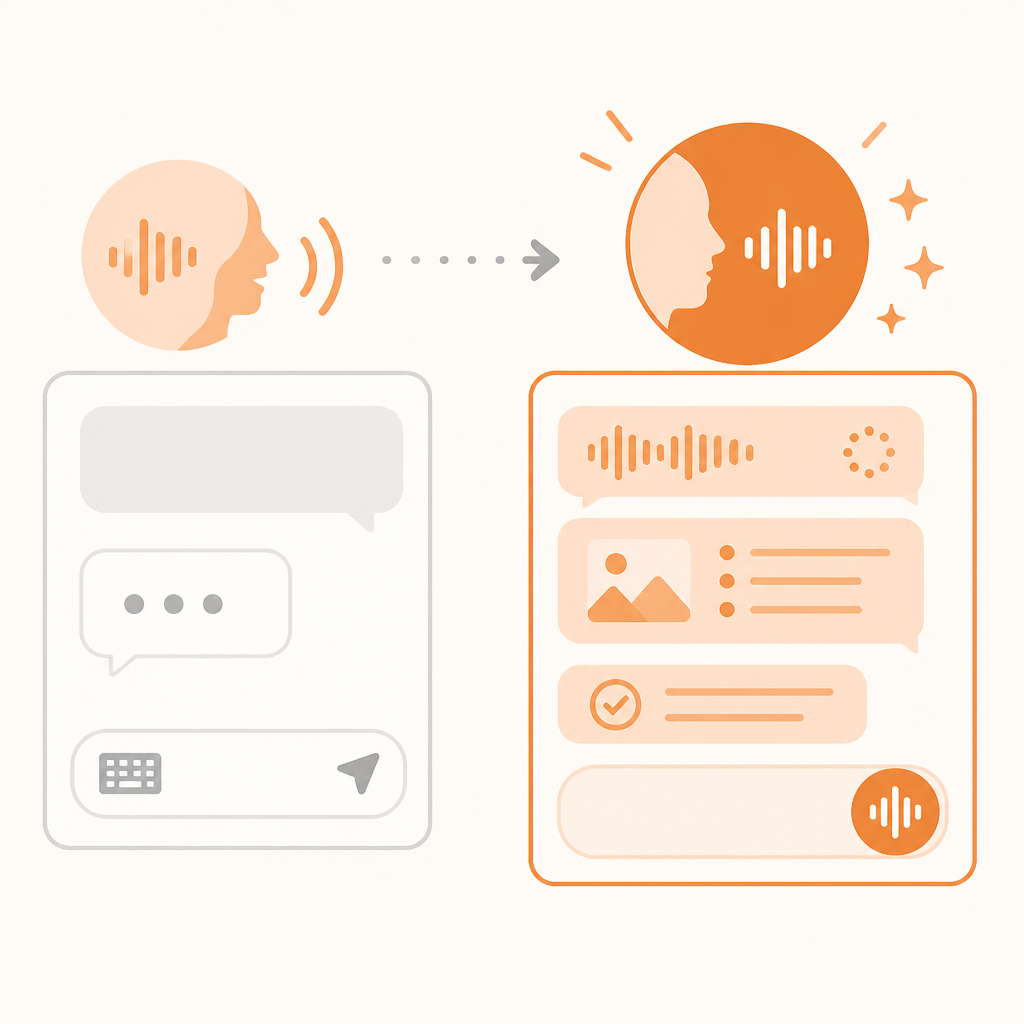
That split makes the feature feel more like a tiered productivity tool than a single universal mode. If you want the richer app connections and stronger models, you will likely need a paid plan.
Free tier: Haiku + 1 connected app4. Multilingual support is broad, but manual
Anthropic had already added multilingual support in beta earlier this year, and the rollout now covers 10 languages. Supported languages include English, French, German, Hindi, Indonesian, Italian, Japanese, Korean, Portuguese, and Spanish.
The catch is that users still have to specify the language manually. That makes the feature useful for multilingual teams and travelers, but less automatic than a fully adaptive voice assistant.
- English
- French
- German
- Hindi
- Japanese
- Spanish
5. The voice stack itself did not change
Anthropic says it did not change the voice model in this release, and it has not explained what voice stack Claude uses. That means the update is mostly about model selection, app access, and workflow support, not a new spoken interaction engine.
So if you are hoping for better interruption handling or a more natural back-and-forth, this release does not promise that. The main story is that Claude voice mode is becoming more useful for getting work done, not necessarily more human-sounding.
How to decide
Pick Claude voice mode if you want voice chat tied to real work apps and you already use Claude’s text models. It is the strongest fit for people who want to speak a task into existence, then have the assistant help carry it out.
If you mainly want the best conversational polish in voice, this update is less important than the app hooks. Free users should expect a narrower setup, while paid users get the fuller mix of model choice and connected tools.
// Related Articles
- [IND]
WAIC 2026 turns AI hype into real work
- [IND]
KPMG’s OpenAI deal turns SaaS into agents
- [IND]
Trump adviser accuses Moonshot AI of stealing Anthropic
- [IND]
Vector databases will reshape financial search, not replace core syst…
- [IND]
Milvus 3.0 adds lake-native vector search
- [IND]
Google’s Q2 2026 results prove AI spend is now the story