Anthropic’s California deal makes Claude the default public-sector AI
California should treat Anthropic’s Claude deal as the model for public-sector AI adoption.

California should treat Anthropic’s Claude deal as the model for public-sector AI adoption.
Anthropic’s agreement with Governor Newsom is the right move because government AI should start with a single, governed platform, not a scattered pile of pilots. Making Claude available to all state agencies and local governments gives California one procurement path, one security posture, and one training surface instead of dozens of inconsistent deployments that are hard to audit and easy to misuse.
One platform beats a thousand pilot projects
Get the latest AI news in your inbox
Weekly picks of model releases, tools, and deep dives — no spam, unsubscribe anytime.
No spam. Unsubscribe at any time.
Public agencies do not fail because they lack AI tools; they fail because they buy too many tools too fast and cannot govern them. A statewide deal changes the default from ad hoc experimentation to managed adoption, which matters more than model benchmarks when the buyer is a bureaucracy that has to answer to auditors, unions, lawmakers, and the public.
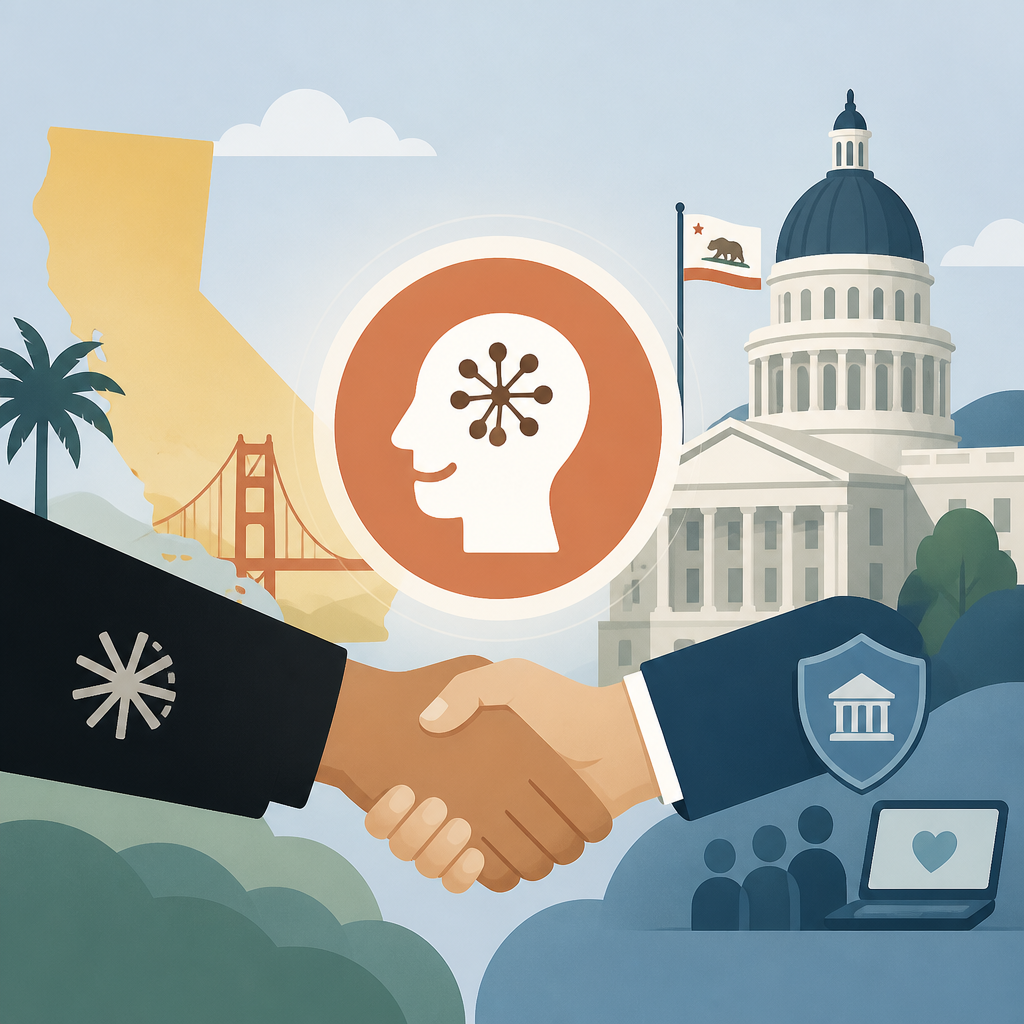
California is not buying a chatbot for curiosity. It is buying a common layer that can be embedded across benefits offices, permitting desks, call centers, and internal workflows. That is the only scalable way to move AI from novelty to infrastructure, and it is exactly why a single vendor agreement is more useful than a patchwork of departmental purchases.
Government needs control, not model maximalism
The best argument for the deal is that public-sector AI should be constrained by policy before it is constrained by disaster. Claude is being introduced into a setting where data handling, logging, access controls, and human review matter more than raw capability, and a centralized agreement makes those requirements enforceable instead of optional.
There is also a practical advantage in choosing a vendor already in conflict with federal regulators. Anthropic’s fight with the Trump administration over rollout restrictions underscores a simple point: government buyers need vendors that can survive political scrutiny and still deliver. If a model is considered sensitive enough to attract national-level restriction, then the state should insist on a formal contract rather than informal use by employees with credit cards.
The counter-argument
Critics will say this is exactly how government becomes dependent on one AI company. They will argue that a statewide Claude deal hardens vendor lock-in, narrows innovation, and gives Anthropic a privileged lane into public administration before open-source or competing commercial systems have a fair shot.
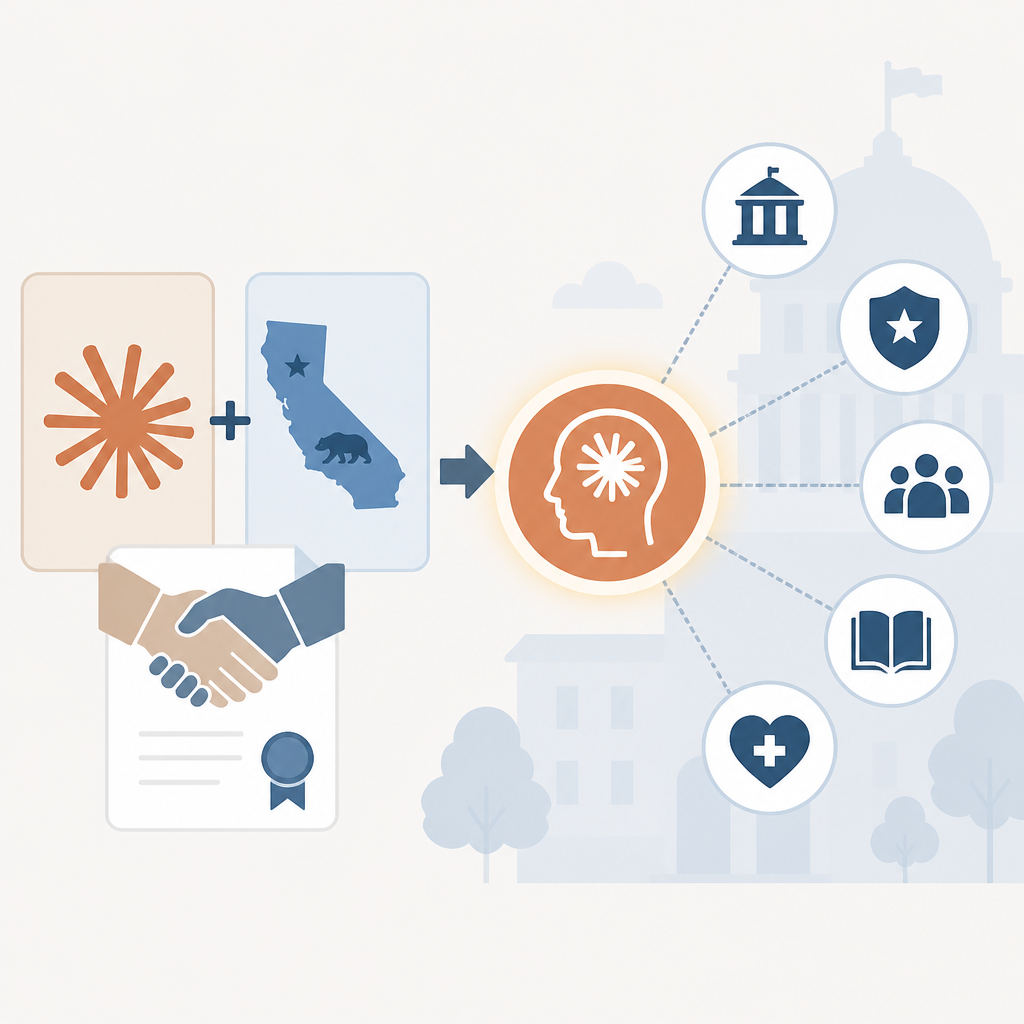
That concern is real, but it does not defeat the deal. Lock-in is a procurement problem, not a reason to avoid procurement. California can require portability, logging access, data retention limits, and exit clauses while still standardizing on one platform now. The bigger risk is not choosing one vendor; it is letting every agency improvise its own AI stack and then pretending that is governance.
What to do with this
Engineers and PMs in government should treat this as a blueprint: define one approved model tier, wrap it in policy, instrument every interaction, and make usage reviewable from day one. Founders selling into the public sector should stop pitching novelty and start selling administration, controls, and procurement simplicity. The winning AI product in government is not the smartest one; it is the one a state can safely standardize on.
// Related Articles
- [IND]
CBDC Governance: Standards and Stakeholder Roles
- [IND]
Invisible AI watermarks are the right move for Claude
- [IND]
pgvector is enough for small datasets, not your default
- [IND]
OpenAI’s Astra pause shows safety now shapes model releases
- [IND]
Anthropic is building custom AI chips for Claude
- [IND]
Moka AI Is a Stronger HRMS Choice for Growing Teams