Apple’s Gemini Siri deal rewrites AI app strategy
4 takeaways from Apple’s $1B Gemini deal show how Siri will work, what developers gain, and where AI teams should build.

Apple’s Gemini deal shows how Siri will mix on-device AI, private cloud, and outside partners.
Apple’s reported $1 billion-a-year deal with Google gives AI engineers a live example of build-versus-buy tradeoffs, hybrid routing, and platform planning.
| Item | Model size | Hosting | Expected timing |
|---|---|---|---|
| Apple Siri with Gemini | 1.2T parameters | Apple Private Cloud Compute | iOS 26.4, March/April 2026 |
| On-device tier | 3B-7B parameters | Apple Neural Engine | Already in use |
| ChatGPT integration | Not disclosed | External partner | Still available |
1. The deal is about focus, not talent
Get the latest AI news in your inbox
Weekly picks of model releases, tools, and deep dives — no spam, unsubscribe anytime.
No spam. Unsubscribe at any time.
Apple can afford to build almost anything, yet it chose to pay Google about $1 billion a year to power the next Siri. That tells engineers something important: the best use of internal teams is not always model training. Sometimes the better move is to concentrate on product integration, privacy controls, and the user experience layer.
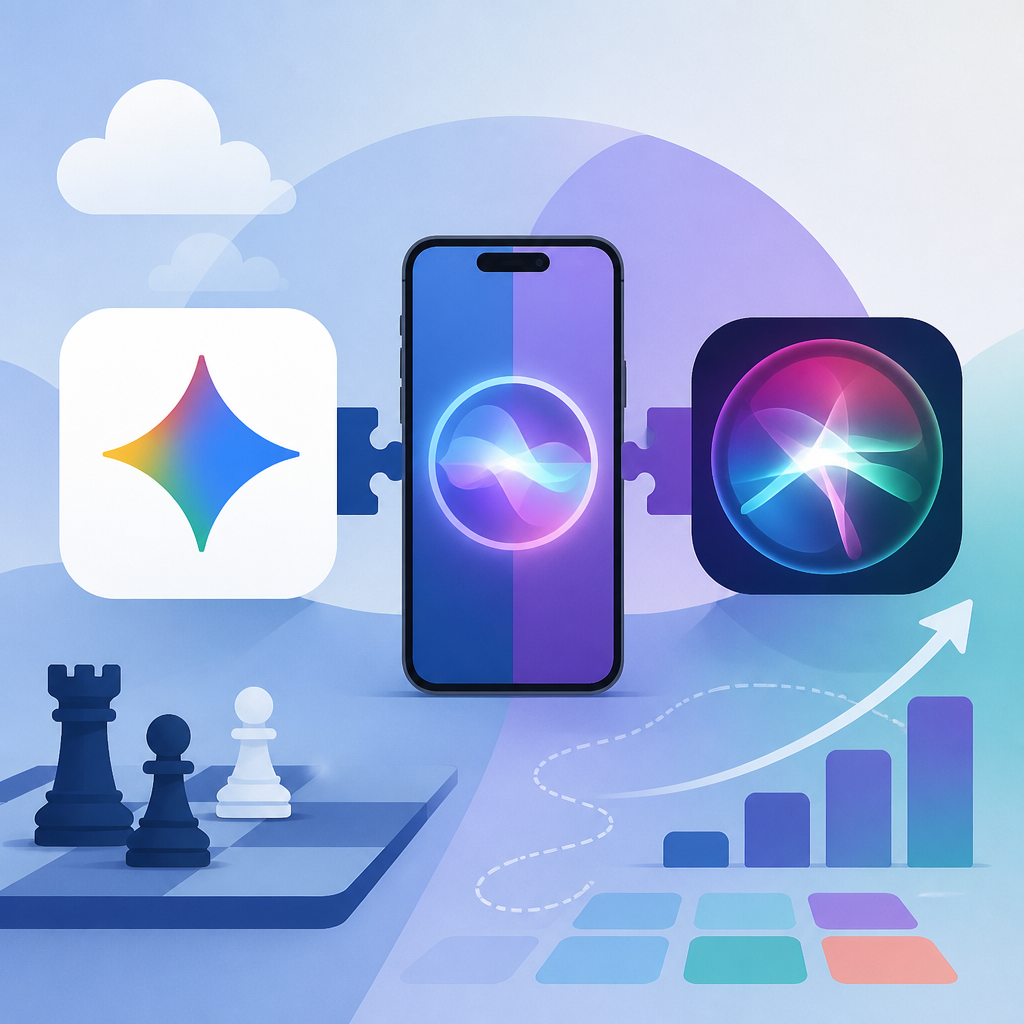
For teams making their own AI roadmaps, the lesson is to ask where differentiation actually lives. If the company will not win by owning the foundation model, then model ownership may be a distraction from shipping features users feel.
- Apple keeps control of the Siri experience.
- Google supplies the model capability.
- Internal teams stay focused on product behavior and system design.
2. Siri will run as a three-tier system
The most useful engineering detail in this story is the architecture. Siri is expected to route simple tasks to local models, harder reasoning to Apple-controlled cloud systems, and some requests to outside services when needed. That is not a marketing choice. It is a practical way to balance latency, privacy, and capability.
This routing model is directly relevant to production AI work. It shows that one model rarely fits every task, and that the best systems make decisions based on cost, sensitivity, and task complexity.
- Tier 1: on-device models for timers, summaries, and notifications.
- Tier 2: private cloud inference for deeper reasoning.
- Tier 3: partner systems for broader knowledge tasks.
3. App Intents and SiriKit gain real value
For developers, the practical upside is not just a smarter Siri. The bigger change is that app actions exposed through App Intents and SiriKit should become easier to trigger through natural language. That means more reliable shortcuts, better multi-step commands, and fewer brittle voice flows.
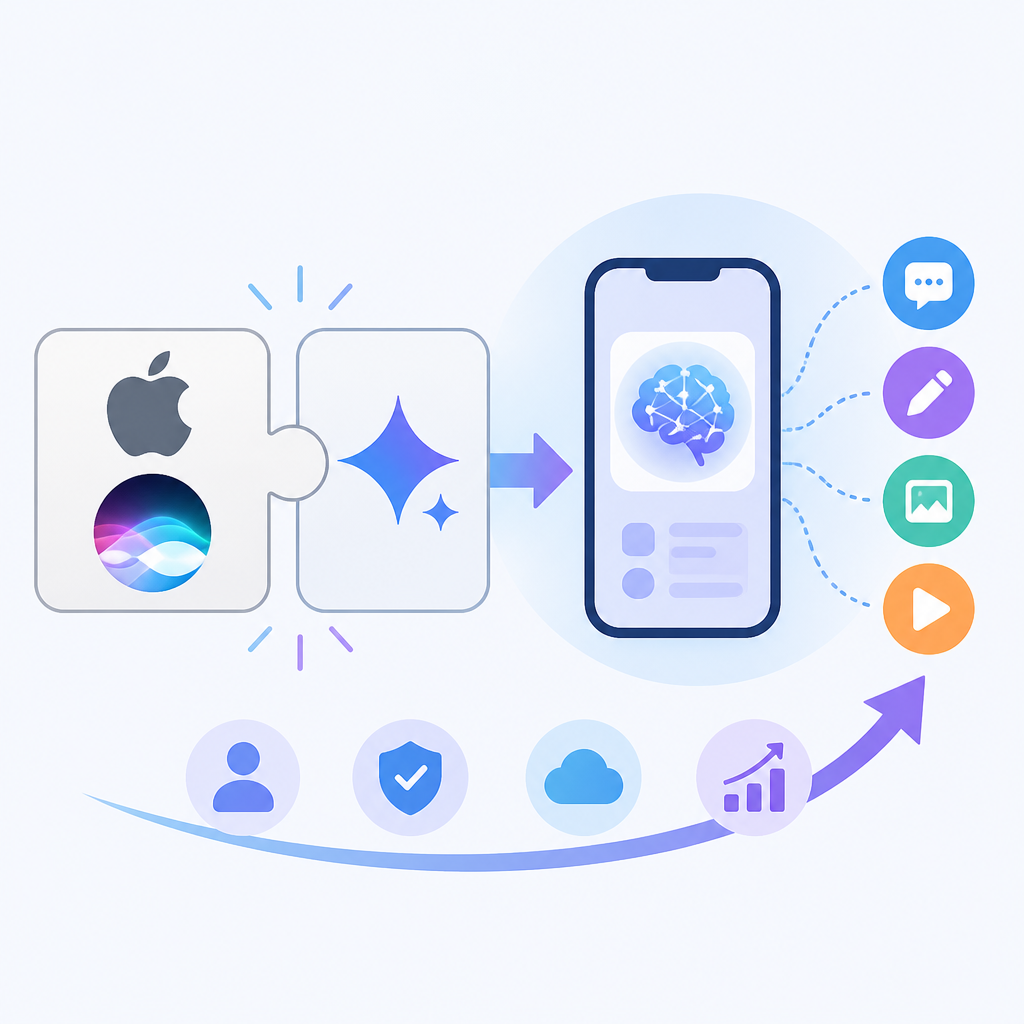
If you build on Apple platforms, this is where the partnership becomes concrete. The models may change, but the integration points are what survive. Engineers who design around those interfaces will be better positioned than teams that wait for a specific model brand to stabilize.
Example workflow:
1. User asks Siri to find a flight in email
2. Siri extracts the booking details
3. Siri opens transit options
4. Siri sends a message with the ETA
4. Privacy will shape the developer experience
Apple says Gemini-derived models run inside Apple Private Cloud Compute, not on Google servers. That matters because it preserves Apple’s privacy story while still using a partner model. For engineers, the key issue is request routing: what stays on device, what goes to Apple cloud, and what could touch an external service.
That routing affects compliance, privacy labels, latency budgets, and failure handling. Teams building enterprise apps should plan for variability now, because a cloud-backed voice action may behave differently from a local one when connectivity drops or policy limits apply.
- Expect different latency by tier.
- Design graceful fallback when cloud access is unavailable.
- Track data flow for privacy review and audit work.
5. The partnership is a warning against model obsession
Apple did not stop building AI. It simply chose not to make foundation-model ownership the center of its strategy. That is a useful signal for AI engineers who feel pressure to treat every new model as a must-have internal project. In many companies, the real value comes from orchestration, not from training everything in-house.
The stronger career move is to get good at assembling systems that produce business value. If you can combine external models, internal APIs, and product constraints into a reliable workflow, you will be useful across platform shifts, vendor changes, and new model releases.
How to decide
If you are a product engineer, build around App Intents, SiriKit, and fallback paths that survive backend changes. If you work in platform or enterprise AI, treat this as a case study in when to buy capability instead of building it. If you are early in your career, focus on integration skills, routing logic, and evaluation, since those transfer better than betting on a single model family.
The Apple-Google deal is not just about Siri. It is a reminder that the strongest AI systems often combine internal control with outside intelligence, and that good engineering is usually about choosing the right layer to own.
// Related Articles
- [IND]
pgvector is enough for small datasets, not your default
- [IND]
OpenAI’s Astra pause shows safety now shapes model releases
- [IND]
Anthropic is building custom AI chips for Claude
- [IND]
Moka AI Is a Stronger HRMS Choice for Growing Teams
- [IND]
August 2026 Market Review: AI Stocks Flipped Fast
- [IND]
Pixel 11 launch live: every Google reveal