AI models are eating the software stack, and app-layer companies are …
AI model companies are growing faster than hyperscalers while enterprise adoption is still under 5%, and that gap will wipe out many app-layer startups.

Model companies are scaling faster than the software market can absorb, and app-layer firms are losing their moat.
For years, software companies assumed the value sat in workflows, interfaces, and distribution. That assumption is breaking. Anthropic and OpenAI are now adding monthly revenue at a pace that outstrips Meta, Google, and Microsoft, yet real economic penetration is still under 5%. When the infrastructure layer is compounding that fast before the market has even begun to digest it, the application layer is not safe. It is exposed.
The first argument: model companies are capturing the growth engine
Get the latest AI news in your inbox
Weekly picks of model releases, tools, and deep dives — no spam, unsubscribe anytime.
No spam. Unsubscribe at any time.
The clearest signal is revenue momentum. If the fastest-growing companies in the AI stack are the model providers, then the economic center of gravity has shifted downward. A startup that once expected to own the customer relationship now has to explain why a foundation model vendor will not absorb the same use case with a better prompt, a fine-tune, or a bundled feature. That is not theoretical pressure. It is a direct threat to margin and differentiation.
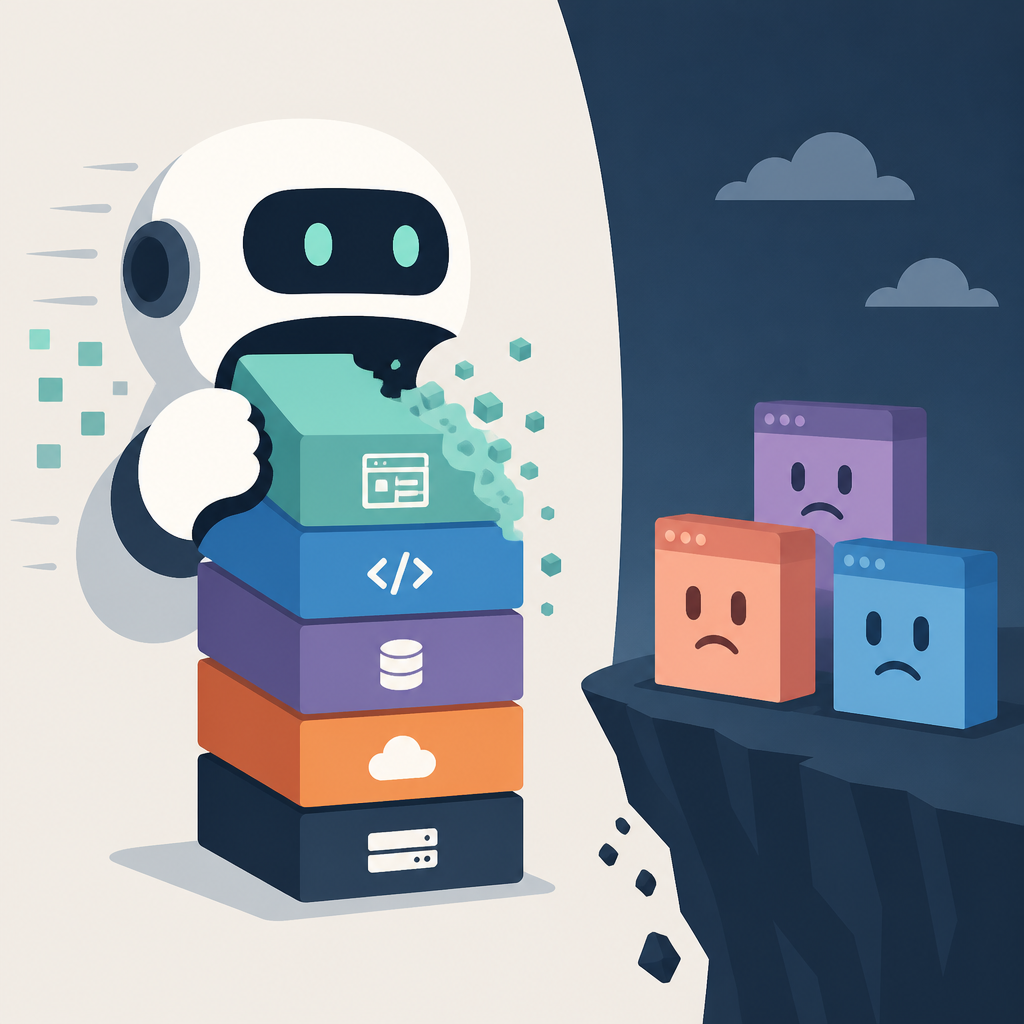
The second signal is adoption timing. Less than 5% penetration into the real economy means the market is still early, not mature. In an early market, the winners are the companies that control the underlying capability, because they set the pace of improvement and the terms of access. App companies built on top of a static platform can defend themselves. App companies built on top of a rapidly improving model layer are standing on moving ground.
The second argument: the app layer has weaker defenses than founders admit
Most application companies do not own scarce data, regulated distribution, or a workflow that is impossible to automate. They own packaging. That matters in normal software markets, but it matters less when the platform underneath improves every month. If the model can draft, summarize, search, classify, and act across tools, then many “must-have” apps become nice-to-have wrappers. Wrappers are easy to copy and easier to replace.
The strongest evidence comes from internal enterprise use. Coding teams and frontier AI labs are already far ahead in adoption, which proves the technology works where the incentives are strongest. The rest of the enterprise is behind, not because the software is weak, but because rollout takes time. That lag is exactly why the shakeout will be brutal. By the time procurement, security, and change management catch up, the model layer will have improved again, and many application vendors will have lost the chance to become indispensable.
The counter-argument
The best case for app-layer companies is that software value has never been only about raw capability. Enterprises buy trust, integration, compliance, and domain-specific outcomes. A generic model can write a decent email, but it cannot by itself own a clinical workflow, a claims process, or a regulated financial operation. In that view, model companies are infrastructure suppliers, while applications remain the place where business value gets operationalized.
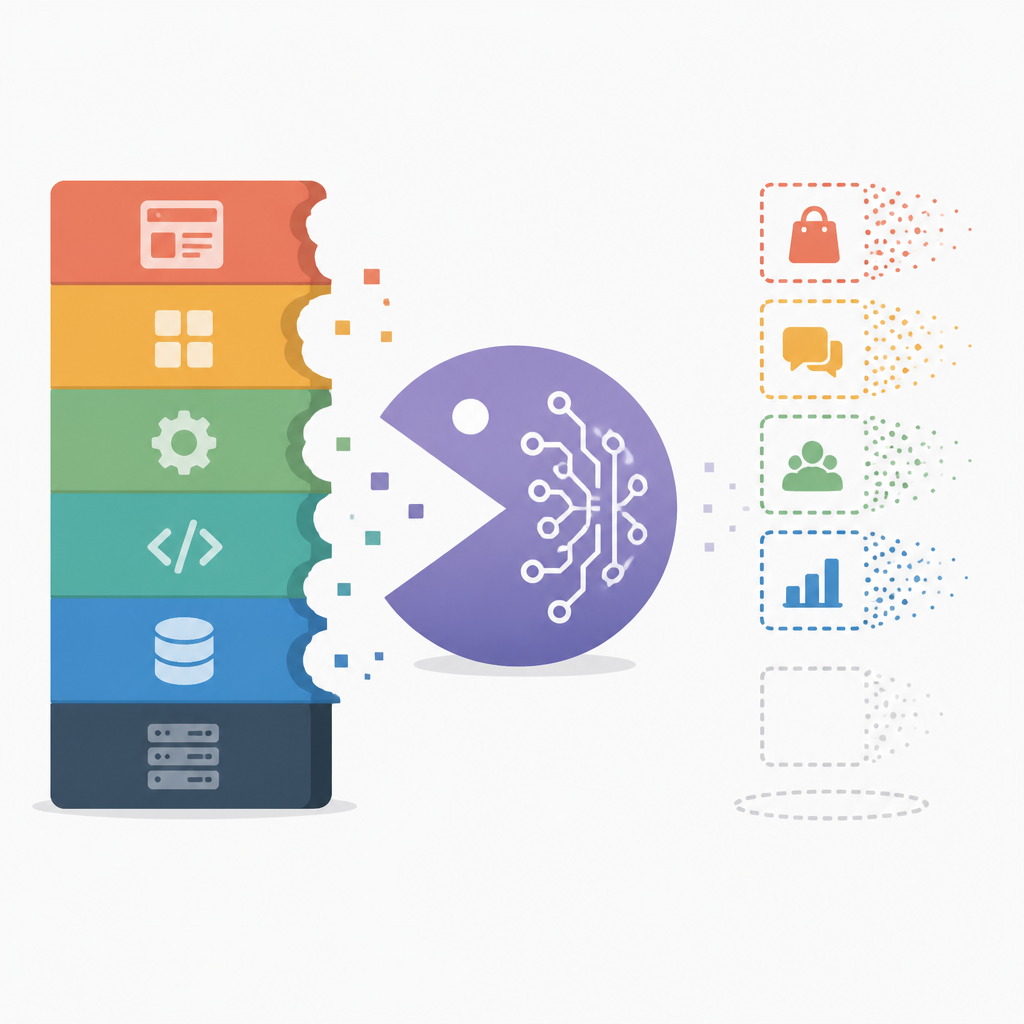
There is also a commercial argument. Even if model providers capture the technical layer, the market is large enough for thousands of application businesses to survive by serving vertical niches. History supports this in part. Cloud platforms did not eliminate SaaS. They created a larger market for it. The same pattern, defenders argue, should hold for AI.
That counter-argument is incomplete. Cloud did not erase SaaS because cloud infrastructure was mostly stable and neutral. AI models are not stable and neutral. They improve at the exact layer many apps depend on, and they increasingly ship with native product features that collapse what used to be separate software categories. I accept one limit: vertical software with real regulatory burden, proprietary data, or high-stakes workflow ownership will survive. But the broad middle of application software will not. If your product is a thin interface over general intelligence, the model company is not your partner. It is your replacement.
What to do with this
If you are an engineer, build where the model layer cannot easily move: proprietary data pipelines, evaluation systems, security controls, and workflow automation with real operational lock-in. If you are a PM, stop treating “AI feature” as a moat and start measuring whether your product owns outcomes, not screens. If you are a founder, assume the app layer will compress fast and design for depth, not breadth. The companies that survive will not be the ones that add AI. They will be the ones that become the system of record for work the model alone cannot own.
// Related Articles
- [IND]
OpenAI's gov partnerships turn access into policy
- [IND]
Kubernetes sets rules for AI-assisted maintainership
- [IND]
BYOA is the only path for vibe coding apps
- [IND]
This ML project index covers every skill level
- [IND]
Entire’s agent Git network fixes AI code trust
- [IND]
OpenAI’s 54% token-efficiency gain is the real AI coding battleground