Claude Fable 5 Gets Access Back in the US
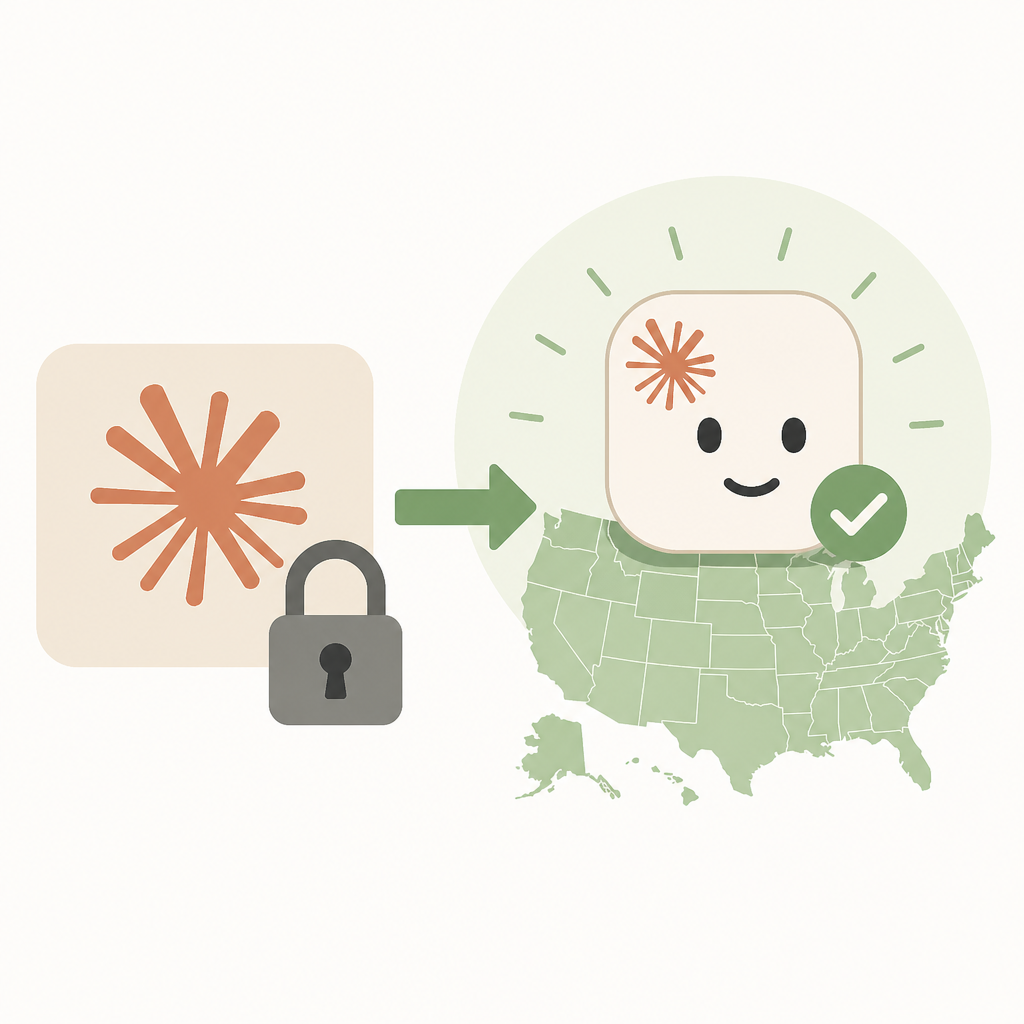
Anthropic says US export limits on Claude Fable 5 and Mythos 5 are lifted, with access restoration starting tomorrow.

US users can expect Claude Fable 5 and Mythos 5 access to come back soon.
I’ve been waiting for AI model access to stop feeling like a moving target. One week a model is available, the next week it’s wrapped in policy drama, regional restrictions, or some half-explained compliance note that sends you back to the drawing board. If you build anything real on top of these systems, that kind of instability is maddening. You do the work to wire prompts, tools, fallbacks, evals, and then the model disappears from under you because of export controls or a vendor decision you had no control over. That’s the part people skip when they talk about “model choice.” It’s not just taste. It’s access, continuity, and whether your stack can survive a vendor changing the rules midstream.
The source that triggered this write-up is a Zhihu post at zhuanlan.zhihu.com/p/2055639769871398111, which summarizes Anthropic’s announcement that the US Commerce Department has lifted export restrictions affecting Claude Fable 5 and Claude Mythos 5. I’m treating the Zhihu post as the trigger here, but the real thing to watch is Anthropic’s own follow-up and the official policy language from the US government. For reference, Anthropic’s main site is anthropic.com, and the US Department of Commerce is commerce.gov.
This is not a model launch. It’s an access repair
Get the latest AI news in your inbox
Weekly picks of model releases, tools, and deep dives — no spam, unsubscribe anytime.
No spam. Unsubscribe at any time.
Anthropic announced that the US Department of Commerce has lifted export controls on Claude Fable 5 and Claude Mythos 5, and the company will begin restoring access starting tomorrow.
What this actually means is boring in the best possible way: the models are not being reintroduced as shiny new products, they’re being made usable again for people who were already blocked. That distinction matters. If you’re shipping on top of a model, “new version” and “restored access” are completely different operational events. A new version means migration work. Restored access means the model was already in your plan, and now you can stop treating it like a dead dependency.

I’ve run into this exact mess before with hosted AI APIs. You build around a model name, then region rules or policy restrictions kick in and suddenly your app has a split-brain problem: some users can reach the model, others can’t, and your support inbox becomes a compliance tutorial nobody asked for. When access comes back, the first thing I want is not a marketing blog post. I want a clear status page, a rollout window, and a straight answer on whether the model ID stays the same.
How to apply it: if you depend on a hosted model, separate “model availability” from “model behavior” in your architecture. Keep your provider abstraction thin, keep your fallback path tested, and log every access failure with region and account metadata. If access returns, you want to flip one switch, not rework your whole stack.
Export controls are a product problem, not just a policy problem
People love to talk about export controls like they live in a government memo somewhere far away from engineering. They don’t. They show up in your deployment plan, your procurement process, your customer onboarding, and your incident response. If Anthropic really is resuming access after the Commerce Department lifted restrictions, that tells me the bottleneck wasn’t model quality. It was permission.
That’s the annoying part for developers. We tend to assume the hard part is inference, latency, or prompt quality. Sometimes the hard part is just whether your users are allowed to touch the thing you built on. I don’t mean that as a philosophical complaint. I mean it literally: the model can be good, your code can be good, and your product can still be unusable because access is gated by geography or regulation.
How to apply it: treat policy constraints like runtime constraints. Write them down in your system design docs. Add a line item for restricted regions, restricted accounts, and restricted capabilities. If you sell software to companies with compliance teams, don’t bury this in legal fine print. Put it in the implementation plan. Otherwise you’ll be the person explaining why the demo works in one country and fails in another.
- Track model access by region, account type, and deployment environment.
- Keep a fallback model ready for restricted users.
- Document which features break when a provider changes availability.
Why model names matter more than people admit
Claude Fable 5 and Claude Mythos 5 are not just labels. In practice, they’re contracts. A model name tells your app what behavior to expect, what tests to run, and what regressions to fear. When access disappears, the name becomes a dead endpoint in your codebase. When access returns, the name becomes a dependency you need to re-validate before you trust it again.
I’m always suspicious when teams say, “We can swap models later.” Sure, in theory. In production, model swaps are usually a pile of hidden assumptions. Your prompt works because one model is tolerant of verbosity. Your tool-calling succeeds because another model emits cleaner JSON. Your retrieval setup works because the model follows context better than the fallback. Then access changes and all those assumptions get exposed.
How to apply it: version your prompts alongside model IDs. Don’t just store “Claude”; store the exact model, the temperature, the tool schema, and the eval set that matched it. If Fable 5 or Mythos 5 comes back into your environment, run it through the same acceptance checks you’d use for any new dependency. Restoration is not the same as trust.
If you want a reference point for model documentation discipline, Anthropic’s docs are here: docs.anthropic.com. That’s where I’d start before I let any restored model back into a production path.
The real work starts after access returns
Everyone gets excited when a blocked tool becomes available again. Then the actual engineering starts. You have to figure out who gets access first, whether old keys still work, whether rate limits changed, and whether your retries are going to stampede the provider the moment the switch flips. That’s where these announcements usually get messy.
I’ve seen teams celebrate a provider recovery and then immediately break their own app because they assumed the outage ended cleanly. It rarely does. There’s usually a lag between “policy lifted” and “all accounts restored,” and that lag is where your support load spikes. If Anthropic starts restoring access tomorrow, I’d expect a phased rollout, not a magical instant return for everyone.
How to apply it: build a restoration checklist. It should include key rotation checks, account verification, quota validation, and a smoke test for your highest-value workflow. If the model is used in an agent loop, test the loop end to end. If it’s used for structured output, test the parser against real outputs, not your happiest-path sample.
- Verify whether old API keys still authenticate.
- Run a smoke test on every critical prompt template.
- Check whether latency and error rates changed after restoration.
What I’d watch next if I depended on Claude
If I were running production traffic on Claude models, I’d be watching three things: the official Anthropic announcement, the exact scope of the restored access, and whether the restored models keep their original identifiers or come back with new routing rules. Those details decide whether this is a simple unblock or a migration disguised as one.
I’d also keep an eye on whether the restored access is universal or limited. The Zhihu post says Anthropic will begin restoring access starting tomorrow and will publish more details later. That phrasing matters. “Starting tomorrow” is not the same as “fully restored now.” It usually means there’s a staged rollout and some users will get it before others.
How to apply it: don’t update your product docs until the provider’s own status page and docs confirm the change. If you have customers asking whether Claude Fable 5 or Mythos 5 is back, answer carefully. Say what’s confirmed, say what’s pending, and don’t invent certainty just because the headline sounds clean.
For anyone who wants the official source trail, I’d keep these links handy: Anthropic at anthropic.com, Anthropic docs at docs.anthropic.com, and the US Department of Commerce at commerce.gov. If the policy change gets a formal notice, that’s the document I’d trust before I moved anything in production.
The template you can copy
# Model Access Restoration Checklist

## Event
- Provider: Anthropic
- Models: Claude Fable 5, Claude Mythos 5
- Change type: Access restoration
- Effective date: [fill in]

## What changed
- Access status: [restricted / restored / partial]
- Regions affected: [fill in]
- Accounts affected: [fill in]
- API keys impacted: [fill in]

## What I need to verify
1. Authentication still works with existing keys
2. The model ID has not changed
3. Rate limits are documented and unchanged
4. Tool calling still returns valid structured output
5. Latency is within acceptable bounds
6. Fallback model still works if access drops again

## Smoke tests
- Simple text generation
- Structured JSON output
- Tool invocation
- Multi-turn conversation
- Agent loop with retries

## Rollout plan
- Phase 1: internal testing
- Phase 2: limited customer rollout
- Phase 3: full production traffic

## Support notes
- What users may see if access is partial
- What error message to show if the model is unavailable
- Who to contact if restoration fails

## Product note
Do not announce full availability until provider status, docs, and live tests all match.
This template is mine, not Anthropic’s. It’s a practical wrapper I’d use any time a hosted model comes back after a policy or access disruption. The underlying story and the access-restoration claim come from the Zhihu post at https://zhuanlan.zhihu.com/p/2055639769871398111; everything else here is my own developer-facing interpretation.
// Related Articles
- [TOOLS]
RustRover 2026.1.4 is the right default IDE for Rust teams
- [TOOLS]
Claude Design setup for synced prototypes
- [TOOLS]
Rust 1.96 turns ranges into safer copies
- [TOOLS]
AI Data Operations vs MLOps: what each owns
- [TOOLS]
OpenTag turns Slack threads into actions
- [TOOLS]
GPU VRAM Needed for LLM Fine-Tuning in 2026