Claude Partner Network 2026 tiers and join steps
Join Anthropic's Claude Partner Network by meeting tier requirements and shipping production customer deployments.

How do agencies join the Claude Partner Network in 2026?
This guide shows the 2026 Claude Partner Network tiers and the steps to qualify.
If you run a software agency, consultancy, or AI services firm, this guide is for you. After following the steps, you'll know the Services Track tiers, the published requirements for each tier, and the fastest path to a first promotion.
You will also see how the Claude Partner Hub fits in, what counts as progress, and why production deployments matter more than certifications alone.
Before you start
Get the latest AI news in your inbox
Weekly picks of model releases, tools, and deep dives — no spam, unsubscribe anytime.
No spam. Unsubscribe at any time.
- Anthropic account for your partner team
- Access to the Anthropic docs and the Claude Partner Network page
- At least 1 internal owner for partner ops
- Claude-certified practitioners you can schedule for exams
- Customer projects that can reach production within 12 months
- A delivery stack for production apps, such as Totalum, Next.js, or similar
- Permission to publish customer stories when projects go live
Step 1: Map the Services Track tiers
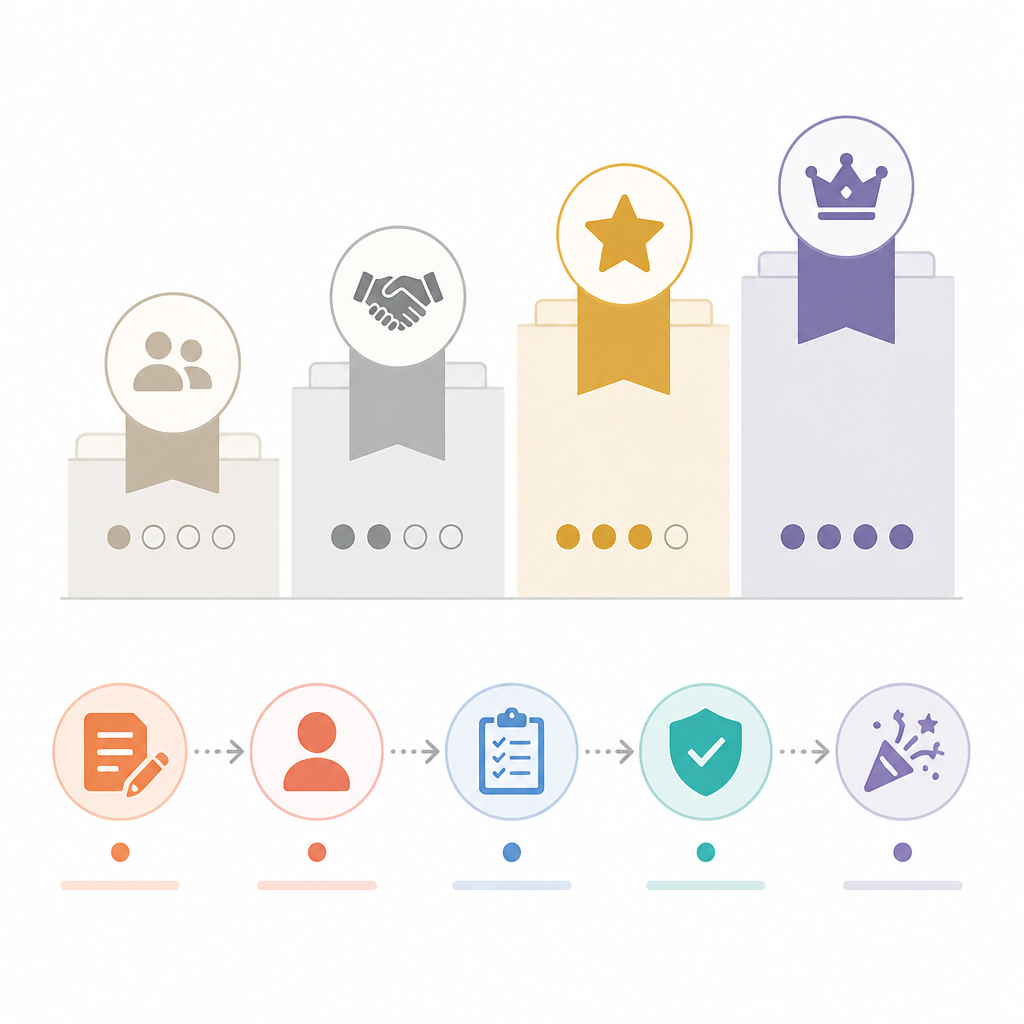
Your first outcome is a clear target. The Claude Partner Network Services Track has three tiers: Select, Preferred, and Global Premier. Each tier raises the bar for active Claude-certified individuals, joint customer deployments in production over the trailing 12 months, and public customer stories.

The published thresholds are straightforward: Select requires 10 certified individuals, 2 production deployments, and 1 public story. Preferred requires 100 certified individuals, 15 deployments, and 3 public stories. Global Premier requires 1,000 certified individuals, 100 deployments across 3 or more regions, and 15 public stories plus a joint business plan with named executive sponsors.
Verification: you should be able to write your current headcount, deployment count, and story count next to each tier and see exactly which gap blocks promotion.
Step 2: Register your team for Claude certification
Your next outcome is a certification plan that can actually be executed. Anthropic's Partner Academy is where individuals earn the Claude certifications that count toward the Services Track. Start by assigning a certification owner, choosing the first 10 practitioners, and booking exam dates on a calendar.
Certification plan checklist
- Pick 10 practitioners
- Book Partner Academy exam dates
- Track active certifications by name
- Renew before expiration
- Review counts before each promotion window
Verification: you should see named people, booked exam slots, and a live tracker that shows how many active certifications are ready for the next review window.
Step 3: Ship two production customer deployments
Your third outcome is the real gate to Select. Anthropic counts joint customer deployments in production, not demos or pilots. That means you need two customer apps live in production within the trailing 12 months, with a clear link to your partner work.
To move faster, build around a repeatable delivery template. Many agencies use Claude for the orchestration layer and an app builder or web stack for the production app itself. The point is to reduce the time spent on auth, database setup, deployment, and other wiring so your team can focus on the Claude integration work that differentiates the engagement.
Verification: you should see two live customer deployments, each with a production URL, an owner, and internal notes proving the project is deployed rather than in pilot.
Step 4: Publish one customer story
Your fourth outcome is proof that buyers can see. Select requires one public customer story, and the higher tiers require more. The story can be a case study, a blog post, or another public reference that shows the customer outcome and names the Claude-powered work.
Make the story part of your delivery process. Ask for approval before launch, collect a short quote while the project is fresh, and publish the story soon after the deployment goes live. That keeps your promotion packet from stalling on marketing paperwork.
Verification: you should see one live story link, a customer-approved quote, and a note that the story maps to a deployed production project.
Step 5: Use the Claude Partner Hub to track promotion readiness
Your fifth outcome is a daily view of readiness. Anthropic says the Claude Partner Hub shows your standing against the published requirements and refreshes daily. It also helps customers find qualified firms by track, tier, certifications, and region.
Use the Hub as your source of truth before each review window on January 1 and July 1, with the extra October 1 window available in 2026. Check certification counts, deployment counts, and story counts early enough to fix any gaps before the review date.
Verification: you should see the same numbers in your internal tracker and in the Partner Hub, with no surprises when the next review window opens.
Step 6: Package your delivery offer around production wiring
Your final outcome is a partner offer that sells faster than your competitors. Agencies win more Claude work when they can ship the surrounding application quickly, not just the model integration. That means packaging auth, database, file storage, hosting, custom domains, and admin tooling as a repeatable production layer.
If you use an AI app builder such as Totalum, Claude can orchestrate the build through MCP while your team focuses on prompts, tools, evals, and customer outcomes. That shortens the path from signed deal to deployed app, which helps you hit the deployment thresholds that matter for tier promotion.
Verification: you should have a named service offer, a repeatable build template, and a delivery timeline that is shorter than your previous Claude projects.
| Metric | Before/Baseline | After/Result |
|---|---|---|
| Services Track tiers | Loose partner directory | Select, Preferred, Global Premier |
| Select requirements | No published threshold | 10 certified, 2 deployments, 1 story |
| Preferred requirements | No published threshold | 100 certified, 15 deployments, 3 stories |
| Global Premier requirements | No published threshold | 1,000 certified, 100 deployments, 15 stories, 3+ regions |
| Review cadence | Ad hoc promotion timing | January 1, July 1, and October 1 in 2026 |
Common mistakes
- Counting pilots as deployments. Fix: only track customer systems that are live in production and tied to partner work.
- Waiting to start stories until the end. Fix: collect approval and quotes as soon as each project launches.
- Optimizing for certifications only. Fix: balance exam scheduling with a pipeline of deployable customer engagements.
What's next
Once your first tier is within reach, build a repeatable pipeline for certifications, production deployments, and customer stories so each review window becomes a promotion check, not a scramble.
// Related Articles
- [AGENT]
Claude cross-session messaging setup for teams
- [AGENT]
ChatGPT now remembers your Mac work history
- [AGENT]
Grok Bot turns browser chores into cloud work
- [AGENT]
Agent Plugins 1.0.0 turns skills into folders
- [AGENT]
FaithEyes lets you train tool-faithful vision agents
- [AGENT]
Connect Qwen 3.8 Max to CLI Agents