Trump adviser accuses Moonshot AI of stealing Anthropic
A White House adviser says Moonshot AI copied Anthropic models and used restricted Nvidia servers as US-China AI tensions rise.

A White House adviser says Moonshot AI copied Anthropic models and used restricted Nvidia servers.
China’s Moonshot AI is under fresh scrutiny after a White House adviser accused it of stealing capabilities from Anthropic and training on restricted Nvidia hardware. The allegation lands just as Moonshot prepares to release Kimi K3 as an open-source model on 27 July.
| Fact | Detail |
|---|---|
| Accusation | Moonshot AI allegedly used distillation from Anthropic’s Fable AI |
| Model release date | 27 July |
| Chip platform | Nvidia GB300 Grace Blackwell |
| US export restriction year | 2022 |
What the White House adviser actually alleged
Get the latest AI news in your inbox
Weekly picks of model releases, tools, and deep dives — no spam, unsubscribe anytime.
No spam. Unsubscribe at any time.
Michael Kratsios, Donald Trump’s science and technology adviser, said on X that the US government has information suggesting Moonshot AI carried out a “large scale” effort to extract capabilities from top American AI systems. He said the method was distillation, where a weaker model learns by repeatedly querying a stronger one and absorbing its responses.
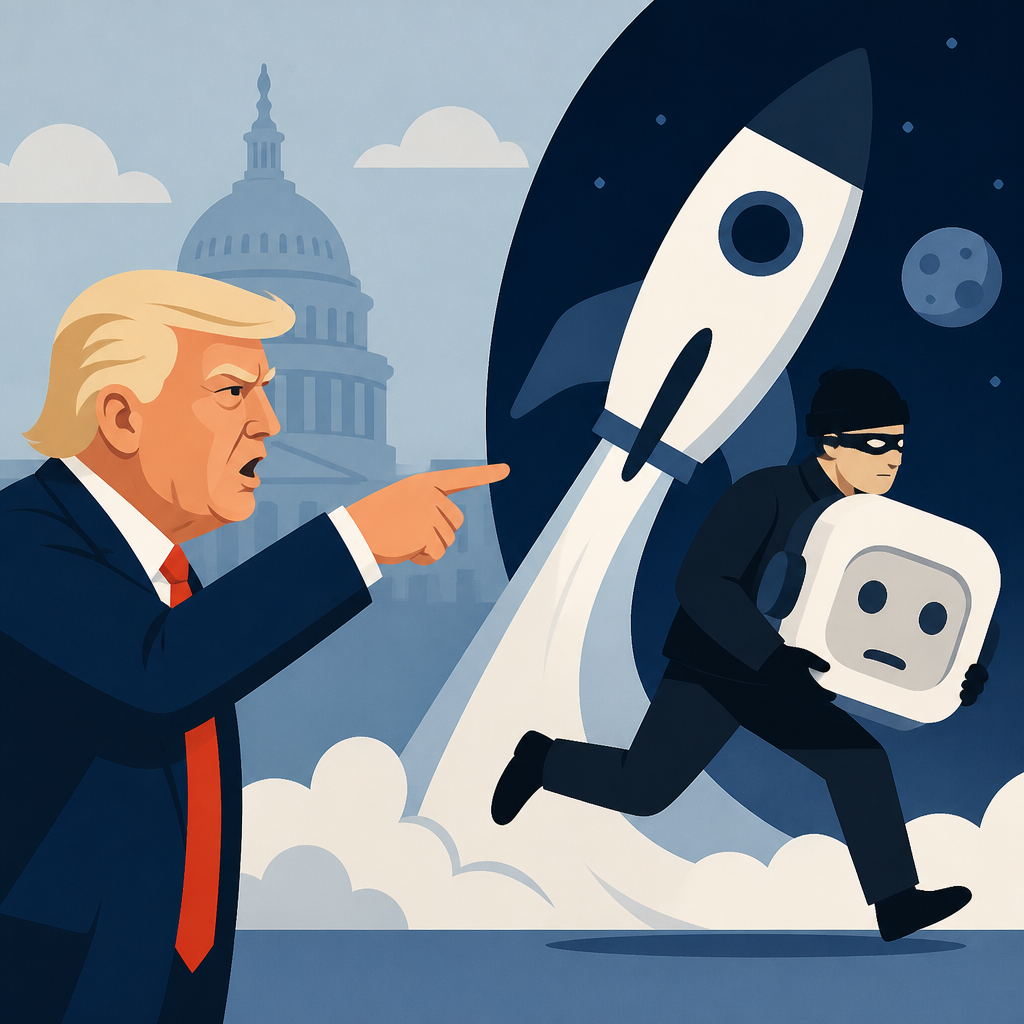
That is a serious charge because distillation sits in a gray zone between inspiration and theft. If a company trains a model by feeding it another model’s outputs at scale, it can end up with behavior that looks close to the original without paying the original developer.
Kratsios also said Moonshot likely used restricted Nvidia servers, including systems built on the GB300 Grace Blackwell platform. The claim matters because Washington tightened controls on advanced chip exports to China in 2022, then spent the next two years trying to stop smuggling routes and third-country workarounds.
- Kratsios said the alleged copying targeted Anthropic’s Fable AI.
- He said the training may have involved Nvidia GB300 Grace Blackwell servers.
- Moonshot’s Kimi K3 drew attention after its unveiling last week.
- Moonshot plans to release Kimi K3 openly on 27 July.
Why distillation has become a political fight
Distillation is common in AI development. Teams use it to shrink large models into cheaper systems that can run faster or cost less. The problem comes when the source model is proprietary and the output is used to build a competing product.
That is exactly the line Anthropic has been pressing Congress to police. In June, the company said Chinese e-commerce giant Alibaba had “illicitly” extracted capabilities from Claude models using distillation attacks. Anthropic then urged lawmakers to penalise companies behind such attacks and tighten protections around US AI technology.
“Open source is not open season on American IP,” said US Treasury Secretary Scott Bessent on social media.
Bessent’s comment came after he said the US would examine whether Chinese AI models had stolen capabilities from American rivals. He also said sanctions would be on the table if Chinese companies crossed the line into intellectual property theft through what he called “industrial-scale distillation attacks.”
The language is doing a lot of work here. Washington is no longer treating model copying as a narrow licensing dispute. It is framing it as industrial espionage with national-security implications, especially when the target models are tied to frontier AI research.
Moonshot’s Kimi K3 changes the pressure level
Moonshot’s timing makes the accusation sharper. The company said Kimi K3 can rival top US technology, and the model’s open-source release means developers and hobbyists will be able to download and customise it freely. That broad access will also make it easier for outsiders to inspect how much of the model looks like borrowed behavior versus original training.
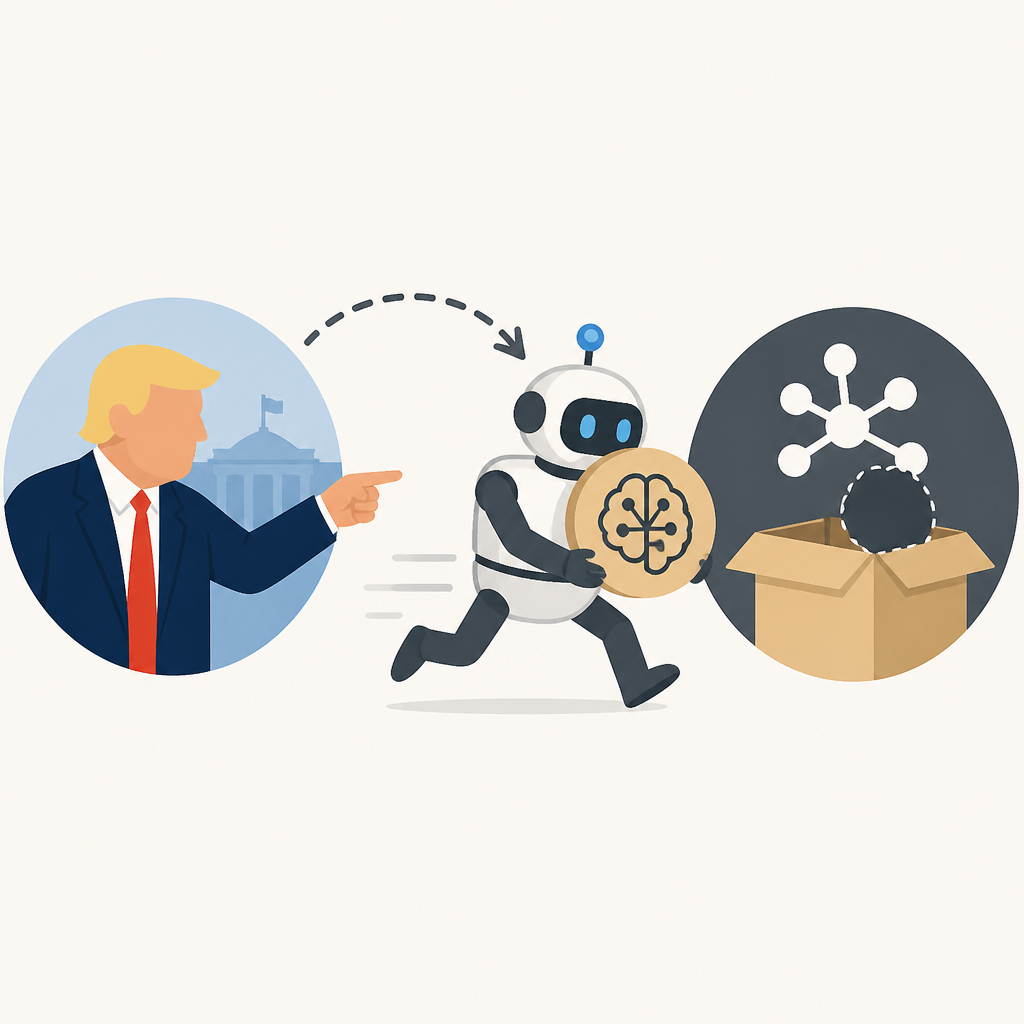
Open-source release is where the politics get messy. US firms often praise open models for accelerating innovation, but they also worry those models can be copied, fine-tuned, and turned into commercial products by competitors with fewer legal constraints. Chinese firms make the opposite argument, saying open access is part of global AI progress.
- Moonshot says Kimi K3 can rival leading US models.
- The model will be freely downloadable and customisable.
- Open-source release may make independent analysis easier.
- The release also raises the risk of faster cloning by competitors.
China’s embassy in Washington pushed back by pointing to remarks from foreign ministry spokesperson Lin Jian, who said Beijing opposes the politicising of trade and tech issues. Lin said China’s AI development is based on “joint contribution for shared benefit” and urged a “people-centred approach.”
That response follows a familiar pattern: Washington accuses, Beijing denies, and both sides wrap the dispute in larger claims about fairness, innovation, and national interest. The difference this time is that the US is pairing the accusation with talk of sanctions and export controls, which gives the issue real commercial weight.
What this means for the US-China AI race
The Moonshot case is part of a broader US effort to slow the spread of advanced AI know-how into China. The White House said in April that it would work more closely with American AI companies to counter “industrial-scale campaigns” by foreign rivals to steal technology. Kratsios said those campaigns were meant to “systematically undermine American research and development and access proprietary information.”
That framing matters because it suggests the US is moving from reactive enforcement to active coordination with model makers. If that continues, companies like Anthropic, OpenAI, and Nvidia could become both witnesses and policy partners in the same fight.
There is also a diplomatic layer. Trump is expected to meet Xi Jinping in September, and AI theft allegations are the kind of issue that can harden positions before any summit. Even if no formal penalties arrive immediately, the public accusation raises the cost of silence for both governments.
For developers, the practical question is simpler: how much trust can you place in an open model when its training path is under dispute? If the US starts treating distillation as a sanctionable offense, more AI labs will need better audit trails, clearer provenance records, and stricter controls around model access.
My read is that this story will not end with one accusation. The more likely next step is a wave of compliance checks, export-control pressure, and model audits that make cross-border AI development slower and more expensive. The open question is whether the industry can keep open-source AI useful without turning every major release into a legal fight.
// Related Articles
- [IND]
WAIC 2026 turns AI hype into real work
- [IND]
KPMG’s OpenAI deal turns SaaS into agents
- [IND]
Vector databases will reshape financial search, not replace core syst…
- [IND]
Milvus 3.0 adds lake-native vector search
- [IND]
Google’s Q2 2026 results prove AI spend is now the story
- [IND]
AI regulation in India is now a business risk