Gemini 3.5 Flash makes computer use a default, not a demo
Google is right to make computer use a native Gemini 3.5 Flash feature.

Google is right to make computer use a native Gemini 3.5 Flash feature.
Google has made the correct move: computer use should live inside the main model, not sit off to the side as a separate experiment. With Gemini 3.5 Flash, the company says developers can build agents that see, reason, and act across browser, mobile, and desktop environments, and it points to long-horizon work like software testing and enterprise automation as the real target. That is the right product shape for a capability that only matters when it is embedded in everyday workflows.
Native integration beats a bolt-on model
Get the latest AI news in your inbox
Weekly picks of model releases, tools, and deep dives — no spam, unsubscribe anytime.
No spam. Unsubscribe at any time.
The strongest reason to support this launch is simple architecture. Google says computer use was previously only available as a standalone Gemini 2.5 model, and now it is integrated natively in Gemini 3.5 Flash. That matters because agentic systems work best when planning, tool use, and action selection happen in one model path instead of being stitched together from separate services.
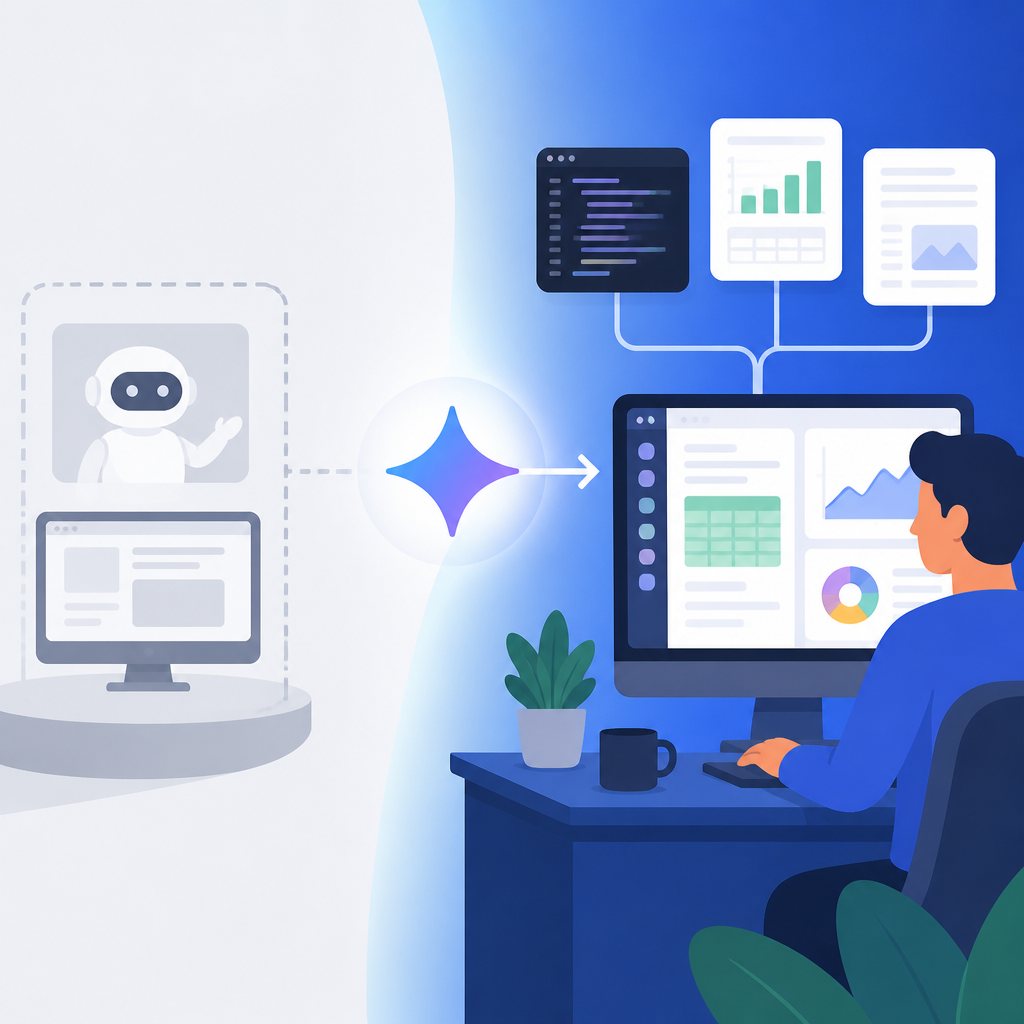
There is also a developer productivity angle. A built-in tool means fewer moving parts, less orchestration overhead, and a more direct path from prompt to action. If a team wants an agent that can navigate a browser, fill a form, or inspect a desktop app, it is better to call one model with one set of safety controls than to juggle a general model plus a special-purpose computer-use endpoint.
Enterprise automation needs model-level computer use
Google is aiming at the right workload class: long-horizon and enterprise automation. The company explicitly calls out continuous software testing and knowledge work across professional applications. Those are not toy demos. They are the kinds of tasks where agents must survive context drift, switch between interfaces, and keep working without a human reissuing the same instruction every few minutes.
The examples in the post reinforce that point. Google says 3.5 Flash can analyze the Gemini app and return a categorized list of features, and it can audit its own documentation for accessibility issues. Those are mundane but valuable jobs, which is exactly what enterprise buyers want. They do not want a flashy agent that wins a benchmark and fails on Tuesday afternoon when a UI changes. They want repeatable labor reduction.
Safety is the real product, not just the model
Computer use in live environments is risky by design. Google acknowledges prompt injection and says it trained the model adversarially for those attacks. It also adds two enterprise safeguards: explicit user confirmation for sensitive or irreversible actions, and automatic stopping when indirect prompt injection is identified. That is the right admission. The value of computer use rises only when the safety layer is serious enough for real deployment.
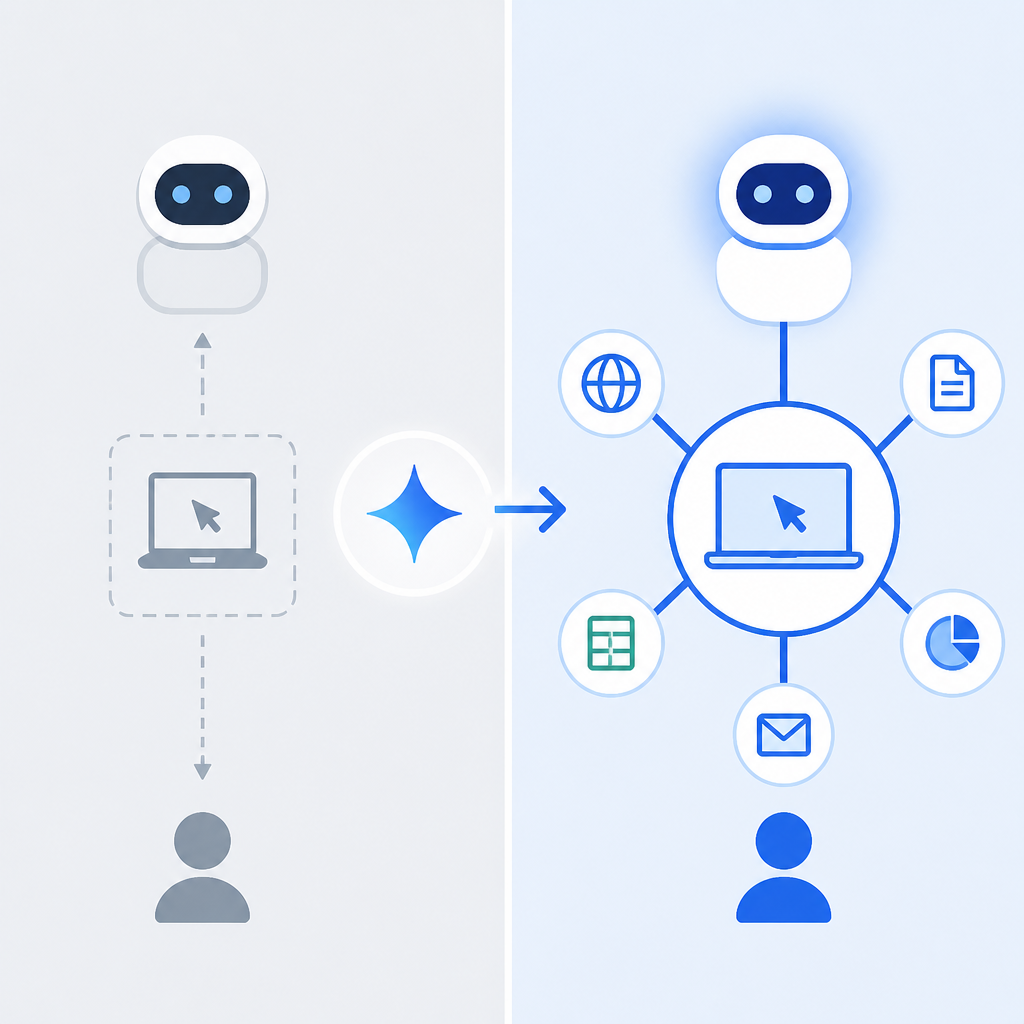
The company’s defense-in-depth framing is the part to take seriously. It tells developers to combine the model with secure sandboxing, human-in-the-loop verification, and strict access controls. That is not a marketing flourish; it is the minimum viable operating model for agents that click around inside real software. The launch is strongest where it treats safety as a system property rather than a checkbox.
The counter-argument
The skeptical view is straightforward: putting computer use inside a flagship model invites overreach. If an agent can operate across browser, mobile, and desktop, then mistakes are no longer abstract. A bad action can delete data, send an email, or change a setting. Critics will also say the feature risks encouraging teams to automate too quickly, before they have the controls and monitoring needed for high-stakes workflows.
That concern is valid, and Google does not erase it. But it is not an argument against integration; it is an argument for constraints. A separate model would not make agents safer by itself. What reduces risk is explicit confirmation, injection detection, sandboxing, and access control. Google has shipped those guardrails alongside the capability, which is exactly how a serious platform should introduce a powerful tool.
What to do with this
If you are an engineer or PM, treat Gemini 3.5 Flash computer use as infrastructure for tightly scoped workflows, not a blank check for autonomous action. Start with tasks that are repetitive, observable, and reversible, then wrap them in confirmation gates, logs, and rollback paths. If you are a founder, the opportunity is to build the workflow layer around this capability: the business value will come from reliable agent design, not from the raw act of clicking buttons.
// Related Articles
- [MODEL]
August 2026 model rankings: Claude leads text, Kimi coding
- [MODEL]
Qwen3.8-Max pushes Alibaba into the top tier
- [MODEL]
Qwen3.8-Max proves that agentic work is the real frontier
- [MODEL]
Google Earth Should Not Ship AI Image Generation
- [MODEL]
Try Claude Opus 4.7 and read its benchmarks
- [MODEL]
Opus 5 lets you cut cost without losing quality