Google launches Gemini 3.5 Live Translate audio model
Google unveiled Gemini 3.5 Live Translate, an audio model for live speech-to-speech translation.

Google unveiled Gemini 3.5 Live Translate, an audio model for live speech-to-speech translation.
Google said on Tuesday that Gemini 3.5 Live Translate is built for live speech-to-speech translation, a use case that matters far more than a demo clip. If the model works well in real conversations, it could reduce the awkward lag that makes current translation tools feel mechanical.
The announcement is short on technical detail, but the product direction is clear: Google wants audio translation to feel immediate, natural, and useful in live settings. That puts the company in direct competition with other AI audio systems that try to keep pace with fast, messy human speech.
| Item | What Google said | Why it matters |
|---|---|---|
| Model | Gemini 3.5 Live Translate | New audio model for live translation |
| Announcement date | Tuesday | Fresh product news, not a long rollout |
| Use case | Speech-to-speech translation | Targets real-time conversation |
| Ticker | GOOG, GOOGL | Public market relevance |
What Google actually announced
Get the latest AI news in your inbox
Weekly picks of model releases, tools, and deep dives — no spam, unsubscribe anytime.
No spam. Unsubscribe at any time.
The core message is simple: Google introduced a new audio model that translates speech as people talk. That is different from a text-first translation system pasted onto audio after the fact. In live settings, timing matters almost as much as accuracy, because even a good translation feels awkward if it arrives too late.
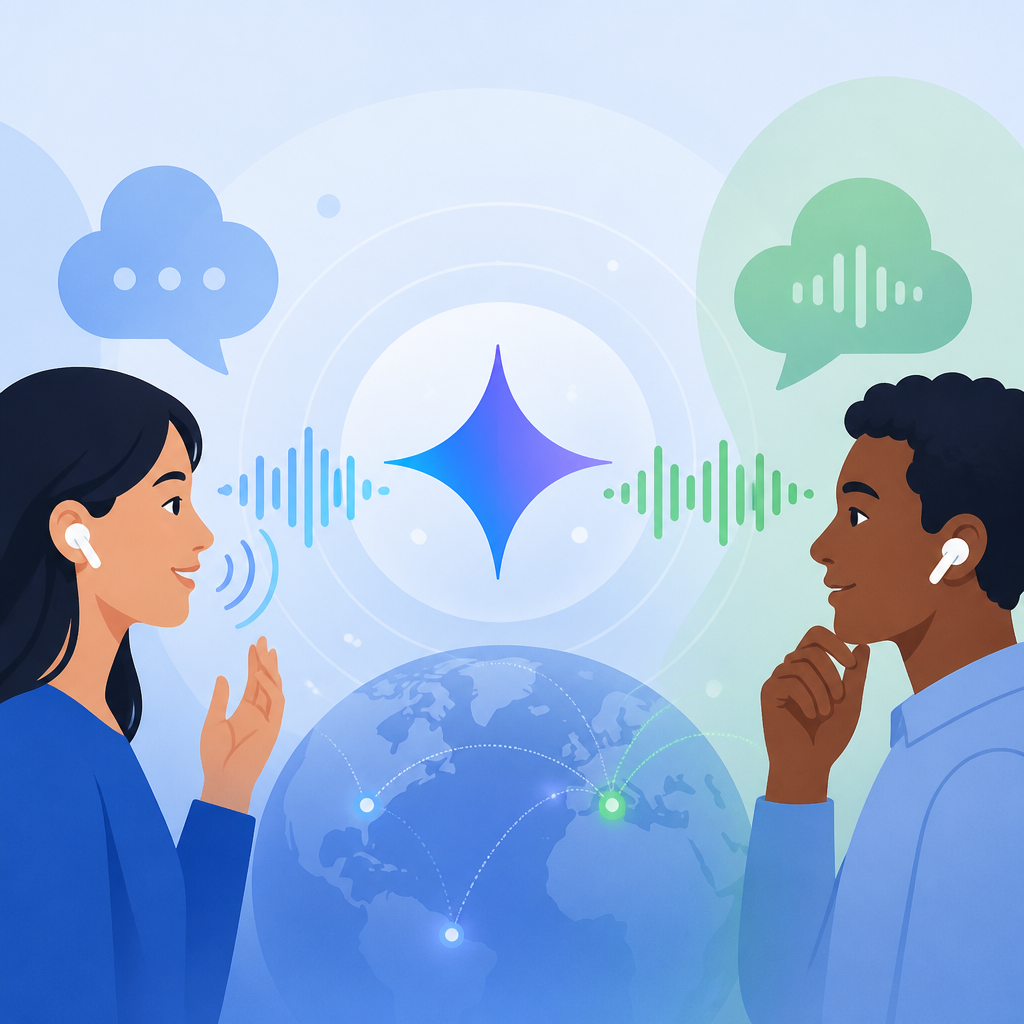
Google has spent years pushing its AI products into more natural conversation formats, and this update fits that pattern. The company did not publish benchmark scores or a long technical paper in the source material, so the announcement is better read as a product signal than a full research release.
For developers and product teams, the interesting part is not the brand name. It is the direction: audio models are moving from batch processing toward interactive use, where latency, turn-taking, and speech quality all matter at once.
- Speech-to-speech translation aims to preserve the flow of conversation.
- Live audio models need to handle accents, interruptions, and partial phrases.
- Product value depends on latency as much as raw translation quality.
- Real-world usefulness will matter more than lab-style demos.
Why live translation is harder than it sounds
Anyone who has used a translation app in a noisy room knows the problem. Human speech is incomplete, overlapping, and full of filler words. A model has to decide when a sentence is finished, what the speaker meant, and how to render that meaning in another language without making the conversation feel robotic.
That is why live speech translation is a more demanding task than ordinary transcription. The system needs to hear, interpret, and respond quickly enough that the other person can keep talking without constant pauses.
“The future of machine translation is speech-to-speech,” says Marta R. Costa-jussà, a researcher in multilingual NLP and speech translation.
That quote captures the direction of the field, even if Google has not yet shared the engineering details behind this release. The market has already moved past simple text translation. The real competition now is about whether AI can keep up with live human conversation without making people wait or repeat themselves.
How this compares with other AI audio efforts
Google is entering a crowded area, even if the source article is light on rivals. The broader AI market already includes speech and voice products from OpenAI, Anthropic, and Microsoft, each pushing conversational AI in different directions. Translation is one of the most practical places to test whether these systems can do more than chat.
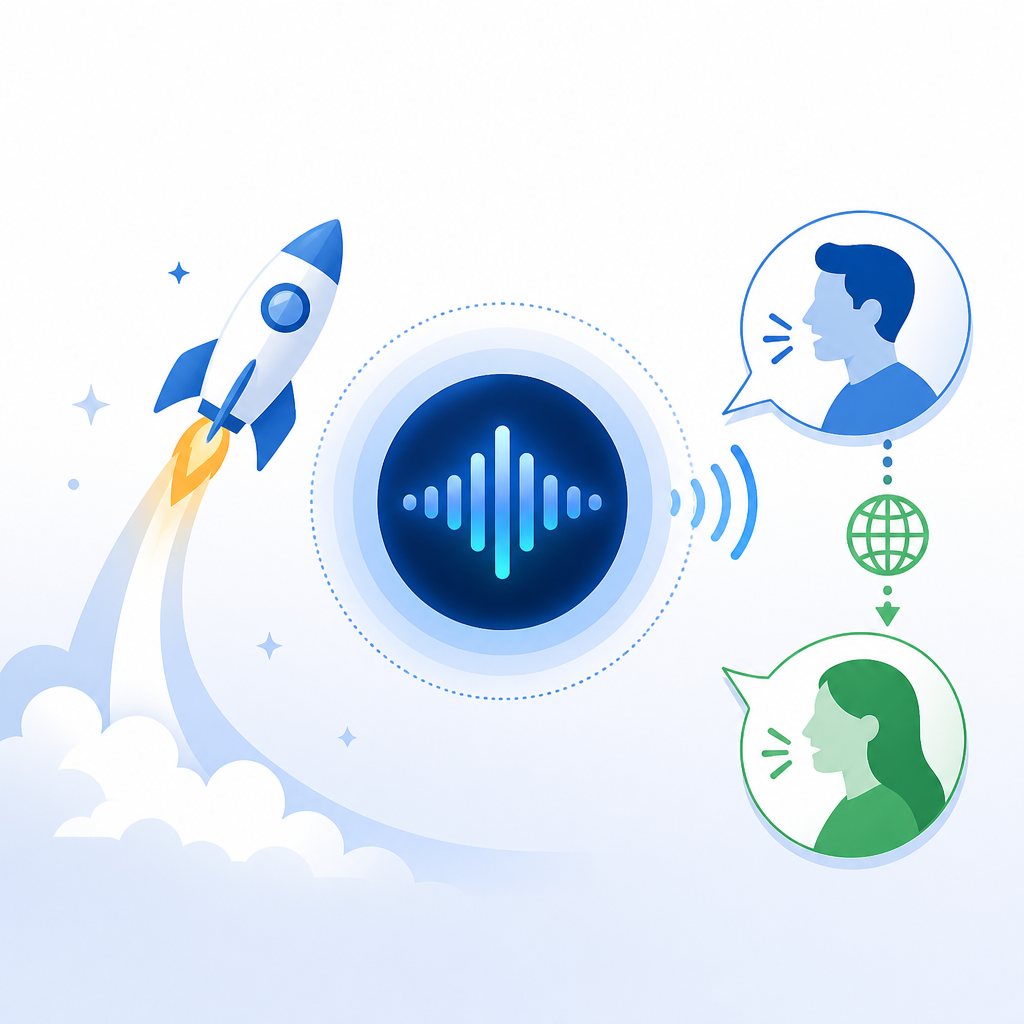
What matters in this category is measurable performance. A useful live translator has to keep latency low, avoid hallucinating words that were never spoken, and stay stable across different voices and environments.
- OpenAI has focused heavily on voice and multimodal interaction in its recent products.
- Microsoft keeps pushing speech features through its AI stack and enterprise software.
- Google AI has the distribution advantage of Search, Android, and Workspace.
- Live translation is useful in travel, customer support, and multilingual meetings.
Google’s advantage is obvious: it can ship AI features across products that billions of people already use. If Gemini 3.5 Live Translate reaches Android devices, Meet, or other Google services, adoption could happen fast. The harder part is proving that the model is reliable enough for real business use, not just casual conversation.
What to watch next
The next update that matters is not another teaser. It is a demo with numbers: latency, supported languages, error rates, and whether the model can handle real-world audio without drifting off course. Until Google publishes those details, this release is best understood as an opening move in a larger push toward live AI translation.
For now, the signal is clear. Google wants Gemini to do more than answer questions and generate text. It wants the model to sit in the middle of a spoken conversation and translate in real time. If the company can make that work at scale, the next question is simple: which Google product gets it first?
That answer will tell developers a lot about where Google thinks live audio AI fits best, and whether this is a feature for consumers, enterprises, or both.
// Related Articles
- [MODEL]
August 2026 model rankings: Claude leads text, Kimi coding
- [MODEL]
Qwen3.8-Max pushes Alibaba into the top tier
- [MODEL]
Qwen3.8-Max proves that agentic work is the real frontier
- [MODEL]
Google Earth Should Not Ship AI Image Generation
- [MODEL]
Try Claude Opus 4.7 and read its benchmarks
- [MODEL]
Opus 5 lets you cut cost without losing quality