John Jumper’s move shows how AI labs bleed talent
I break down John Jumper’s move from Google DeepMind to Anthropic and what it says about AI lab retention.

John Jumper’s move from DeepMind to Anthropic is a clean lesson in AI talent churn.
I’ve been watching AI lab hiring for a while now, and honestly, it keeps feeling a little too familiar. Big lab, huge compute, glossy demos, then another senior researcher quietly walks out the door. That’s the part people keep trying to dress up as normal. It isn’t normal if you’re the one trying to ship a roadmap and your best people keep getting poached by the next shiny lab with a tighter story and a cleaner mission.
This Reuters item, published at reuters.com, says senior research scientist John Jumper will leave Google DeepMind to join Anthropic. Reuters doesn’t give a star count, a bookmark count, or any of the social-media confetti people love to wave around. What it does give us is the signal that matters: a named researcher leaving one of the most visible AI labs for another one.
This is not a headline about one person, it’s about gravity
Get the latest AI news in your inbox
Weekly picks of model releases, tools, and deep dives — no spam, unsubscribe anytime.
No spam. Unsubscribe at any time.
Senior research scientist John Jumper said on Friday he would leave Google DeepMind to join AI startup Anthropic, the latest high-profile departure at the Big Tech giant's AI lab.
What this actually means is simple: the center of gravity in AI research is still moving, and people with leverage over model quality know it. When a senior scientist leaves, the story isn’t just “someone changed jobs.” It’s “they made a bet on where the best work, best peers, and best odds of impact now live.”
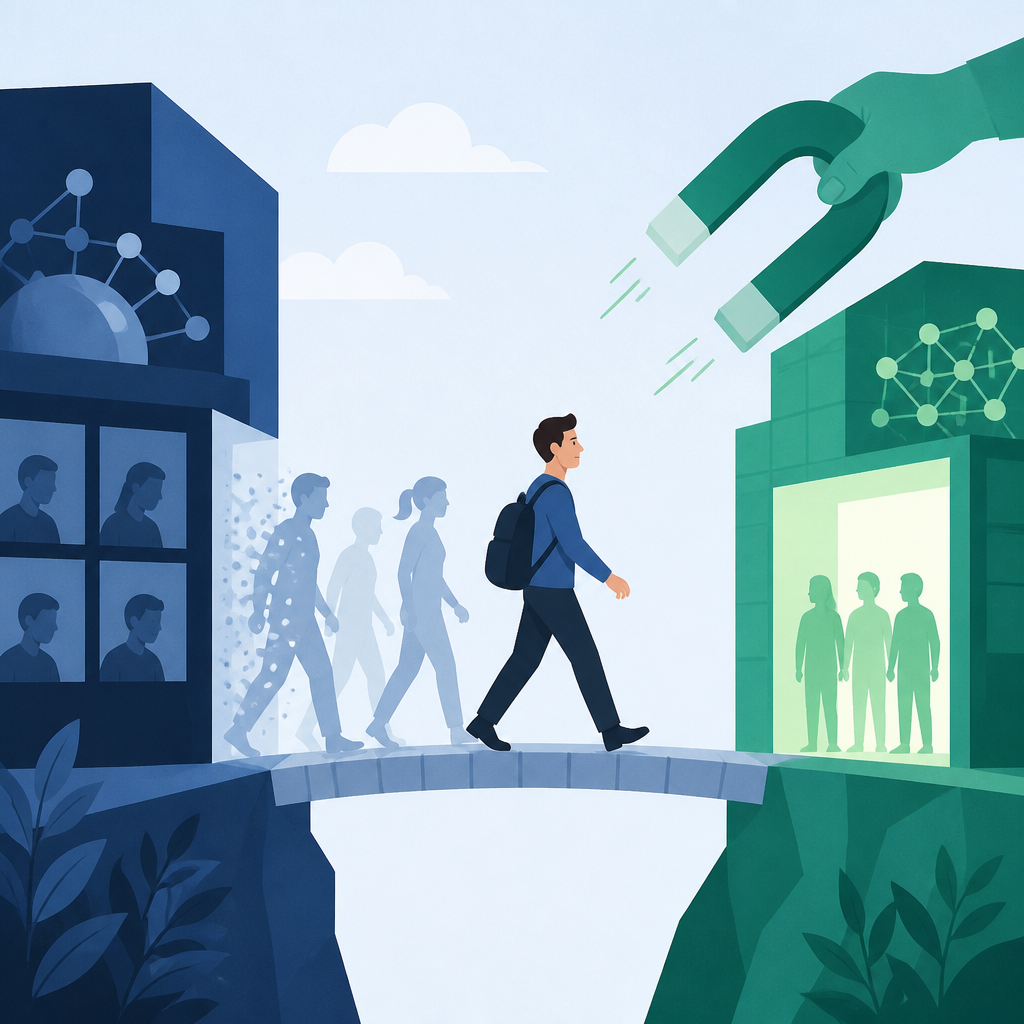
I’ve seen teams pretend this is about compensation alone. Sometimes it is partly money, sure. But if money were the whole story, you wouldn’t see researchers move from one top-tier lab to another top-tier lab with almost embarrassing regularity. There’s always a mix of mission, autonomy, publication freedom, and the feeling that your work won’t get buried under product politics.
How to apply it: if you run an AI org, stop treating retention like a one-time comp review. You need a real answer for why a senior researcher should stay through the boring middle of the roadmap. If you can’t explain that in one sentence, you’re already behind.
DeepMind and Anthropic are selling different kinds of seriousness
DeepMind is still one of the most important names in AI research, and Anthropic has built its brand around safety, model behavior, and a very explicit research identity. That contrast matters. Researchers don’t just pick a paycheck; they pick a thesis about how AI should be built and where their work will matter.
What this actually means is that the “best lab” is not always the one with the biggest parent company. A researcher may decide that a smaller, sharper organization gives them more room to shape the actual direction of the work. I’ve watched engineers do the same thing in startup land for years. They leave a giant org because the giant org has too many layers, too many approvals, and too many meetings pretending to be strategy.
I ran into this on a team where we kept losing senior people to smaller companies with weaker brand names but stronger focus. We kept saying, “But we have more resources.” They kept saying, “Yes, and I can’t use them.” That line stings because it’s usually true.
- Big labs can attract talent with scale, but scale also creates drag.
- Smaller labs can attract talent with focus, but focus only works if execution is disciplined.
- Researchers compare both, and they notice when one side is easier to do meaningful work in.
How to apply it: if you’re building an AI team, write down your actual offer to researchers. Not the marketing version. The real one. Is it compute? Influence? Publication freedom? Safety work? A narrower mission? Put it in plain English and see if it sounds compelling outside your org chart.
The real asset in AI is still people who can move model quality
There’s a lot of noise in AI about products, wrappers, and launch velocity. Fine. But the core asset is still a small number of people who can improve model quality, training strategy, and research direction. John Jumper is not being framed here as a random hire. Reuters identifies him as a senior research scientist, which is the kind of role that tends to matter far more than people outside the field want to admit.
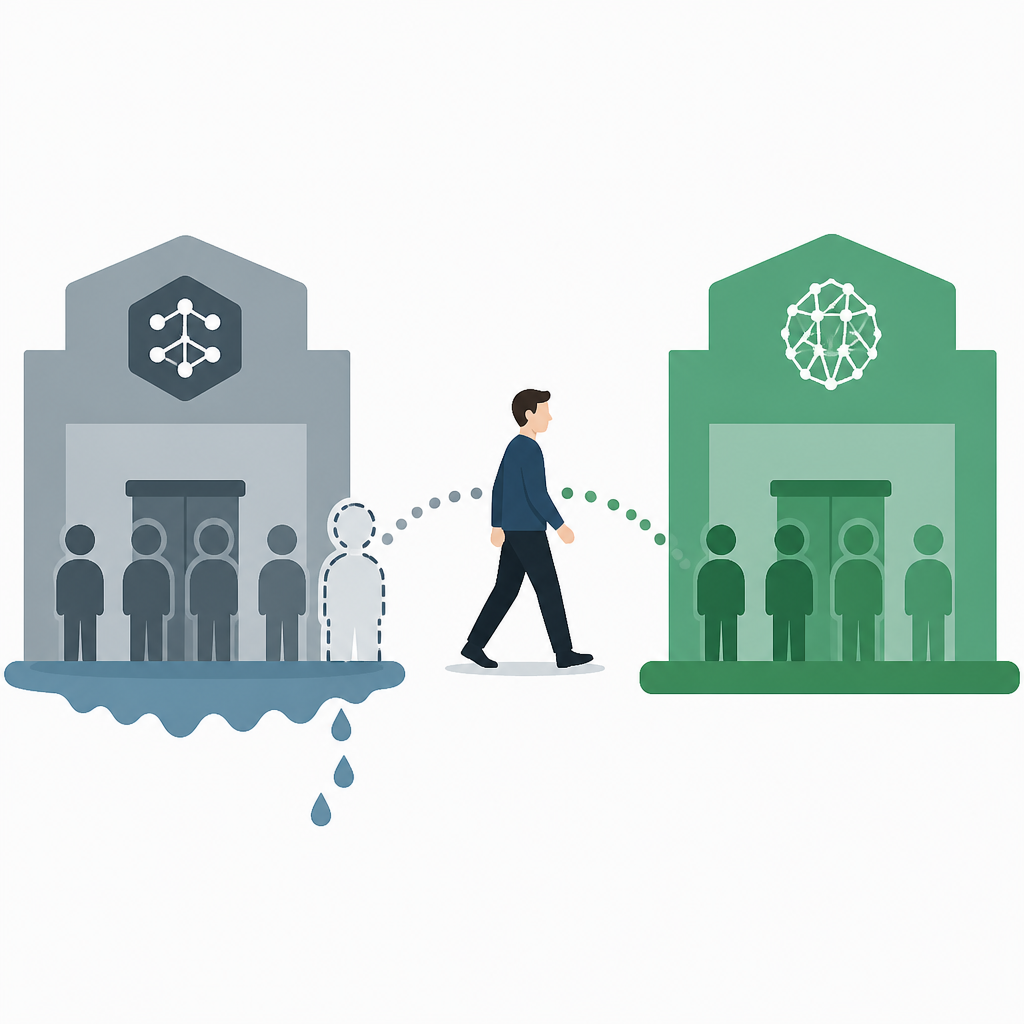
What this actually means is that AI labs are not just competing for users. They’re competing for the people who can make the models better enough that users stay. That’s the uncomfortable truth behind all the polished demos. If your lab loses enough of those people, your product roadmap starts depending on everyone else’s breakthroughs.
I’ve worked around teams that thought they could “hire around” a talent loss. Usually that means three things happen. First, the team spends months interviewing. Second, the replacement is good but not equivalent. Third, the roadmap quietly gets less ambitious while everyone pretends it didn’t. It’s a very expensive way to discover that one senior researcher was carrying more institutional knowledge than the org admitted.
How to apply it: map the people in your org who are actually bottlenecks for quality. Not managers, not title holders. The people whose judgment changes outcomes. Then give them reasons to stay that are about scope and ownership, not just annual comp.
Why this kind of move keeps happening
Reuters calls this “the latest high-profile departure” at Google DeepMind. That wording matters. It tells me this is part of a pattern, not a one-off. And once people start seeing a pattern, they start behaving like the pattern is real, because it is.
What this actually means is that AI labs are in a phase where reputation alone doesn’t lock people in. A famous name can get talent in the door, but it can’t always keep them there if another lab offers a cleaner research identity or a better shot at influence. That’s the part leaders hate, because it means brand is not retention.
I’ve seen this in smaller companies too. Founders love to say, “People want to work here because of the mission.” Maybe. But when a competitor shows up with a better research environment, a clearer decision loop, or fewer internal blockers, mission gets stress-tested fast.
- People leave when the work slows down more than they expected.
- People leave when they can’t see how their research changes the product.
- People leave when another team offers a sharper identity and fewer layers.
How to apply it: don’t wait for a resignation to ask what your senior people are tolerating. Do a blunt audit. What frustrates them weekly? What do they complain about that you’ve normalized? Fixing one high-friction process can do more for retention than another pep talk.
Anthropic keeps winning on narrative discipline
Anthropic has been very good at making itself legible to researchers and builders. The company’s public messaging around safety, model behavior, and careful deployment gives it a distinct identity. That matters because researchers want to know what kind of institution they’re joining, not just what title they’ll get.
What this actually means is that narrative is not fluff in AI hiring. It’s part of the operating system. If your company’s story is vague, people assume the internal strategy is vague too. If your story is crisp, people can imagine where their work fits. That’s a real recruiting advantage, and it’s one a lot of bigger companies still underestimate.
I’ve had this argument with teams that thought they could hide behind “we’re building the best tech.” That line is useless. Everyone says it. The better question is: best tech for what, and under what constraints? Anthropic has a more answerable version of that than most labs, and researchers notice.
How to apply it: write your research org’s one-sentence identity. Not a slogan. A sentence a senior engineer would actually repeat to a candidate. If you can’t do that, you’re making hiring harder than it needs to be.
What builders should take from this, without the drama
If you’re not running a frontier lab, you might be tempted to shrug this off as celebrity hiring gossip. I wouldn’t. The useful lesson is that talent moves toward places where the work feels meaningful, the structure feels usable, and the team feels like it can actually win. That’s true whether you’re hiring AI researchers or backend engineers.
What this actually means is that retention is an architecture problem. Compensation matters, but it’s not the whole design. So does clarity. So does speed. So does whether people feel like their decisions matter or just get reviewed to death.
I’ve seen too many teams overpay for talent they then slowly suffocate. That’s the part nobody likes to say out loud. You can recruit brilliantly and still lose people if the day-to-day experience is miserable. The best people do not stay just because they were flattered once.
How to apply it: audit your org on three questions. Can a senior person do meaningful work here? Can they see the impact of that work? Can they survive the internal friction long enough to care? If the answer to any of those is no, that’s your retention bug.
The template you can copy
# AI talent retention memo template

## What happened
A senior researcher left for a competitor.

## What it means
This is a signal that our current mix of mission, autonomy, and execution is not strong enough to keep top technical people.

## What I’m checking
- Are our researchers clear on the lab’s actual thesis?
- Do senior people have enough ownership to shape outcomes?
- Are we adding friction faster than we’re removing it?
- Can we explain why someone should stay here instead of moving to a competitor?

## What I’m changing this month
1. Interview 3 senior technical people about what slows them down.
2. Remove one recurring approval step that blocks research velocity.
3. Rewrite the team’s one-sentence mission in plain English.
4. Identify the 5 people whose departure would hurt model quality the most.
5. Give each of them a concrete reason to stay: scope, autonomy, or impact.

## Candidate-facing version
We build [specific model or product area] because [specific mission].
Senior technical people here get [real ownership], not just process.
We care about [research value], and we keep the team small enough to move.

## Internal reminder
Brand attracts people.
Day-to-day reality keeps them.
That template is mine, not Reuters’. The idea comes from Reuters’ report about John Jumper leaving Google DeepMind for Anthropic, but the retention memo, the audit questions, and the candidate-facing rewrite are my own working version of how I’d handle this inside a team.
Source: Reuters. I’m using the report as a springboard, not repeating it word for word, and the practical template above is original.
// Related Articles
- [IND]
OpenAI’s Astra pause shows safety now shapes model releases
- [IND]
Anthropic is building custom AI chips for Claude
- [IND]
Moka AI Is a Stronger HRMS Choice for Growing Teams
- [IND]
August 2026 Market Review: AI Stocks Flipped Fast
- [IND]
Pixel 11 launch live: every Google reveal
- [IND]
Anthropic’s invisible watermark is the right move