Meta’s moderation shift shows where AI cuts costs
Meta’s move to AI moderation shows 4 ways large language models can replace human review and cut operating costs.

Meta is replacing some human content review with large language models to cut moderation costs.
Meta Platforms is moving content moderation toward large language models, a change that could reshape how large online services handle safety work. The company’s push matters because moderation is one of the biggest recurring costs in social media, and the decision comes as chief executive Mark Zuckerberg redirects spending toward AI development.
| Item | Primary goal | Tradeoff |
|---|---|---|
| Meta AI moderation | Reduce operating costs | Less human review |
| Human moderator teams | Handle edge cases | Higher labor cost |
| Large language models | Automate first-pass decisions | Need oversight and tuning |
1. Meta’s AI moderation plan
Get the latest AI news in your inbox
Weekly picks of model releases, tools, and deep dives — no spam, unsubscribe anytime.
No spam. Unsubscribe at any time.
Meta’s reported shift is the clearest example of a big platform trying to move moderation from people to software. The goal is not only faster review, but also lower operating expense at a time when AI spending is rising across the company.
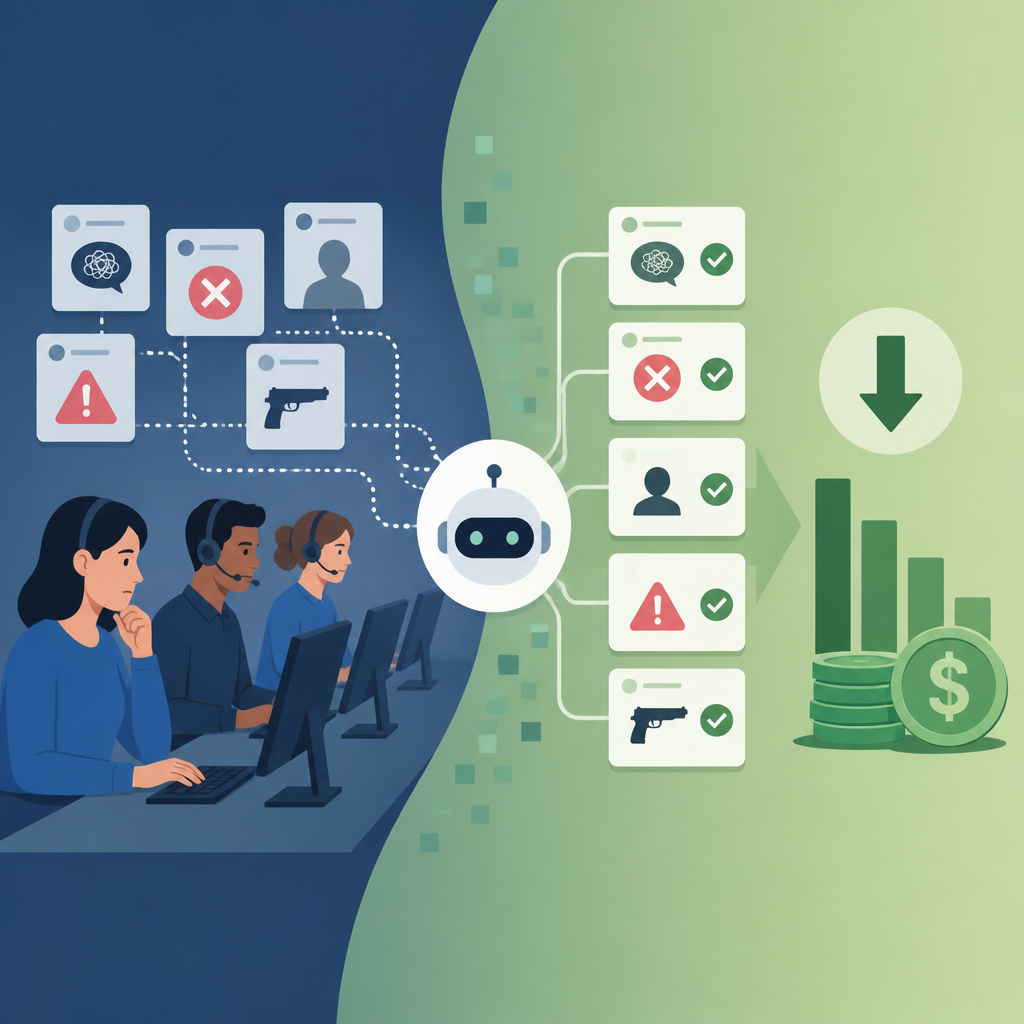
This approach is likely to start with routine decisions, such as flagging obvious policy violations or routing uncertain cases to humans. It is a cost story first, but it is also a product story, because moderation affects what users see and how quickly harmful content is removed.
- Reported by Investing.com on the basis of a Financial Times report
- Driven by cost reduction and AI investment priorities
- Built around large language models rather than only traditional rule systems
2. Large language models as first-pass reviewers
Large language models are useful when a platform needs to read text, classify intent, and apply policy at scale. That makes them a natural fit for first-pass moderation, where the system can sort huge volumes of posts before a human ever sees them.
They are not a full replacement for people, though. Moderation often depends on context, sarcasm, local language, and evolving abuse tactics. AI can help with volume, but it still needs guardrails, escalation paths, and quality checks.
- Good at: text classification, pattern detection, queue sorting
- Weak at: context-heavy edge cases, cultural nuance, adversarial behavior
- Best use: triage before human review
3. Human moderators stay important for hard calls
Even if AI handles more of the workload, human moderators remain the backstop for difficult decisions. Content policies are full of gray areas, and mistakes can create trust problems, public backlash, or uneven enforcement across regions.
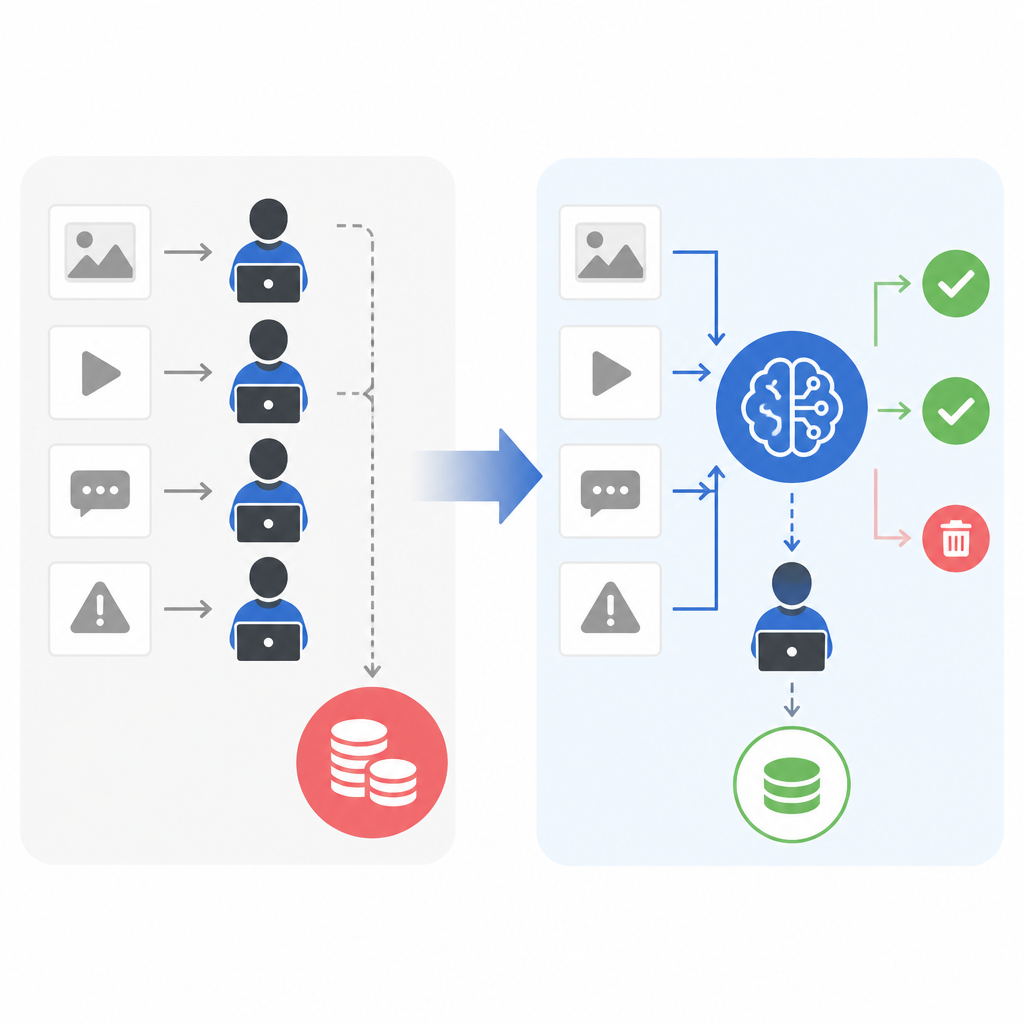
That means the job changes rather than disappears overnight. Teams may spend less time on repetitive screening and more time on appeals, policy exceptions, and training the models that support them.
- Needed for appeals and borderline cases
- Useful for policy updates and model review
- Important when content involves politics, violence, or harassment
4. Cost savings are the main business reason
Moderation is expensive because it scales with user activity, not with revenue alone. If AI can absorb a meaningful share of the review queue, Meta can lower labor costs while keeping the system running at platform scale.
That is why the move is bigger than a staffing change. It signals where management sees the next savings opportunity: software that can do repetitive work continuously, with human staff focused on exceptions instead of the full stream.
- Lower direct labor spend
- Potentially faster review times
- More budget available for AI infrastructure and model training
5. What this means for the rest of Big Tech
If Meta can safely automate more moderation, other platforms will study the result closely. Companies with large user-generated content businesses face the same pressure to reduce review costs while keeping enforcement credible.
The real test is whether AI moderation improves speed without creating more errors. If it does, the same playbook could spread to other social apps, marketplaces, and video platforms that rely on constant content screening.
- Relevant to social networks, forums, and marketplaces
- Could influence hiring, vendor spending, and trust-and-safety workflows
- Success depends on accuracy, oversight, and appeal handling
How to decide
If you care most about company spending, this is a cost-cutting story. If you care about product quality, it is a test of whether AI can do large-scale moderation without damaging trust. If you work in trust and safety, the key question is not whether AI replaces people, but which moderation tasks it can safely absorb first.
For investors, the move matters because it shows how Meta may redirect money from labor toward AI systems. For operators, it is a reminder that the best near-term use of AI is often not total replacement, but triage, routing, and support for the hardest human decisions.
// Related Articles
- [IND]
CBDC Governance: Standards and Stakeholder Roles
- [IND]
Invisible AI watermarks are the right move for Claude
- [IND]
pgvector is enough for small datasets, not your default
- [IND]
OpenAI’s Astra pause shows safety now shapes model releases
- [IND]
Anthropic is building custom AI chips for Claude
- [IND]
Moka AI Is a Stronger HRMS Choice for Growing Teams