MiMo Code Is Worth Using Only If You Treat It Like Infrastructure
MiMo Code is useful only when you deploy it like infrastructure, not a toy.

Docker and GitHub Actions turn MiMo Code into a 24/7 coding system.
MiMo Code is worth using only if you treat it like infrastructure, not a toy.
Free access is not the point, reliability is
Get the latest AI news in your inbox
Weekly picks of model releases, tools, and deep dives — no spam, unsubscribe anytime.
No spam. Unsubscribe at any time.
The strongest case for MiMo Code is not that it is free, but that it can be made persistent. A Dockerized setup gives you a repeatable environment, so the model, dependencies, and runtime behavior stay consistent across machines. That matters more than a flashy demo, because coding assistants fail in practice when every session starts from scratch.

There is a real productivity jump when the tool is always available. A setup that stays ready through Docker containers and scheduled jobs means you do not lose time rebuilding context or reconfiguring the same workspace. For engineers, that turns an assistant from a novelty into part of the workflow, which is the only standard that matters.
Automation is the real multiplier
GitHub Actions is the clearest signal that MiMo Code should be judged as an automation layer. If a task can be triggered automatically from a repo event, then the assistant stops depending on human memory and starts behaving like a system component. That is a bigger deal than raw model quality, because the value of an AI coding tool comes from how often it gets invoked without friction.
Consider a common engineering pattern: a pull request opens, checks run, and the assistant prepares changes or comments without anyone manually launching it. That kind of workflow scales better than a chat window because it fits existing developer habits. The tutorial’s emphasis on orchestration is correct, because the winning use case is not one-off prompting, but repeated execution.
Multi-server setups are for teams, not hobbyists
The argument for multi-server load balancing is straightforward: once a project gets complex, a single box becomes a bottleneck. If you are handling larger repositories or multiple parallel tasks, distributing work across servers reduces contention and keeps the assistant responsive. That is the difference between a personal experiment and a production-ready service.
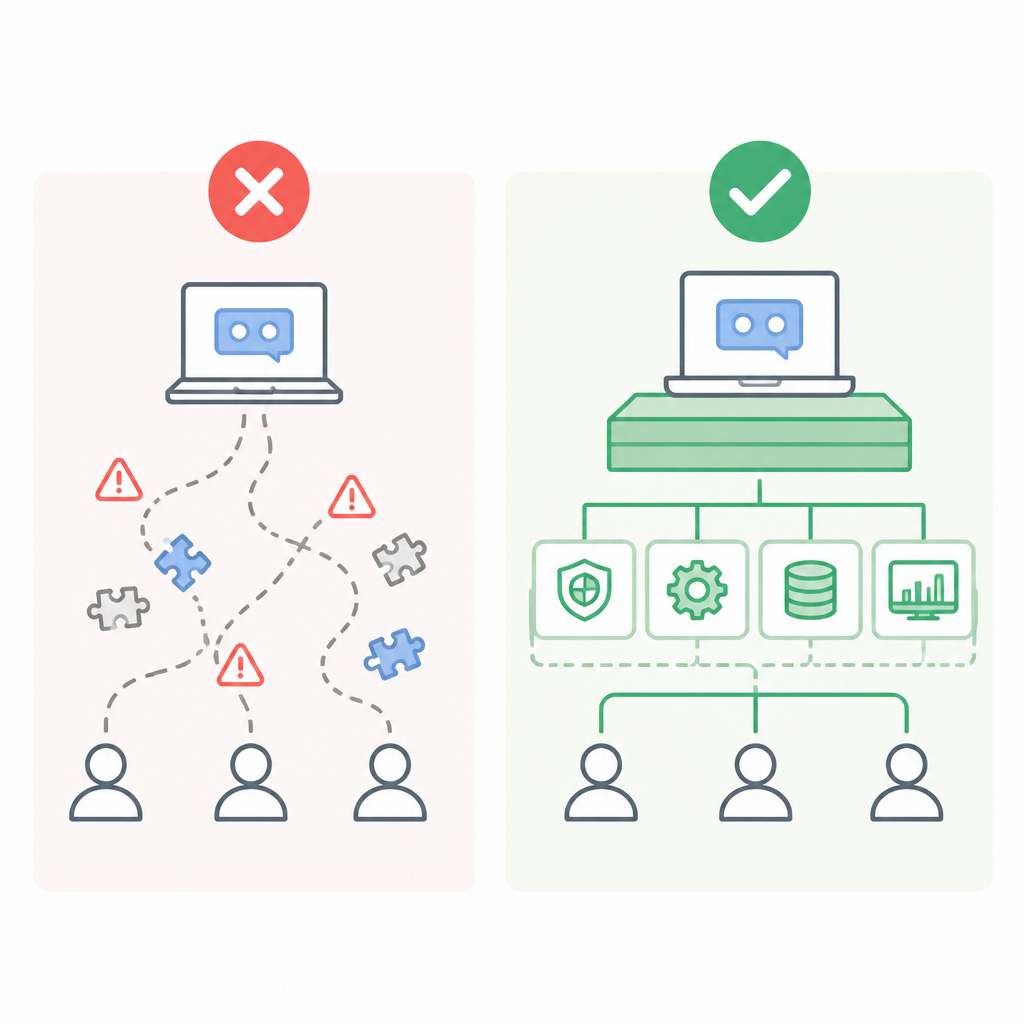
This also exposes the real audience for MiMo Code. Solo users care about convenience, but teams care about throughput and isolation. A multi-server design makes sense only when you need to separate workloads, manage failures, and keep different jobs from stepping on one another. That is not overengineering; it is the cost of using AI as shared infrastructure.
The counter-argument
The best objection is that this is too much machinery for a coding assistant. Docker, scheduled automation, and load balancing all add setup overhead, and many developers want a tool they can open and use immediately. If the goal is fast experimentation, a lightweight hosted product is easier to adopt and easier to explain.
There is also a legitimate concern that infrastructure framing hides the real tradeoff. A free or low-cost route does not automatically mean a better one, because maintenance time has a cost. If the stack breaks often, the time saved by automation disappears into debugging.
That critique is valid, but it does not defeat the case. It only sets the boundary: MiMo Code is not the right choice for casual users who want a disposable chat assistant. For engineers who need repeatability, scheduling, and repo-level automation, the extra setup is the price of getting a system that actually compounds value.
What to do with this
If you are an engineer, start by containerizing MiMo Code before you chase advanced features. Lock down the runtime, wire in one GitHub Action, and only then add multi-server orchestration if the workload demands it. If you are a PM or founder, judge the tool by integration cost and operational reliability, not by the novelty of free access. The winning use case is a dependable AI layer inside your delivery pipeline, not another chat tab.
// Related Articles
- [TOOLS]
SCALE turns CUDA code into portable GPU builds
- [TOOLS]
2027 AI/ML internship jobs are being tracked daily
- [TOOLS]
Ollama raises $65M with 14 people and 8.9M users
- [TOOLS]
Databricks lets you query foundation models
- [TOOLS]
SGLang is winning because inference is the product
- [TOOLS]
Redmi Note 17 turns mid-range into battery bulk