SCALE turns CUDA code into portable GPU builds
I break down Spectral Compute’s SCALE compiler and show how it makes CUDA code portable across GPU vendors.

SCALE lets CUDA code run on more GPUs without a rewrite.
I've been living in CUDA land long enough to know the pain. The code works, the kernels are tuned, the team is invested, and then somebody asks the annoying question: “Can we run this on AMD too?” That’s usually where the room goes quiet. Not because the answer is impossible, but because the answer is expensive, slow, and full of weird compatibility debt. I’ve watched teams keep paying the Nvidia tax because porting feels like a second project nobody budgeted for.
That’s what made Spectral Compute interesting to me. Not because it promises magic. I’ve heard enough GPU-tooling hype to be allergic to that. It got my attention because it attacks the actual choke point: the compiler and the ecosystem around it. The original write-up on TechPlanet frames SCALE as a drop-in replacement for NVCC, and that’s the part worth unpacking. If that claim holds up in real workflows, it changes how I think about vendor lock-in, not just how I think about one compiler.
CUDA lock-in is not a theory, it’s a budget line
Get the latest AI news in your inbox
Weekly picks of model releases, tools, and deep dives — no spam, unsubscribe anytime.
No spam. Unsubscribe at any time.
Nvidia's CUDA programming language has become the de facto standard for GPU computing, commanding approximately 80% of the market for parallel computing development tools.
What this actually means is simple: when one toolchain becomes the default, the hardware vendor gets to set the terms. If your codebase is welded to CUDA, you’re not just choosing a compiler. You’re accepting Nvidia’s pricing, roadmap, and availability constraints whether you like it or not.
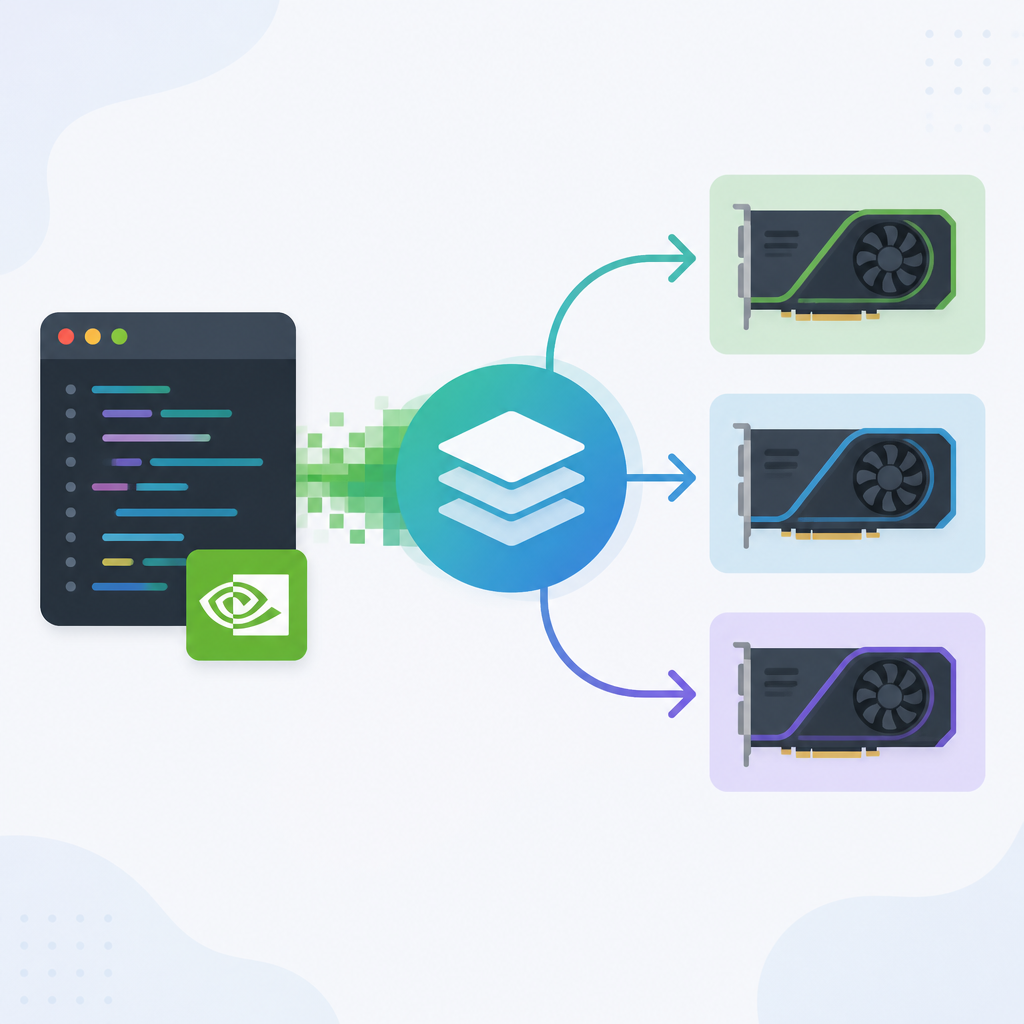
I’ve seen this happen in practice with research teams and startups. They don’t start by saying “let’s build a vendor-dependent stack.” They start by saying “we need the fastest path to results.” CUDA is usually that path. Then three years later, the team wants to diversify hardware, but the code and the muscle memory are both locked in. That’s the trap.
TechPlanet says CUDA commands approximately 80% of the market for parallel computing development tools. I’m not going to pretend that number is some sacred law of physics, but the direction is obvious enough. CUDA is the default. Defaults are sticky. Stickiness becomes leverage for the vendor, even when the customer is the one paying the bill.
How to apply it: if you’re running a GPU-heavy stack, stop treating portability as a nice-to-have. Put it on the same spreadsheet as cloud spend and model quality. If you can’t move workloads, you don’t really have procurement options.
- Audit which kernels, libraries, and build steps are CUDA-specific.
- Mark the parts that would be expensive to rewrite from scratch.
- Estimate the cost of staying versus the cost of portability work.
SCALE matters because it attacks NVCC, not just CUDA syntax
Spectral Compute, founded in 2018, built SCALE as a compiler that uses Clang and LLVM technology to act as a drop-in replacement for NVCC. That’s the important part. They aren’t just translating a few API calls and calling it portability. They’re rebuilding the compilation path.
What this actually means is that SCALE is trying to meet CUDA where it lives: at compile time, where optimization decisions get baked in. That’s a much harder target than a source-to-source converter. It’s also why this is more interesting than the usual “we support CUDA” pitch that turns out to mean “we support a subset of the easy stuff.”
I ran into this kind of disappointment before with tools that looked good on slides and fell apart the moment the code got real. They handled toy examples, then choked on templates, device code, or anything that had been tuned by someone who actually knew what they were doing. If SCALE can compile real CUDA code with a behavior close enough to NVCC, that’s not a cosmetic win. That’s a workflow win.
How to apply it: when you evaluate a portability tool, don’t ask whether it can “understand CUDA.” Ask whether it can replace the compiler in your build pipeline, preserve correctness, and keep performance in the same neighborhood. If it can’t touch the build, it’s not a replacement. It’s a demo.
- Test whether the tool plugs into your existing CI.
- Check whether it supports your actual compiler flags and build system.
- Measure compile output, not just runtime results.
Why LLVM-based reimplementation beats translation theater
TechPlanet describes SCALE as a clean-room re-implementation rather than a translation layer. That distinction matters more than people think. Translation tools usually sit on top of the original abstraction and hope the mismatch doesn’t hurt too much. Reimplementation gives you room to optimize for the target hardware instead of preserving every quirk of the source stack.
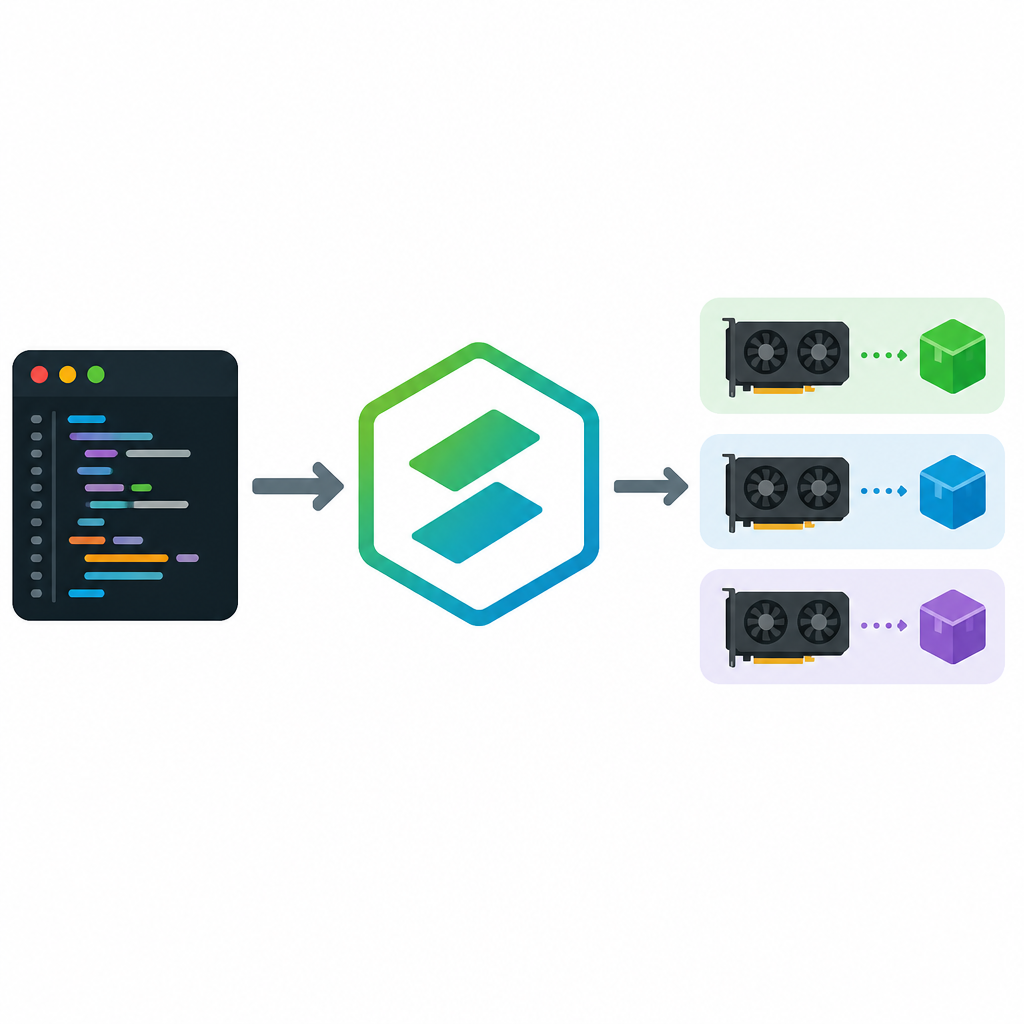
What this actually means is that SCALE is trying to avoid the performance tax that comes from carrying CUDA’s assumptions around like luggage. The article contrasts this with tools like HIPIFY, SYCLomatic, and ZLUDA. Each one solves a piece of the problem, but not the whole thing. Translation can get you moving. It doesn’t guarantee you’ll be fast when you arrive.
I’ve had enough “almost portable” code in my life to be suspicious of anything that promises minimal effort. The last 10% is usually where the real engineering lives. It’s the weird data layout, the hand-tuned kernel, the library call nobody documented, the assumption that only held on one vendor’s hardware. That’s why a compiler-based approach is more credible to me than a shim layer.
How to apply it: if you’re comparing GPU portability strategies, sort them by how much of the original execution model they preserve versus how much they recompile. The more the tool depends on runtime patching or binary trickery, the more likely you are to pay for that abstraction later.
Correctness first, because pretty benchmarks lie
The article says Spectral validates results numerically after recompilation, and only treats the implementation as successful if the output matches the NVCC version. I like that. It’s boring, and boring is good when you’re doing compiler work. Nobody gets to brag about speed if the answers are wrong.
What this actually means is that SCALE is not just chasing benchmark screenshots. It’s trying to prove that the code still computes the same thing. That sounds obvious until you’ve been burned by “optimized” tooling that silently changed edge cases. I’ve seen teams waste weeks debugging what turned out to be a portability layer, not their own algorithm.
There’s also a practical reason this matters: GPU code often lives in the part of the stack where failures are expensive to detect. A model might still train, a simulation might still run, and the numbers might still look plausible. Wrong and plausible is the worst combination. I’d rather have a compiler that is conservative about correctness than one that promises speed and leaves me guessing.
How to apply it: build a verification harness before you try any migration. Keep known-good outputs from NVCC builds, and compare them against the alternative toolchain on representative inputs, not just happy-path test cases.
- Capture baseline outputs for a few real workloads.
- Compare numeric tolerance, not just exact string matches.
- Test edge cases, not only the benchmark dataset.
The ecosystem problem is bigger than the compiler
CUDA is not just a language. It’s a stack of libraries, tooling, and assumptions. The article calls out cuDNN, cuTENSOR, and cuDF, and that’s the real headache. A compiler can get you through the front door, but the house still has rooms full of CUDA-specific dependencies.
What this actually means is that portability is layered. First you need code to compile. Then you need library coverage. Then you need performance that doesn’t collapse when the workload becomes real. That’s why I’m cautious when someone says “we support CUDA” without naming the ecosystem pieces they actually cover.
I’ve had projects where the kernel port was the easy part and the library migration was the slog. A team can survive a compiler switch. It may not survive a dozen missing library features, especially if those libraries sit in the middle of training or inference pipelines. SCALE’s long-term value depends on how much of this surrounding mess it can absorb.
How to apply it: inventory the CUDA libraries you depend on before you touch the compiler. If most of your risk sits in cuDNN or another specialized package, the compiler alone won’t save you. You need a migration map for the whole stack.
- List every CUDA library in your runtime path.
- Separate core compute from helper libraries.
- Check which pieces have viable alternatives on your target hardware.
Neutral tooling is useful because it changes buying behavior
The article says Spectral partnered with Nvidia through the Nvidia Inception program and also wants to stay friendly with AMD. That sounds odd until you think about how buyers behave. Tooling that makes CUDA portable doesn’t destroy CUDA’s value. It reduces fear.
What this actually means is that developers are more willing to choose CUDA if they know they’re not trapped forever. That’s a subtle but real shift. Vendor neutrality is not just an ethical stance. It is a sales argument for the whole ecosystem. If the language becomes portable, the language itself becomes more attractive.
I’ve seen this pattern in other parts of infrastructure. Teams adopt a technology faster when exit options are real. They may never leave, but the fact that they could changes the conversation. Procurement gets easier. Architecture reviews get less defensive. Nobody likes being cornered into a single vendor’s hardware story.
How to apply it: if you’re a platform team, make portability part of your vendor evaluation. The goal is not to be anti-Nvidia or anti-AMD. The goal is to keep your options open enough that hardware choice is a performance and cost decision, not a hostage situation.
The copycat-free lesson: compiler control is power
Here’s the part I keep coming back to. Spectral Compute didn’t try to win by wrapping CUDA in more abstraction. It went after the compiler, the place where performance, compatibility, and control all meet. That’s why the story matters even if you never use SCALE directly.
What this actually means is that whoever controls the compilation path controls a lot of the user experience. If the compiler can target multiple accelerators cleanly, hardware vendors lose one of their strongest lock-in points. If it can’t, then every “alternative” remains a side project with a tax attached.
I’m not pretending this is solved. The article is clear that the CUDA ecosystem is huge, adoption is sticky, and support for libraries is still a work in progress. But I’d rather have a serious compiler strategy than another portability layer that dies the first time it meets production code.
How to apply it: when you evaluate GPU infrastructure, ask who owns the compiler path, who owns the libraries, and who owns the performance tuning story. If all three sit with one vendor, you’re not buying a platform. You’re renting permission.
The template you can copy
# GPU portability evaluation template

## Goal
I want to reduce CUDA lock-in without rewriting my codebase.

## Current state
- Primary accelerator vendor:
- CUDA version:
- Build system:
- Critical kernels:
- CUDA libraries in use:
  - cuDNN
  - cuTENSOR
  - cuDF
  - other:

## Portability target
- Target hardware:
- Target compiler/toolchain:
- Performance goal:
- Correctness tolerance:

## Evaluation checklist
### Compiler fit
- Can it replace NVCC in CI?
- Does it support my current flags and build layout?
- Does it compile my real kernels, not toy examples?

### Correctness
- Do outputs match NVCC baselines within tolerance?
- Are edge cases tested?
- Are failures easy to reproduce?

### Performance
- Does runtime stay acceptable on target hardware?
- Are there kernel-level regressions?
- Does the tool preserve tuning opportunities?

### Ecosystem coverage
- Which CUDA libraries are supported?
- What is missing?
- What workarounds are required?

### Business fit
- What does migration cost?
- What hardware options open up?
- What vendor risk goes away?

## Decision rule
Adopt only if the tool:
1. Compiles representative production code,
2. Passes correctness checks,
3. Meets an acceptable performance threshold,
4. Covers the libraries I actually depend on,
5. Reduces vendor lock-in in a way finance can understand.

## Rollout plan
- Phase 1: benchmark one kernel
- Phase 2: port a small service
- Phase 3: expand to a full workload
- Phase 4: compare vendor options on equal footing
That’s the part I’d actually hand to a team. Not a promise, not a slogan, just a way to test whether portability is real. If SCALE or anything like it works in your stack, this is how I’d prove it without fooling myself.
Source attribution: I broke this down from Kelly’s TechPlanet post, Breaking Nvidia's CUDA Moat: How Spectral Compute is Democratizing GPU Computing. My framing, template, and practical checklist are original; the facts and quoted ideas come from that article and the linked vendor sites.
// Related Articles
- [TOOLS]
2027 AI/ML internship jobs are being tracked daily
- [TOOLS]
MiMo Code Is Worth Using Only If You Treat It Like Infrastructure
- [TOOLS]
Ollama raises $65M with 14 people and 8.9M users
- [TOOLS]
Databricks lets you query foundation models
- [TOOLS]
SGLang is winning because inference is the product
- [TOOLS]
Redmi Note 17 turns mid-range into battery bulk