Ollama raises $65M with 14 people and 8.9M users
Ollama raised $65 million, runs with 14 employees, and says 8.9 million developers use its local AI model tool each month.

Ollama raised $65 million to push local AI model running into the mainstream.
Ollama just pulled in $65 million while running with only 14 employees, a tiny team by software infrastructure standards. The company also says 8.9 million developers use its tool every month, which is the real signal here: local model workflows have moved from side project to daily habit.
| Metric | Value | Why it matters |
|---|---|---|
| Funding | $65 million | Gives Ollama room to expand product and infrastructure |
| Team size | 14 employees | Shows how lean the company is |
| Monthly developer users | 8.9 million | Suggests broad adoption for local AI model runs |
Ollama is betting that local AI is a daily workflow
Get the latest AI news in your inbox
Weekly picks of model releases, tools, and deep dives — no spam, unsubscribe anytime.
No spam. Unsubscribe at any time.
The pitch behind Ollama is simple: developers should be able to run large language models on their own machines without turning setup into a week-long project. That idea has a familiar ring if you have followed the rise of Docker, because the same people behind Ollama helped build tools that made local software environments less painful.
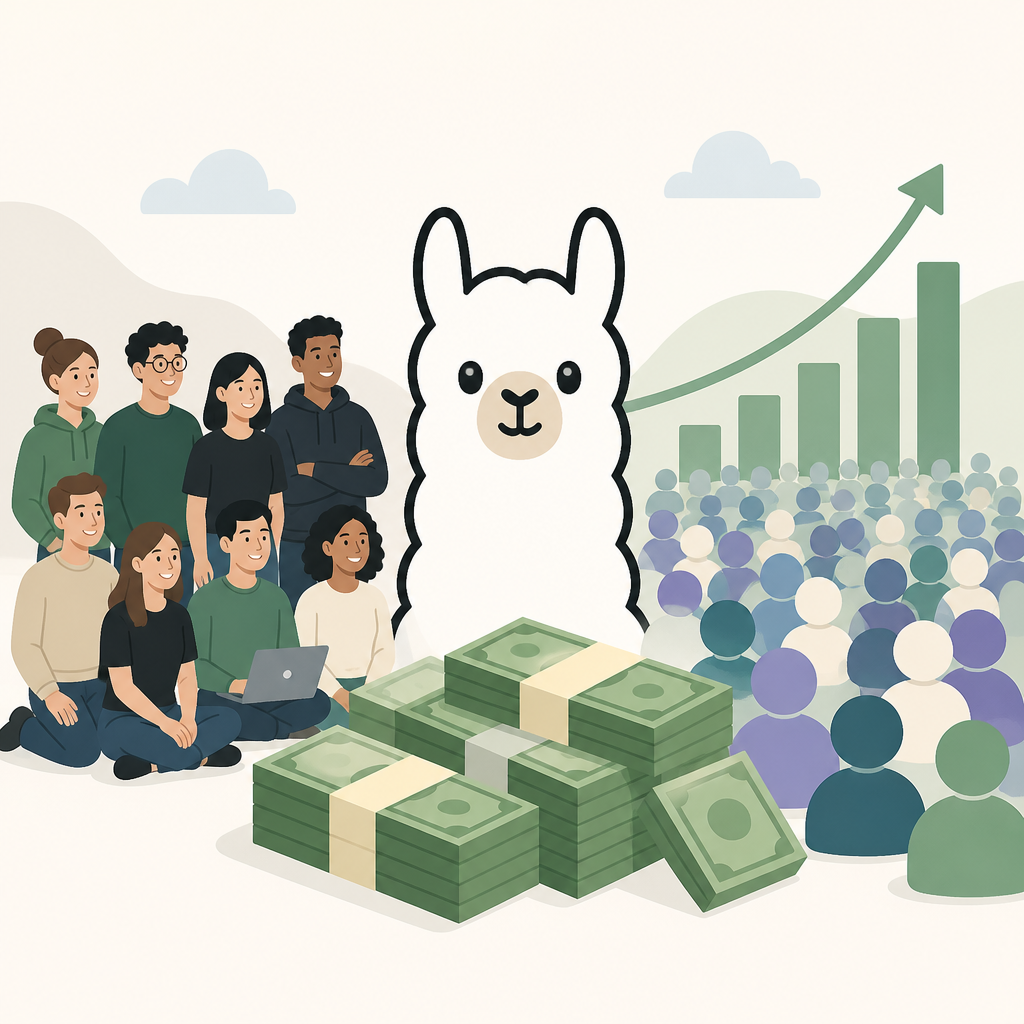
According to the source article, Ollama cofounder Jeff Morgan and cofounder Michael Chiang worked on Docker Desktop after Docker acquired their earlier company, Kitematic. That history matters because the product mindset is the same: hide the annoying setup details and let developers get to work.
- Ollama focuses on local model execution, which keeps data on the developer’s machine.
- The company says 8.9 million developers use it each month.
- The team is only 14 people, so the company is operating with very low headcount.
- The $65 million raise suggests investors think local AI is moving beyond hobbyist use.
Why this funding round is bigger than the number
$65 million is a meaningful check for a company that is still small enough to fit in a single conference room. It tells you investors are willing to back infrastructure for local AI even as the market keeps flooding with cloud-first model APIs from OpenAI, Anthropic, and Meta AI.
“The best way to predict the future is to invent it.” — Alan Kay
That quote gets used a lot, but it fits this story because Ollama is trying to make a specific future feel normal: developers running models locally the same way they run databases, containers, and test suites. The company is not selling novelty. It is selling convenience, privacy, and a lower-friction path to experimentation.
There is also a practical reason this matters. Local inference can reduce latency, avoid repeated API calls, and keep sensitive prompts off third-party servers. For solo developers and small teams, that changes the economics of prototyping. For larger teams, it changes the control surface.
Docker DNA explains the product strategy
Ollama’s founders did not come out of nowhere. Their work on Docker Desktop and Kitematic trained them to think about developer pain points in very concrete terms: install steps, dependency conflicts, and the difference between “works on my machine” and “works for the whole team.”
That background shows up in the way Ollama is positioned. It is less about training frontier models and more about making model usage boring in the best possible way. If a developer can pull a model, run it, and start testing prompts within minutes, the product has done its job.
- Docker Desktop helped standardize local development workflows for containers.
- Ollama is doing a similar job for local AI models.
- The shift from cloud-only AI to local AI mirrors the shift from manual server setup to containers.
- Both products win by removing setup friction rather than adding more features to the UI.
That comparison matters because infrastructure tools often win by becoming invisible. Developers do not brag about their package manager or container runtime. They just keep using it because it saves time. Ollama appears to be following that same logic, and the user numbers suggest it is working.
What the numbers say about developer demand
8.9 million monthly developers is a huge figure for a tool that lives in the infrastructure layer. Even if that number includes a wide range of usage intensity, it still points to real demand for local AI workflows. A tool does not hit that scale by accident.
What makes the figure more interesting is the contrast with the team size. Fourteen employees supporting millions of developers means the company has to stay disciplined about product scope, support load, and what it builds next. That kind of ratio usually forces sharp priorities.
For developers, the practical takeaway is clear: local AI is no longer a niche preference for privacy-minded tinkerers. It is becoming a default option for people who want lower latency, offline work, or fewer cloud dependencies. If Ollama keeps this pace, expect more model packaging, better hardware support, and tighter integration with the tools developers already use.
For OraCore readers, the bigger question is whether cloud AI vendors respond by making their own local or hybrid options easier to adopt. If they do, Ollama has already done its job by proving there is enough demand to justify the effort.
Ollama’s next test is scale without losing simplicity
The next stage is not about proving that local AI exists. That part is already settled by the user count and the funding. The harder job is keeping the product simple while supporting more models, more hardware, and more developers who expect the experience to stay fast.
If Ollama can do that, it will keep pulling developers away from one-size-fits-all cloud defaults and toward a more flexible setup where local execution is the first option, not the fallback. The real test now is whether the company can grow from a beloved developer tool into an essential layer in everyday AI work.
// Related Articles
- [TOOLS]
SCALE turns CUDA code into portable GPU builds
- [TOOLS]
2027 AI/ML internship jobs are being tracked daily
- [TOOLS]
MiMo Code Is Worth Using Only If You Treat It Like Infrastructure
- [TOOLS]
Databricks lets you query foundation models
- [TOOLS]
SGLang is winning because inference is the product
- [TOOLS]
Redmi Note 17 turns mid-range into battery bulk