MiniMax M3 adds 1M-token coding power
MiniMax M3 brings coding and agent features, a 1 million-token context window, and multimodal input to the company’s flagship model.

MiniMax M3 is MiniMax’s flagship model for coding, agents, and long-context work.
MiniMax has added M3 to its model lineup, and the pitch is clear: this is the company’s new flagship for coding-heavy workflows and agent-style tasks. The headline numbers are hard to miss, with a 1 million token context window and native multimodal understanding aimed at developers who want one model to read more, remember more, and act on more.
| Item | Detail |
|---|---|
| Model | MiniMax M3 |
| Context window | 1,000,000 tokens |
| Primary focus | Coding and agentic tasks |
| Capability | Native multimodal understanding |
MiniMax is betting on long context and agent work
Get the latest AI news in your inbox
Weekly picks of model releases, tools, and deep dives — no spam, unsubscribe anytime.
No spam. Unsubscribe at any time.
The most important part of the M3 announcement is the mix of scale and task focus. A 1 million token window changes how teams think about codebases, documentation, logs, and product specs because the model can keep far more material in view at once. That matters most when the job is less about one-off prompts and more about sustained work across large projects.

MiniMax is also framing M3 around agentic use cases. In practice, that means the model is meant to plan steps, inspect inputs, and keep going through multi-stage tasks rather than stopping after a single answer. For developers, that can mean stronger support for repo analysis, bug triage, code generation, and tool-using assistants.
The company’s choice to emphasize coding is smart. Coding has become one of the clearest ways to test whether a model can reason over structure, follow constraints, and recover from mistakes. If a model performs well there, it usually has a good shot at broader knowledge work too.
- 1 million token context window for very large inputs
- Flagship positioning inside MiniMax’s model family
- Built for coding and agent-style workflows
- Native multimodal understanding for mixed input types
Why developers care about the 1M-token number
Long context is easy to advertise and hard to use well. But when it works, it changes the shape of the task. Instead of splitting a codebase into tiny chunks, a developer can keep more files, notes, and error output in one session. That reduces the amount of manual stitching between prompts and gives the model more room to preserve dependencies.
It also matters for agent systems. Agents fail when they lose track of earlier instructions, miss constraints from a spec, or forget what a file looked like ten steps ago. A larger context window does not solve those problems by itself, but it gives the system more memory to work with.
“The real challenge is not just getting a model to read more text, but getting it to use that extra context well.” — Andrej Karpathy, former Tesla AI director
That quote fits M3’s pitch closely. Long context is only valuable if the model can keep attention on the right details, ignore noise, and produce useful output across a long session. Otherwise, the number becomes marketing instead of utility.
For teams comparing options, M3’s approach puts it in the same conversation as other long-context systems from OpenAI, Anthropic, and Google Gemini. The difference is that MiniMax is pitching M3 around coding and agent behavior first, rather than general chat.
How M3 compares with other developer models
MiniMax did not publish a broad benchmark table in the source material here, so the cleanest comparison is feature level. M3 is entering a crowded field where model makers compete on context length, coding quality, and tool use. The models below are worth keeping in mind because they shape what developers already expect from an assistant model.
- GPT-4o focuses on fast multimodal interaction and broad assistant use.
- Claude is widely used for long-form reasoning and coding help.
- Gemini pushes multimodal input and large-context workflows.
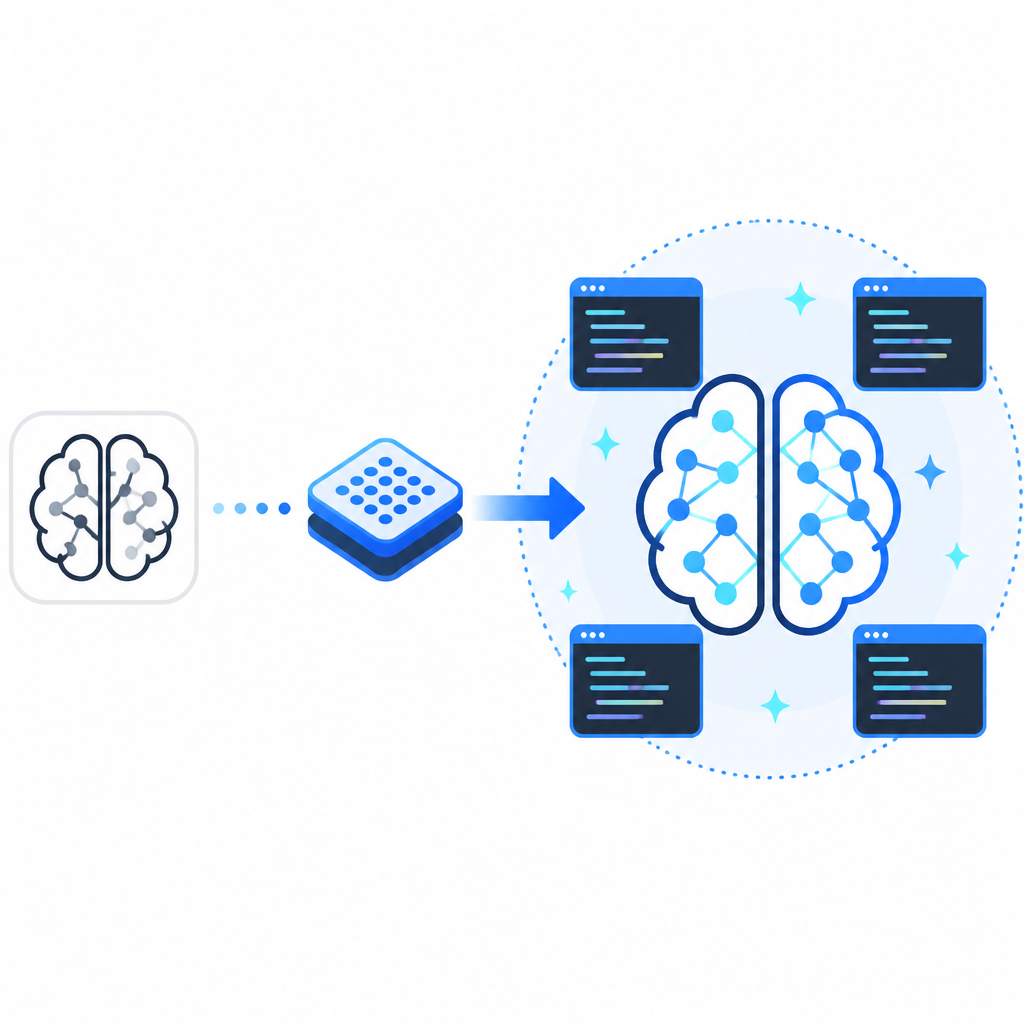
- MiniMax M3 pushes a 1 million token window with coding and agent focus.
What makes M3 interesting is not that it has long context alone. It is the combination of long context, coding emphasis, and multimodal input. That combination is useful for product teams that want one model to read a design doc, inspect screenshots, and work through source code in the same session.
If MiniMax can keep the model reliable under that load, M3 could become a practical choice for teams building internal developer tools, support copilots, and research assistants. If it cannot, the 1 million token headline will matter less than day-to-day output quality.
What this means for the next wave of agent tools
M3 is another sign that model makers are treating agents as a product category, not a side feature. That matters because agent systems need more than chat polish. They need memory, tool use, structured reasoning, and enough context to survive real work.
For developers, the best way to evaluate M3 will be with real tasks: a medium-sized repo, a long bug report, a design spec with screenshots, or a support backlog with history. Those are the places where long context either saves time or gets in the way.
MiniMax has made its pitch. The next question is whether teams will use M3 for isolated demos or for everyday work across code, docs, and tools. If the model handles long sessions without losing track of constraints, it will earn attention fast. If not, the market will move on to the next claim with a bigger token number.
For readers tracking this space, the practical test is simple: does a model help you finish a task with fewer prompt resets and less manual cleanup? That is the metric that will decide whether M3 feels useful or just large.
// Related Articles
- [MODEL]
August 2026 model rankings: Claude leads text, Kimi coding
- [MODEL]
Qwen3.8-Max pushes Alibaba into the top tier
- [MODEL]
Qwen3.8-Max proves that agentic work is the real frontier
- [MODEL]
Google Earth Should Not Ship AI Image Generation
- [MODEL]
Try Claude Opus 4.7 and read its benchmarks
- [MODEL]
Opus 5 lets you cut cost without losing quality