OpenAI launches Daybreak cybersecurity partners
OpenAI’s Daybreak program brings cybersecurity vendors and service providers into governed AI work for defenders.

OpenAI’s Daybreak program connects cybersecurity partners to build governed AI tools for defenders.
OpenAI is opening a structured partner program for cybersecurity companies and service providers, and the pitch is refreshingly specific: build practical tools for defenders, keep the work governed, and make the collaboration easier to audit. The program is called Daybreak, and it signals that OpenAI wants deeper ties with security vendors instead of one-off integrations.
The announcement is short on technical specs, but the framing matters. OpenAI is not talking about a generic AI accelerator or a broad partner marketplace. It is targeting a narrow slice of the industry where trust, access control, and documentation matter as much as model quality.
What Daybreak is trying to do
Get the latest AI news in your inbox
Weekly picks of model releases, tools, and deep dives — no spam, unsubscribe anytime.
No spam. Unsubscribe at any time.
Daybreak is built around collaboration between OpenAI and security-focused companies that already know how defenders work. That includes vendors that ship security products, plus service providers that run operations for customers and help them respond to incidents. The goal is to turn model access into something that can be used inside real security workflows instead of isolated demos.

That focus fits the way security teams buy software. They want evidence, clear boundaries, and a path to production that does not create new compliance headaches. If OpenAI can make Daybreak feel predictable for security buyers, it gets a cleaner route into a market that is usually skeptical of vague AI promises.
- Program focus: cybersecurity companies and service providers
- Target users: defenders and security teams
- Primary theme: practical, governed solutions
- Source page: Daybreak partners
That wording also hints at a broader strategy. OpenAI has spent the last few years pushing its models into general-purpose work, but security is different. The stakes are higher, the workflows are more specialized, and the buyer wants more than a chat interface. A partner program gives OpenAI a way to co-design products with companies that already sit inside those workflows.
Why the governance angle matters
In cybersecurity, “governed” is doing a lot of work here. It usually means access controls, auditability, policy enforcement, and a clear understanding of who can see what. If an AI system is going to help defenders triage alerts or summarize incidents, it has to fit into that control model rather than bypass it.
That is where many AI security pitches fall apart. They can sound impressive in a demo, then collapse when a customer asks about data retention, tenant isolation, or approval flows. Daybreak appears designed to reduce that gap by bringing vendors into the process early.
“The best security is built with the people who actually defend systems,” said Jen Easterly, former director of the U.S. Cybersecurity and Infrastructure Security Agency, in a widely cited 2023 interview about public-private defense.
That quote lands here because the logic is the same. Security tools work better when the people building them understand how defenders operate under pressure. A partner program can help with that, but only if it produces concrete workflows and not just marketing alignment.
How this compares with other AI partner programs
OpenAI is not the only company building partner ecosystems around AI, but Daybreak has a narrower target than most. Some programs chase broad app distribution. Others focus on cloud infrastructure or developer tooling. Daybreak is going after a domain where buyers care about incident response, threat detection, and policy control.
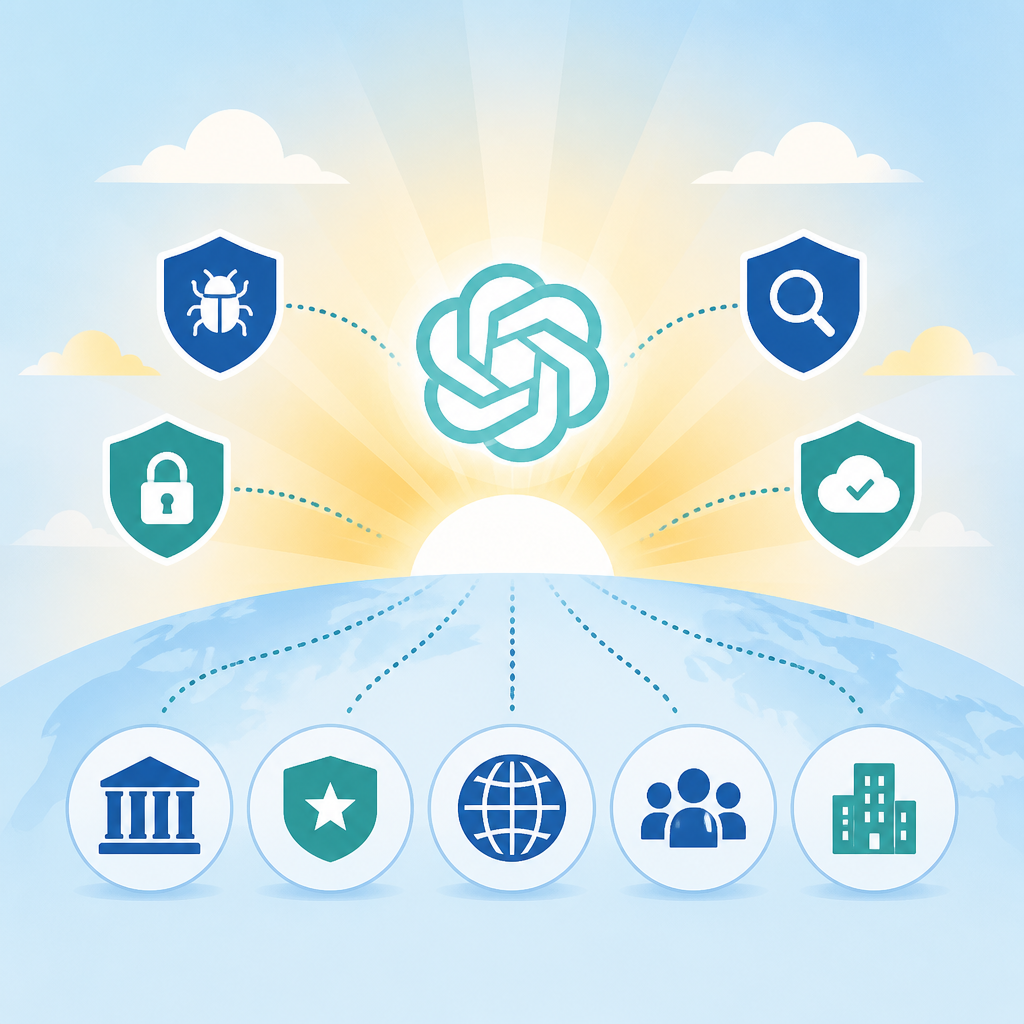
That narrower focus could be an advantage. Security vendors already have distribution, trust relationships, and domain expertise. OpenAI brings model capability and brand weight. Put together, those pieces can create products that are easier for enterprise security teams to justify.
- OpenAI brings model access and platform reach
- Microsoft Security already shows how AI can be packaged for enterprise defense
- Wiz and similar cloud security vendors show how fast security buyers adopt focused tools
- CrowdStrike shows the value of embedding AI into existing security operations
The comparison is useful because it shows what Daybreak is really about: distribution through trust. Security teams rarely buy a model first and figure out the workflow later. They buy a product that fits an existing job, and the model is hidden inside that product. Daybreak seems built for that reality.
What to watch next
The biggest question is whether Daybreak produces named products, reference architectures, or deeper integrations that security teams can actually deploy. OpenAI has not published a long list of technical details on the partner page, so the next signal will come from which companies join and what they build together.
If the program attracts serious security vendors, expect OpenAI to use Daybreak as a template for other regulated markets where governance matters. If it stays vague, it will read like another partner badge page. The difference will come down to whether the first releases solve a real defender job, such as incident summarization, alert triage, or controlled investigation support.
For now, Daybreak is a clear bet that security buyers will accept AI faster when the rules are explicit and the partners already understand the job. The next thing to watch is simple: which vendors show up first, and what they ship within the program.
For more on OpenAI’s product direction, see our coverage of OpenAI’s enterprise AI strategy.
// Related Articles
- [IND]
CBDC Governance: Standards and Stakeholder Roles
- [IND]
Invisible AI watermarks are the right move for Claude
- [IND]
pgvector is enough for small datasets, not your default
- [IND]
OpenAI’s Astra pause shows safety now shapes model releases
- [IND]
Anthropic is building custom AI chips for Claude
- [IND]
Moka AI Is a Stronger HRMS Choice for Growing Teams