OpenAI FDEs turn broken agents into shipped systems
I break down OpenAI’s FDE playbook and turn it into a copy-ready agent deployment template.

OpenAI’s FDE model turns half-built agents into systems people actually ship.
I’ve been building agent workflows long enough to know where they go to die: not in the demo, not in the prompt, but in the week after someone says, “Looks good, let’s roll it out.” That’s where the rot shows up. The model answers nicely in a sandbox, the tools are wired, the notebook looks clean, and then real users hit it with messy data, weird permissions, half-documented APIs, and the classic corporate habit of changing the process after you’ve already encoded it. I’ve watched teams spend months polishing agent behavior and then lose the whole project because nobody owned deployment, monitoring, fallback paths, or the boring human part of adoption. It’s irritating because the failure mode is so predictable. The agent isn’t “smart” enough. The team isn’t “ready.” The workflow isn’t “productionized.” All of that is usually just a polite way of saying nobody stayed close enough to the customer to finish the job.
That’s why I paid attention when I saw the Zhuanlan Zhihu post laying out OpenAI’s FDE push, with the company building a deployment-focused arm and sending people into customer accounts to make the thing work in practice. The post frames it through the idea of “Frontier Deployment Engineers” and ties it to OpenAI’s acquisition of Tomoro, plus the broader race with Anthropic. I’m not treating the article as gospel, because it’s commentary, not a primary announcement. But the underlying pattern is hard to ignore: the companies selling models are moving closer to implementation, and that changes how I think about agent projects.
The part everyone keeps skipping: deployment is the product
Get the latest AI news in your inbox
Weekly picks of model releases, tools, and deep dives — no spam, unsubscribe anytime.
No spam. Unsubscribe at any time.
OpenAI成立Deployment Company,融资40亿美元,收购咨询公司Tomoro,派出“前沿部署工程师”(FDE)进驻企业,手把手帮客户调系统。
What this actually means is simple: the model is no longer the whole story. The deployment motion, the integration work, the debugging in the customer’s environment, and the hand-holding around adoption are part of the product now. If you’ve been treating agent work like “build prompt, connect tools, ship,” you’ve been leaving out the most expensive part.
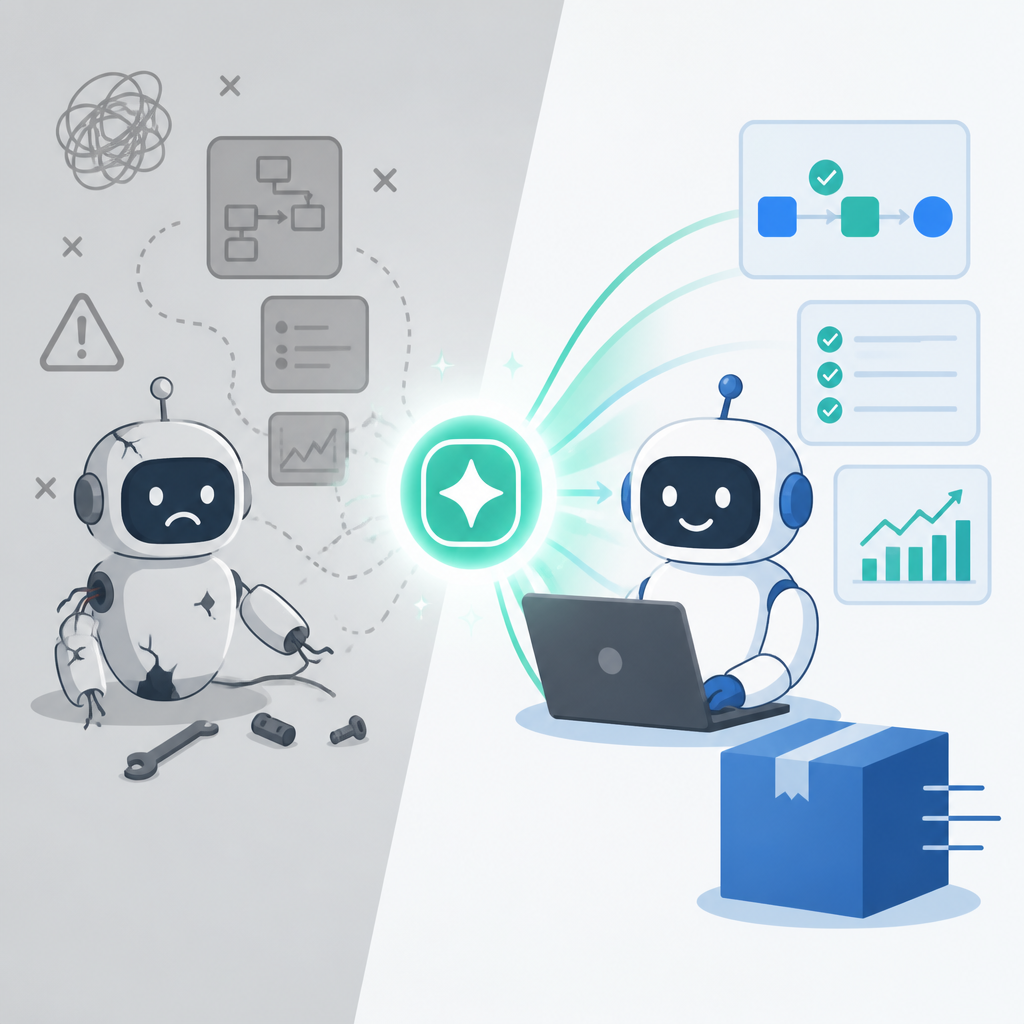
I ran into this over and over with internal copilots. The prototype would impress everyone in a controlled review, then IT would ask about logging, legal would ask about data retention, and the actual users would say the answer quality was fine but the output didn’t fit their workflow. That’s not a model problem. That’s deployment debt.
OpenAI’s FDE idea is basically a confession that generic support is not enough. Somebody has to sit close to the customer, understand the system, and keep adjusting until the thing survives contact with reality. If you’ve ever watched a consultant spend three days just learning the client’s naming conventions and approval chain, you already understand the point.
How to apply it: stop defining agent success as “it answers correctly in evals.” Define it as “a named customer can use it inside their real process without extra heroics.” That means you need ownership for rollout, integration, change management, and follow-up. If you don’t have that person, you do not have a production plan.
Why FDEs exist: the gap between demo and disgust
The ugly truth is that most agent failures are social failures wearing technical clothes. A demo gets applause because it compresses complexity. Production exposes the seams. People need permissions they didn’t mention, edge cases they forgot, and outputs that match the shape of existing work. If the agent asks for one more field than the old process, users will hate it even if the model is “better.”
That’s the niche FDEs are meant to fill. I think of them as the person who translates between model behavior and business reality. They’re not just engineers in the abstract. They’re the person who can sit with a customer, figure out why the workflow breaks, and then change the system without turning it into a science project.
There’s a reason consulting firms make so much money in enterprise software. The software was never the only deliverable. The actual deliverable was “make this fit our org.” OpenAI’s move, as described in the source article, is a bet that model vendors can capture part of that service layer instead of handing it all to external integrators.
- Demo success means the model can answer.
- Deployment success means the customer can adopt it.
- Operational success means the customer keeps using it after the first month.
How to apply it: when you scope an agent project, write down the non-model work explicitly. Include data mapping, permissions, fallback behavior, review loops, and user training. If that list feels embarrassing because it’s longer than the prompt, good. That’s reality.
Tomoro is the clue: systems beat cleverness
The post mentions OpenAI acquiring Tomoro, a consulting company. That detail matters more than the headline if you’re trying to understand the playbook. Buying a consulting shop is not about vanity. It’s about importing the muscle memory of deployment: scoping, stakeholder management, implementation, and the thousand tiny adjustments that make enterprise work possible.
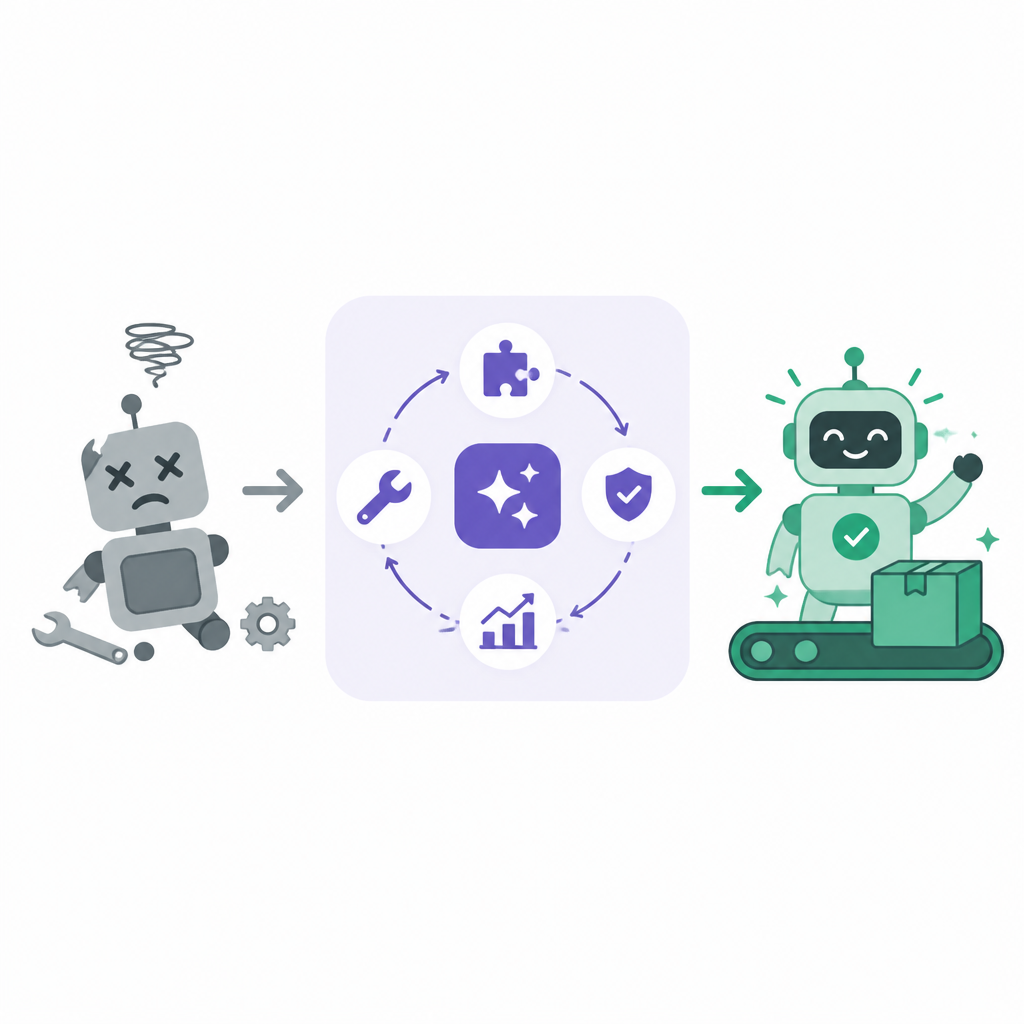
What this actually means is that OpenAI is not just trying to sell access to a model. It’s trying to own the path from interest to adoption. That path is messy, and messy paths are where software companies either grow up or get stuck in endless pilot purgatory.
I’ve seen teams build beautiful agent frameworks and then act shocked when the client asks for custom routing, audit logs, or a way to freeze outputs before they hit downstream systems. The model team calls that “out of scope.” The customer calls it “basic.” Tomoro-style consulting exists because somebody has to bridge that gap without pretending it isn’t there.
How to apply it: if you’re building agent infrastructure, add a deployment layer on purpose. Not a “nice to have” layer. A real one. It should include onboarding docs, environment checks, permission validation, rollback steps, and a human contact for every rollout. If you can’t explain how a customer gets from zero to first value in under a week, your system is not ready.
Anthropic proves the same point from the other side
The source also points to Anthropic working with Blackstone. Different company, same message: the model vendors are moving toward direct enterprise engagement because that’s where the real work is. You can sell APIs all day, but if the customer cannot operationalize the output, you’ve sold a very expensive experiment.
I don’t think this is about one company copying another in some shallow way. It’s more like the market finally admitting that enterprise AI is a services business with software attached. That’s uncomfortable for people who wanted the model to be the whole story, but it’s where the money and the pain both live.
When I hear “partnership,” I usually ask, “Who is doing the integration?” That answer tells me everything. If the answer is “the customer will figure it out,” then the partnership is marketing. If the answer is “we have people on site, we’re mapping workflows, and we own the rollout,” then now we’re talking about a real operating model.
- Model access gets attention.
- Implementation gets budget.
- Adoption keeps the contract alive.
How to apply it: if you’re a smaller team, don’t copy the scale, copy the posture. Act like deployment is part of the product. Build your own version of FDE behavior with a named owner, customer check-ins, and a feedback loop that feeds straight into the agent design.
The real job of an FDE is to kill false confidence
This is the part I respect most. A good deployment engineer does not protect the team’s ego. They destroy the illusion that a polished demo equals readiness. That sounds harsh, but it saves everyone time. If the agent is brittle, say so. If the customer’s process is changing weekly, say so. If the output requires human review, say so before somebody promises full automation in a slide deck.
I’ve been on both sides of that conversation. The worst version is when a team keeps saying, “We can probably make that work,” while quietly hoping the customer won’t notice the gaps. The better version is a blunt checklist: what works, what fails, what needs a human, and what needs more data. That honesty is what lets the project survive.
The FDE model, at least as described in the source material, is basically institutionalized honesty. It says the vendor should be close enough to reality to see the cracks early. That’s a lot more useful than shipping a shiny API and praying the customer has a strong enough engineering org to absorb the pain.
How to apply it: create a readiness review before every rollout. Ask four questions: What data is missing? What permissions are unclear? What output needs human approval? What happens when the model is wrong? If you cannot answer those cleanly, you are still in pilot territory.
What I’d steal from this if I were building agents today
If I strip the hype away, the lesson is not “OpenAI is hiring consultants.” The lesson is that agent systems need a deployment discipline, and most teams don’t have one. They have prompts, evals, maybe a dashboard, and a prayer. That’s not enough once real users show up.
I’d steal three things from the FDE model. First, keep implementation close to the product team so customer pain feeds back fast. Second, make someone accountable for adoption, not just code. Third, treat every rollout like a living system, because it is one. The customer environment will change, the workflow will drift, and the agent will need maintenance whether your roadmap admits it or not.
If you’re a startup, this is especially important. You cannot afford a giant services org, but you also cannot afford fake product-market fit. So build a thin deployment function: one person who owns the customer’s path from trial to production, one checklist for launch, and one loop for post-launch fixes. That gets you most of the value without pretending you’re a consulting firm.
How to apply it: make deployment artifacts part of the repo. Not separate tribal knowledge. Put the rollout checklist, escalation path, and customer-specific notes where engineers can see them. If the knowledge lives only in Slack, you’ll lose it the moment someone gets busy.
The template you can copy
# Agent Deployment Playbook

## 1. Goal
Ship an agent that works inside a real customer workflow, not just in a demo.

## 2. Owner
- Product owner:
- Engineering owner:
- Deployment owner:
- Customer contact:

## 3. Customer workflow
- Current process:
- Where the agent fits:
- Inputs it needs:
- Outputs it produces:
- Human approval points:

## 4. Readiness checklist
- Required data is available
- Permissions are confirmed
- Logging is enabled
- Fallback behavior is defined
- Human review path is documented
- Rollback plan exists
- Customer training is scheduled

## 5. Failure modes
- Missing data:
- Bad tool call:
- Wrong output format:
- Permission denied:
- Model uncertainty:
- Customer process change:

## 6. Deployment steps
1. Validate environment
2. Connect tools
3. Run test cases
4. Review outputs with customer
5. Fix workflow gaps
6. Launch to a small user group
7. Monitor first week daily
8. Expand only after stable usage

## 7. Post-launch loop
- Daily issues:
- Weekly review:
- Metrics tracked:
- Customer feedback source:
- Next fixes:

## 8. Success criteria
- User can complete the task without extra help
- Output fits the existing workflow
- Errors are visible and recoverable
- Customer keeps using it after launch

## 9. Notes
- What changed from the original process:
- What the model still cannot do:
- What needs a human every time:
The point of this template is not to make your project look organized. It’s to force the messy parts into daylight before they become support tickets. Fill it out with real names, real workflows, and real failure cases. If you can’t write those down, the agent is not ready yet.
That’s the part I wish more teams understood. The future of agent work is not just better models. It’s better deployment habits. And honestly, that’s a relief, because habits are something we can actually improve.
Source attribution: I’m breaking down ideas from the original Zhihu post at https://zhuanlan.zhihu.com/p/2054104152914105203. The template and deployment framing here are my own synthesis built from that source, not a direct excerpt.
// Related Articles
- [TOOLS]
One API gateway turns six AI APIs into one
- [TOOLS]
Anthropic’s daily brief turns news into a workflow
- [TOOLS]
Claude Reflect turns usage into retention
- [TOOLS]
Midjourney turns prompt ideas into art
- [TOOLS]
Ultralytics YOLO26 powers fast vision tasks
- [TOOLS]
Windsurf AI Review 2026: Best AI Code Editor?