OpenAI files IPO paperwork as scrutiny grows
OpenAI has filed confidential IPO paperwork while facing a multistate probe into possible user harm.

OpenAI has filed confidential paperwork for a possible public listing while regulators probe user harm.
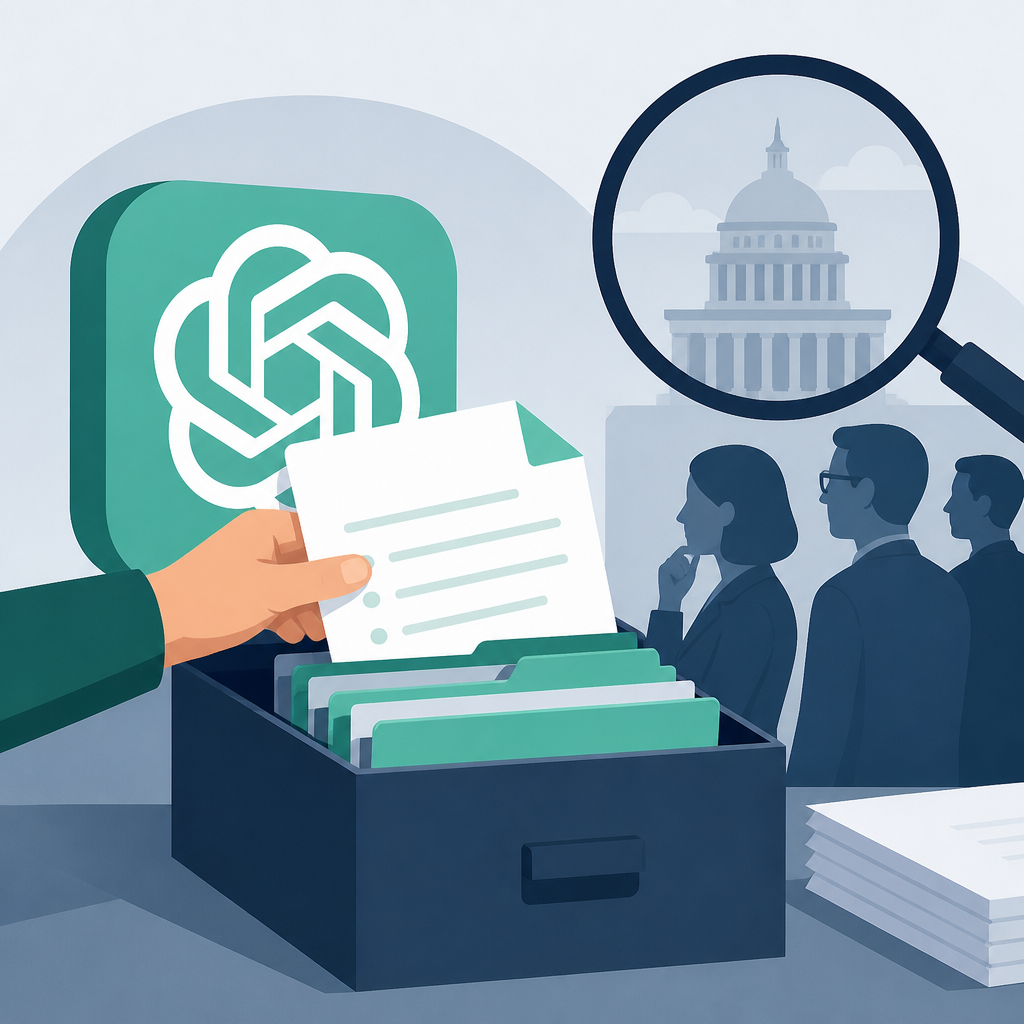
OpenAI has quietly taken a big step toward Wall Street. The company said Monday it submitted confidential documents to the U.S. Securities and Exchange Commission, a move that could lead to an initial public offering, even as it faces fresh scrutiny from state attorneys general.
The timing matters. OpenAI is still one of the most closely watched private companies in tech, and an IPO would force far more financial disclosure than it has ever had to provide. It would also put a hard number on how investors value a company whose products now sit inside everyday workflows for coding, writing, search, and customer support.
| Item | What OpenAI disclosed |
|---|---|
| Filing status | Confidential paperwork submitted to the SEC |
| Possible outcome | Public listing through an initial public offering |
| Regulatory pressure | Multistate probe into possible user harm |
What the filing actually means
Get the latest AI news in your inbox
Weekly picks of model releases, tools, and deep dives — no spam, unsubscribe anytime.
No spam. Unsubscribe at any time.
Confidential IPO paperwork is the first formal step in a process that can take months. It lets a company test the waters with regulators and bankers before it has to publish the full financial details that public investors expect.
For OpenAI, that matters because the company has grown up in a very different setting from a typical software startup. It has raised huge sums, shipped products at speed, and become central to the AI boom without the kind of public reporting that comes with being listed on NYSE or Nasdaq.
That makes the filing less like a celebration and more like a checkpoint. If OpenAI keeps moving toward an IPO, investors will eventually want answers on revenue, losses, governance, and how the company plans to fund the compute it needs for its next generation of models.
- Confidential filings are common before a public offering.
- The company does not have to publish full numbers yet.
- The SEC review can change the timeline fast.
- Any public listing will increase pressure on OpenAI’s governance.
Why the timing is awkward
The filing landed while OpenAI is also dealing with a multistate probe into possible user harm. That combination creates a familiar tech story: the business wants capital and scale, while regulators want answers about risk.
OpenAI has already been under intense public debate over model safety, copyright, misinformation, and the way people use chatbots for emotional support or advice. A public listing would put those issues under a brighter spotlight because investors would have a direct stake in how the company handles them.
There is also a practical angle. Public markets tend to reward growth, but they punish uncertainty. If OpenAI’s products keep expanding while regulators keep asking harder questions, the company will need to prove that trust and revenue can grow together.
“We are not trying to build a chatbot. We are trying to build a system that can understand and generate any kind of content.” — Sam Altman, OpenAI CEO, in a 2023 interview with The Verge
That quote captures the scale of OpenAI’s ambition. It also explains why the company is now under more pressure than a normal app maker. The bigger the system, the more regulators will ask who it affects and how.
How OpenAI compares with other AI companies
OpenAI is not the only AI company facing big-money questions, but it is the one with the clearest path to a public market debut. The contrast with peers is sharp.

Anthropic, for example, has been focused on private fundraising and research-backed growth. It recently pledged $200 million to study AI’s economic impact, a reminder that the leading AI labs are still trying to define their public responsibilities before they face public shareholders.
Meanwhile, OpenAI’s product footprint is already broad. ChatGPT is used by consumers, developers, and enterprises, while the company’s models are embedded in tools and workflows across the software industry. That gives OpenAI a stronger case for public-market demand, but it also means more scrutiny if usage causes harm.
- Anthropic is still private and research-heavy.
- OpenAI has a larger consumer brand through ChatGPT.
- Public investors will demand clearer financials than private backers do.
- Regulators will likely watch the IPO process closely because of the active probe.
One more comparison matters: public AI companies already face a different kind of pressure from the market. When Microsoft or NVIDIA announce AI moves, investors immediately model the revenue impact. OpenAI would have to live inside that same weekly earnings machine.
What to watch next
The next milestone is simple: whether OpenAI turns this confidential filing into a formal IPO roadshow, or slows down if legal and regulatory risk gets heavier. The company has not said when, or even whether, it will actually list.
Still, the direction is clear. OpenAI is acting like a company that wants public-market access, which means it will eventually have to answer public-market questions. Those questions will be about growth, safety, governance, and whether its products can keep scaling without creating more legal headaches than the business can absorb.
If the IPO goes ahead, the most important number may not be the valuation. It may be the first quarter where OpenAI has to explain its business in plain English to public investors, state regulators, and customers at the same time.
That is the real story here: OpenAI is moving from private hype to public accountability, and the next filing will tell us whether the company is ready for that tradeoff.
// Related Articles
- [MODEL]
August 2026 model rankings: Claude leads text, Kimi coding
- [MODEL]
Qwen3.8-Max pushes Alibaba into the top tier
- [MODEL]
Qwen3.8-Max proves that agentic work is the real frontier
- [MODEL]
Google Earth Should Not Ship AI Image Generation
- [MODEL]
Try Claude Opus 4.7 and read its benchmarks
- [MODEL]
Opus 5 lets you cut cost without losing quality