OpenAI should not rush its IPO, and that is the point
OpenAI’s confidential S-1 signals an IPO path, but the company is right to keep the timeline open.

OpenAI’s confidential S-1 shows an IPO is coming, but not soon.
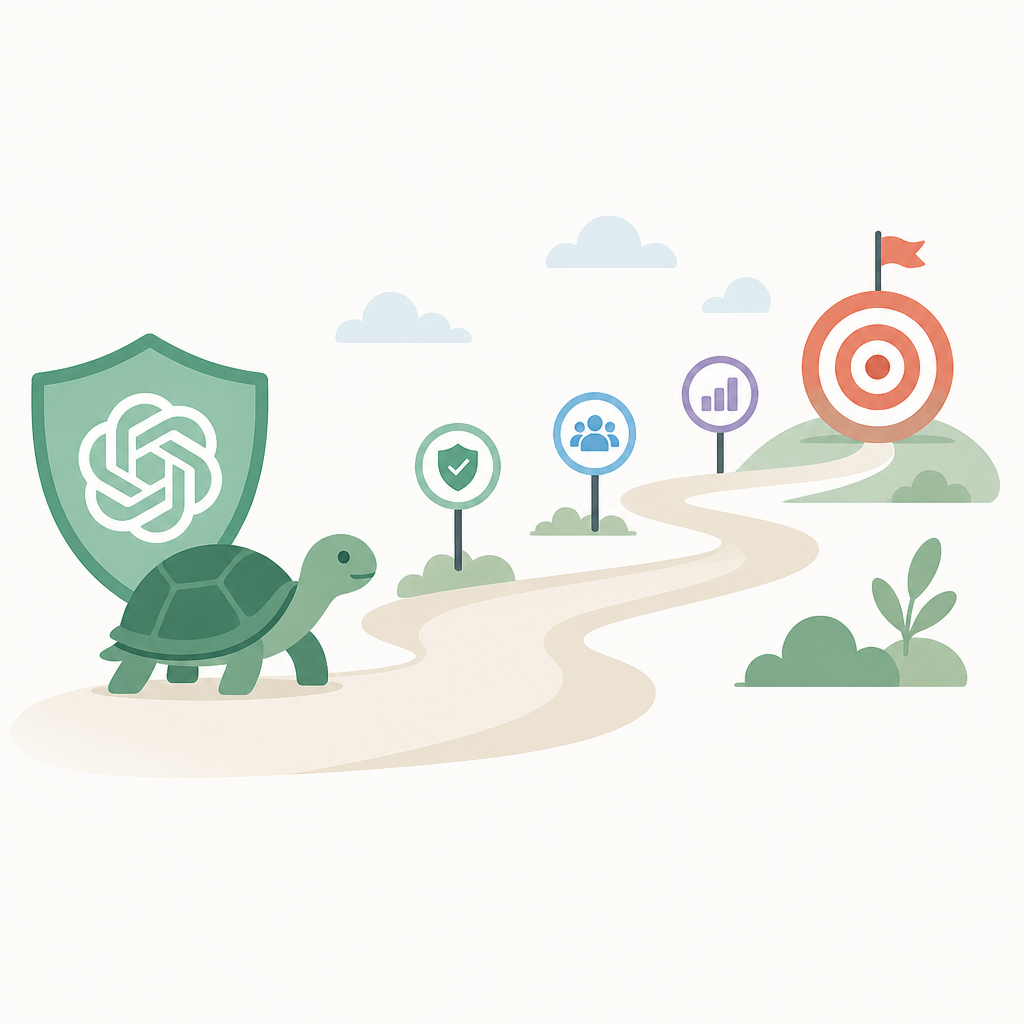
OpenAI is right to manage expectations around its IPO because a rushed listing would turn a strategic financing event into a public stress test. The company has only said it filed a confidential S-1 with the SEC, which is the first formal step toward going public, and that language matters: it signals intent without promising a date. In a market that loves countdowns, OpenAI is refusing to hand investors a clock.
The company needs room, not a deadline
Get the latest AI news in your inbox
Weekly picks of model releases, tools, and deep dives — no spam, unsubscribe anytime.
No spam. Unsubscribe at any time.
The first argument for caution is simple: OpenAI is still operating in a phase where product, infrastructure, and governance are changing fast. A confidential S-1 starts the regulatory process, but it does not mean the business is ready for the discipline of quarterly public scrutiny. If the company is still balancing model releases, safety commitments, and enormous compute costs, a fixed IPO date would force it to optimize for optics instead of execution.

That is not a theoretical concern. Public markets punish ambiguity, and AI companies live with a lot of it. OpenAI has to manage pricing, enterprise adoption, frontier model development, and legal scrutiny at the same time. A premature listing would freeze those tradeoffs in front of analysts who want clean margins and neat guidance. Keeping the timeline vague preserves strategic flexibility while the company still has major internal decisions to make.
Expectation management is a feature, not a dodge
The second argument is that careful messaging protects both the company and the market from hype-driven distortion. OpenAI is one of the most closely watched private companies in the world, so any hint of an IPO date would trigger speculation, valuation theater, and a wave of narratives about who wins, who loses, and how much the company is “worth.” By saying little beyond the filing itself, OpenAI reduces the chance that a procedural step gets mistaken for a launch signal.
There is a real precedent for why this restraint matters. Tech IPOs often arrive after a long stretch of overpromising, and the result is a public debut that has to absorb unrealistic expectations on day one. OpenAI’s business is more sensitive than most because its value is tied not just to revenue, but to trust in its models and governance. If the company lets the market treat the S-1 as a near-term promise, it invites the exact kind of speculative pressure that can damage a debut before it happens.
The counter-argument
The strongest case against this view is that OpenAI should use the IPO moment to build confidence, not uncertainty. Investors, employees, and partners want clarity. A public listing can provide liquidity, stronger governance, and a clearer capital base for the massive spending AI requires. From that perspective, a firm timeline would show control and maturity, and the company’s reluctance to give one can look like hesitation.
There is also a market argument: if OpenAI is already filing, why not lean into the process and let demand build? A company with this level of attention can use transparency to anchor expectations and reduce rumor-driven volatility. Some will say the longer it waits, the more it risks wasting momentum.
That argument misses the main constraint: momentum is not the same thing as readiness. OpenAI does not benefit from speed if speed forces it to explain unfinished economics, unresolved governance questions, or an operating model that is still being rewritten by product cycles. The company should accept one limit, though: it must eventually give the market a real path forward. But right now, refusing to promise a date is the correct move because it keeps the IPO process tied to business readiness, not public impatience.
What to do with this
If you are a founder, treat OpenAI’s move as a reminder that going public is not a victory lap, it is a commitment to sustained transparency. If you are a PM or engineer, read the message as a signal that the company is prioritizing control over spectacle, which means your job is to ship durable systems, not chase announcement cycles. The right lesson is not to speculate on the listing date, but to assume the company will keep choosing operational flexibility until the numbers, governance, and product story are all strong enough to survive the public market.
// Related Articles
- [IND]
Kimi K3 pushes open-weight AI toward default
- [IND]
Anthropic’s open-model fight reveals its lonely AI stance
- [IND]
Immich Docker Compose setup that avoids common errors
- [IND]
Millions Raised for Zhipu-style Social World Model
- [IND]
Anthropic’s Book Scanning Strategy Could Set a Pattern
- [IND]
Huang’s open-letter playbook for open-weight AI