OpenAI’s Sora hardware targets enterprise video
OpenAI’s Sora enterprise hardware brings local AI video generation to studios, agencies, and firms that need speed and privacy.

OpenAI’s Sora enterprise hardware brings local AI video generation to studios and agencies.
OpenAI’s enterprise-focused OpenAI Sora device is scheduled to launch on July 15, 2026, with a listed price of $2,499. The pitch is simple: keep video generation inside the company instead of pushing every job through the cloud.
The article’s hardware claims are unusually specific for an AI product story. It says the unit ships with 32GB of RAM, 1TB of storage, an Intel Xeon processor, a 15.6-inch 4K OLED screen, and an 80Wh battery, with rumors of a 64GB RAM version and a 2TB storage option later on.
| Spec | Reported value | Why it matters |
|---|---|---|
| Launch date | July 15, 2026 | Gives enterprises a fixed procurement target |
| Price | $2,499 | Sets the entry cost for on-site deployment |
| Memory | 32GB RAM | Supports heavier local workloads |
| Storage | 1TB | Leaves room for large video assets |
| Display | 15.6-inch 4K OLED | Useful for color-sensitive review work |
| Battery | 80Wh | Points to mobile professional use |
What OpenAI appears to be building
Get the latest AI news in your inbox
Weekly picks of model releases, tools, and deep dives — no spam, unsubscribe anytime.
No spam. Unsubscribe at any time.
The most interesting part of this story is the direction it points to. Instead of treating Sora as a pure cloud service, OpenAI is described here as packaging it into dedicated hardware for enterprise workflows.
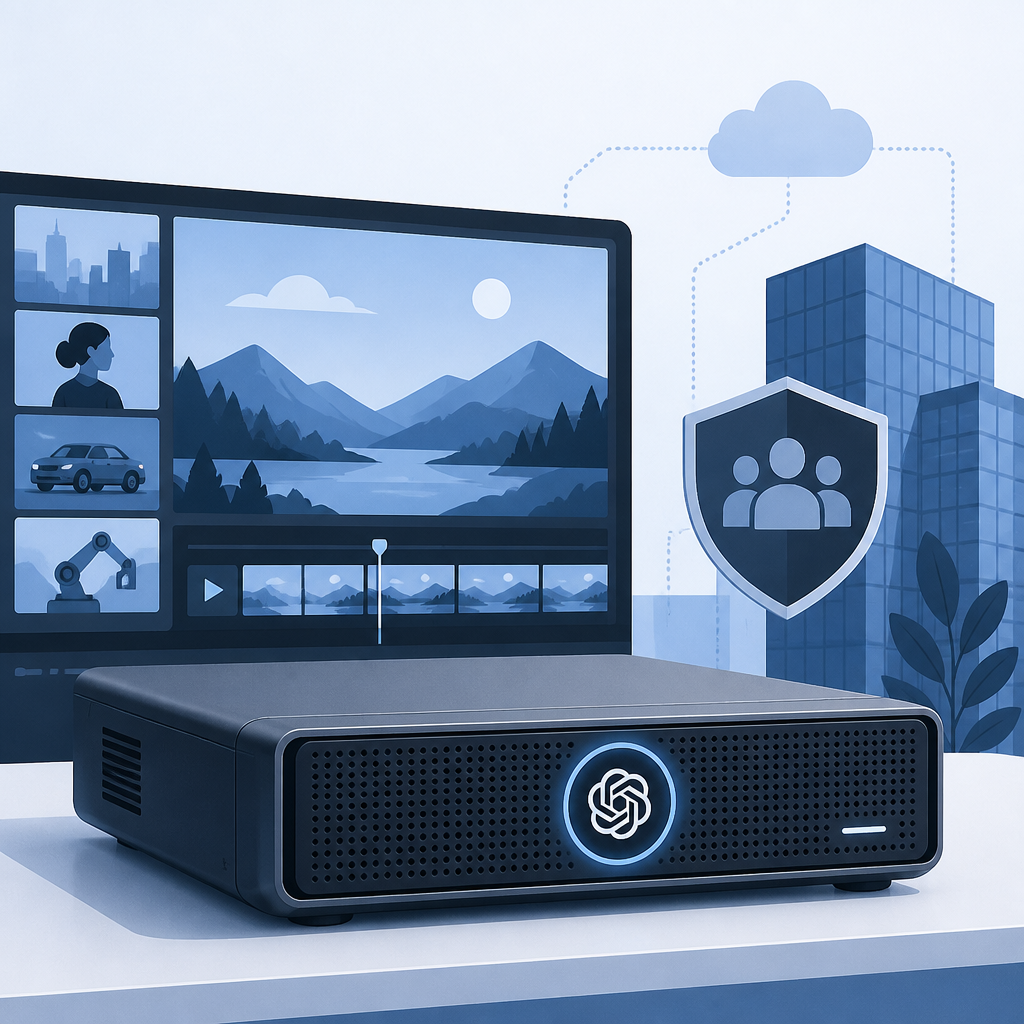
That matters because video generation is one of the heaviest AI tasks around. A local machine with an Intel Xeon processor is a different bet from a browser tab connected to remote servers. It suggests OpenAI wants predictable performance, fewer network bottlenecks, and a tighter grip on where creative data lives.
If the reported specs hold up, the device is aimed at teams that care about output quality more than consumer convenience. A 4K OLED panel is a strong clue here. That kind of screen is useful when color accuracy matters during review, approval, and client sign-off.
The article also hints at future higher-memory and larger-storage variants. If those versions arrive, they would make more sense for production houses that keep long timelines, high-resolution source footage, and multiple render iterations on hand.
- 32GB RAM for the base model
- 1TB storage for local asset handling
- 80Wh battery for mobile workflows
- 15.6-inch 4K OLED display for color-critical review
Why enterprises may care more than consumers
For most companies, the appeal is not novelty. It is control. Local processing can reduce latency, keep proprietary footage off third-party servers, and make it easier to work in environments with strict data policies.
That is a strong fit for film studios, ad agencies, and architectural visualization firms, which all need fast iteration and often handle sensitive client material. In those settings, even small delays in render turnaround can slow approvals and raise costs.
“The future of AI is not about replacing humans, it’s about augmenting human capabilities.” — Jensen Huang, NVIDIA GTC 2024 keynote
Huang’s line matters here because it captures the practical pitch behind enterprise AI hardware. Tools like this are sold on productivity, but the real win is usually workflow compression: fewer handoffs, fewer uploads, and fewer places for files to get stuck.
There is also a security angle. An offline-capable system gives IT teams something cloud subscriptions cannot always promise: a clearer boundary around where data moves and who can access it. For sectors that live and die by confidentiality, that is often worth more than the newest model name.
How this compares with cloud-first AI
The trade-off is straightforward. Cloud systems usually update faster and can tap into much larger compute pools. Local hardware gives you tighter control, but it can age quickly if the software side moves faster than the device refresh cycle.
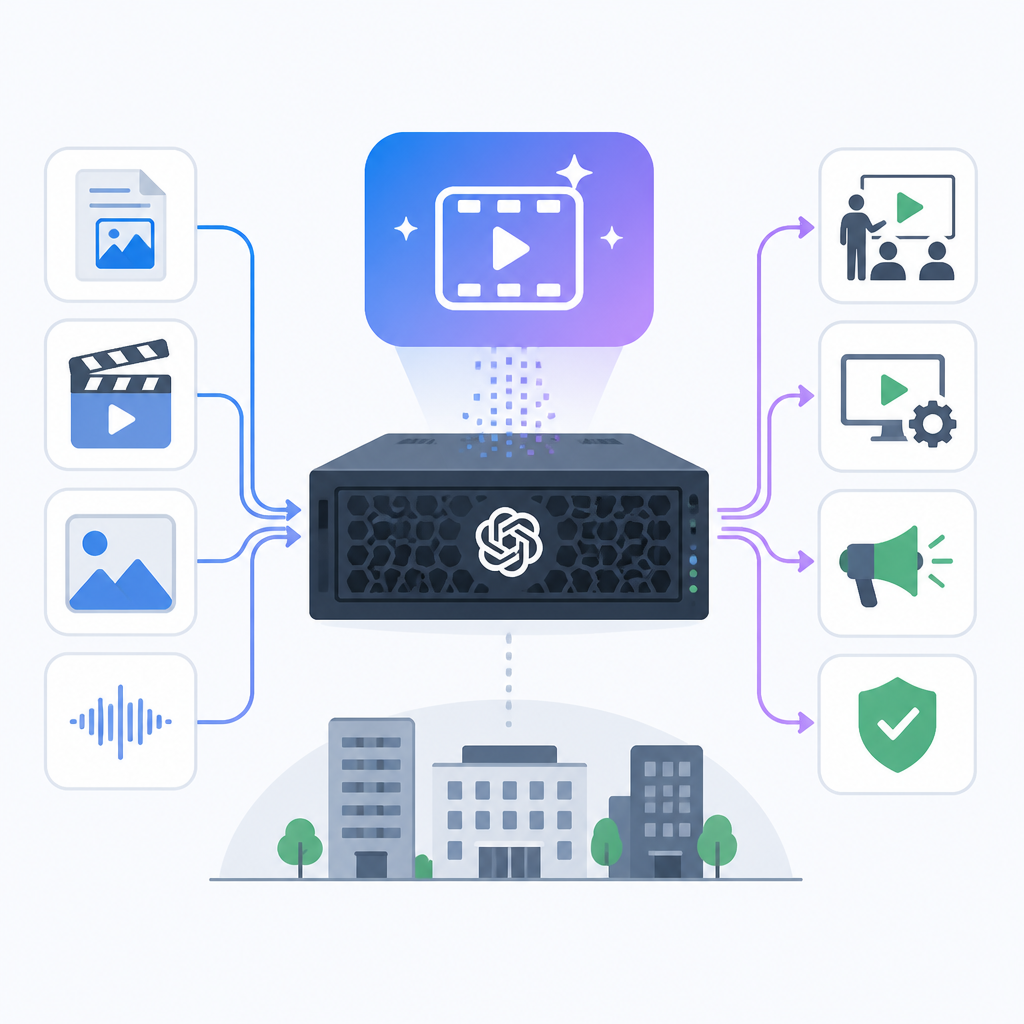
That tension is the whole story here. If OpenAI keeps improving Sora in the cloud while the hardware version stays fixed, buyers will have to decide whether they want the newest model behavior or the safer deployment model.
- Cloud AI can scale up quickly when demand spikes
- Local AI can keep work on-premises for privacy and compliance
- Cloud tools often depend on bandwidth and uptime
- Hardware purchases usually need a longer refresh cycle
The article claims local processing could cut rendering times for complex 4K sequences compared with cloud-based alternatives, especially where bandwidth is a bottleneck. That is believable in principle, but the real test will be benchmark data from independent reviewers, not launch-day marketing.
One thing is already clear: if the device costs $2,499, it is not trying to win on mass-market appeal. It is trying to win a budget line inside a studio, agency, or design firm where one saved day in production can justify the purchase.
What to watch after the July 15 launch
The next question is whether OpenAI can make the hardware version feel like more than a niche add-on. If the enterprise unit delivers consistent output, keeps sensitive media local, and avoids the usual first-generation hardware headaches, it could become a practical option for teams that already spend heavily on creative infrastructure.
But the benchmark question is still open. Buyers should look for side-by-side tests against cloud-based Sora workflows, especially on render time, output quality, and how well the device handles long sessions under load.
My read is that the launch will matter most to organizations with strict privacy rules and repetitive video workloads. If you are running a studio or agency, the deciding factor will not be the brand name. It will be whether this box saves enough time to justify replacing a cloud workflow you already trust.
That is the real test for OpenAI’s Sora hardware: can it earn a permanent place on a production desk, or will it stay a specialized tool for a narrow set of teams?
// Related Articles
- [MODEL]
Qwen3.8-Max pushes Alibaba into the top tier
- [MODEL]
Qwen3.8-Max proves that agentic work is the real frontier
- [MODEL]
Google Earth Should Not Ship AI Image Generation
- [MODEL]
Try Claude Opus 4.7 and read its benchmarks
- [MODEL]
Opus 5 lets you cut cost without losing quality
- [MODEL]
OpenAI Cuts GPT-5.6 Prices as AI Bills Climb