TCS and Anthropic strike enterprise AI pact
TCS will give 50,000 employees access to Claude as it and Anthropic sell enterprise AI services together.

TCS will give 50,000 employees access to Claude while it and Anthropic sell enterprise AI services together.
Tata Consultancy Services and Anthropic have launched a Global Premier Partnership aimed at enterprise AI adoption at scale. The headline number is hard to miss: 50,000 TCS associates will get enterprise-wide access to Claude, and that internal rollout is meant to feed real client work, not just a pilot deck.
The move matters because it combines four things companies usually buy separately: internal deployment, joint selling, industry-specific solution design, and staff training. TCS wants to use Claude across engineering, finance, legal, marketing, and sales, then turn those lessons into offerings for customers in regulated industries and large enterprises that need measurable outcomes.
| Item | Detail |
|---|---|
| Partner 1 | Tata Consultancy Services |
| Partner 2 | Anthropic |
| Employees getting Claude | 50,000 |
| Functions covered | Engineering, finance, legal, marketing, sales |
| Target sectors | Financial services, public services, life sciences, healthcare, aviation, telecom, medtech |
Why this partnership is different
Get the latest AI news in your inbox
Weekly picks of model releases, tools, and deep dives — no spam, unsubscribe anytime.
No spam. Unsubscribe at any time.
Most enterprise AI announcements stop at a press release and a vague promise of transformation. This one is more concrete because TCS is committing to use Claude inside its own business at scale, which gives the company a live test bed for workflow redesign, employee adoption, and governance.

That internal use matters in consulting and IT services. If TCS can show that Claude improves day-to-day work for 50,000 people, it can package those lessons into repeatable client services instead of selling theory.
The other big signal is the joint go-to-market plan. TCS and Anthropic are not treating this as a one-off integration. They are building a commercial motion around it, which usually means sales teams, delivery teams, and product teams will need to align on what gets sold, how it gets deployed, and how results get measured.
- Internal adoption at TCS across 50,000 associates
- Joint enterprise AI offerings for external clients
- Industry-specific work for regulated sectors
- Workforce enablement across multiple business functions
What Claude inside TCS could change
Claude is Anthropic’s flagship model family, and the company has pushed hard on enterprise features such as long-context reasoning, safety controls, and administrative tooling. You can see that focus in Anthropic’s own product pages and developer docs, which are built around business use rather than consumer chat novelty.
For TCS, the practical question is simpler: where does Claude save time, reduce errors, or improve throughput? In consulting and software delivery, the obvious candidates are code generation, document drafting, policy review, customer support workflows, and knowledge search across internal systems.
“The biggest challenge in AI is not building the model, but making it useful, safe, and reliable in the real world,” Anthropic co-founder and CEO Dario Amodei said in a 2024 interview with The Wall Street Journal.
That quote fits this deal well. TCS is effectively betting that enterprise value comes from putting a model into the messy middle of real operations, where human review, data access, and process design matter as much as raw model quality.
If the rollout works, TCS gets more than software access. It gets a large-scale benchmark for how employees actually use AI in regulated, high-stakes work. That is the kind of evidence clients ask for when they want to know whether an AI tool can survive contact with procurement, compliance, and security teams.
Why regulated industries are the target
The press release calls out financial services, public services, life sciences, healthcare, aviation, telecom, and medtech. That list is a clue. These sectors buy slowly, care deeply about auditability, and usually need a partner that can translate AI capability into controls, documentation, and integration work.
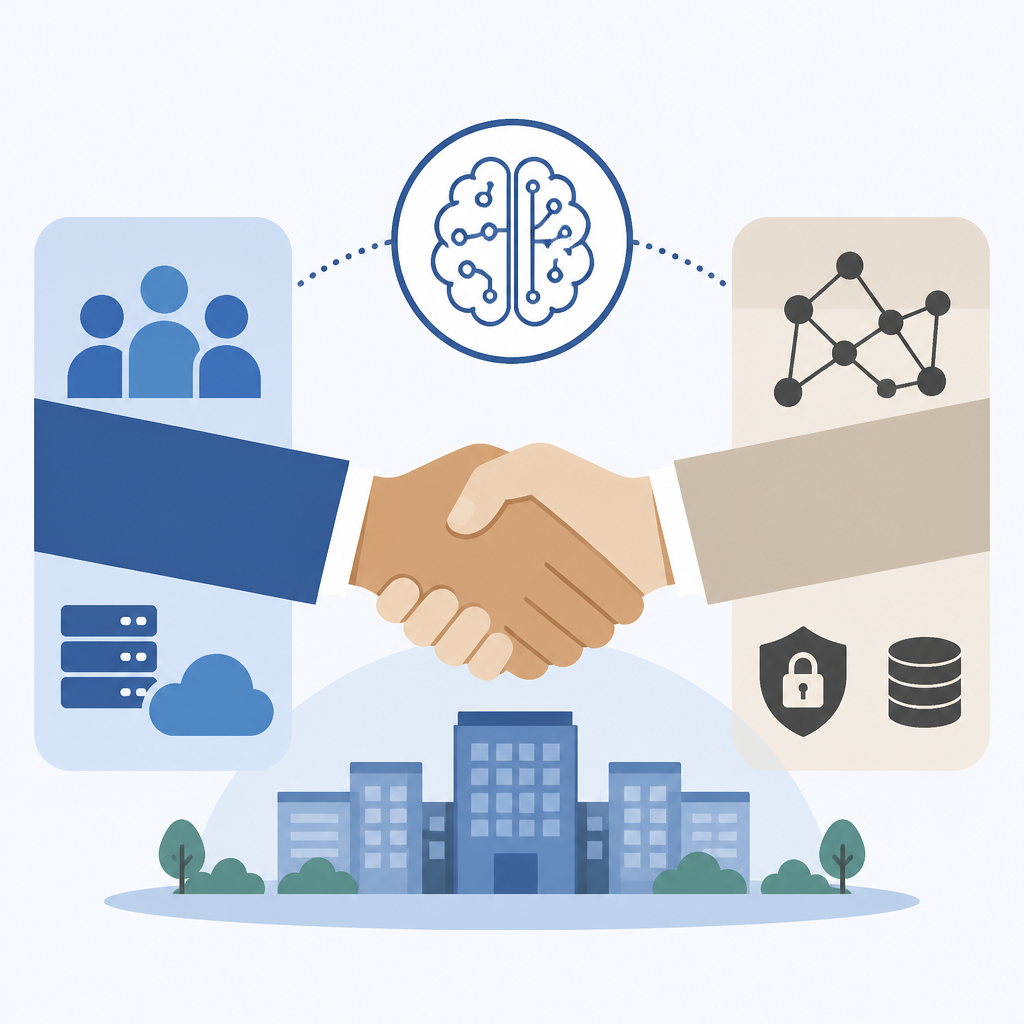
TCS already has the kind of delivery footprint that fits those buyers. Anthropic brings model capability and an enterprise-facing AI product line. Together, they are trying to sell something more durable than a chatbot demo: applied AI services that fit existing enterprise risk rules.
- Claude is being positioned for enterprise workflows, not consumer novelty
- 50,000 TCS associates gives the rollout unusual scale for a services company
- Regulated sectors usually demand proof on security, governance, and audit trails
- Joint delivery can reduce the gap between model capability and business adoption
The comparison that matters is between a normal software license and a services-led AI deployment. A license alone gives access. A services-led deployment gives process redesign, training, and a way to measure whether the model actually changes output quality or cycle time.
That is where TCS has an edge. It can wrap Claude in consulting, integration, and change management work, which is what most large enterprises need before they will let AI touch core operations.
What to watch next
The real test is whether TCS publishes concrete outcomes from its own rollout. If the company can point to measurable gains in developer productivity, faster legal review, better sales support, or shorter finance workflows, this partnership becomes a reference case for other large enterprises.
For now, the deal says something simple about where enterprise AI is heading: the winners will be the companies that can combine model access with implementation muscle and internal proof. If TCS can turn 50,000 Claude users into a repeatable client playbook, rivals will have to answer a harder question than “which model is best?” They will have to explain how they plan to make AI work inside a real business.
That is the number to watch over the next few quarters: 50,000 employees, then client deployments, then measurable results. If those pieces line up, this partnership will look less like a branding move and more like a template for enterprise AI services.
// Related Articles
- [AGENT]
GenAI.mil turns a scary prompt into a report
- [AGENT]
EPAM’s OpenAI deal turns pilots into production
- [AGENT]
Prompt engineering is overrated for Claude Code
- [AGENT]
Grok Build adds live previews and rewind fixes
- [AGENT]
Kimi K3 Benchmark Evaluation Guide for Coding Agents
- [AGENT]
Meta’s first paid model proves AI coding is now a price war