Meta’s first paid model proves AI coding is now a price war
Meta’s paid Muse Spark 1.1 shows AI coding is now a price war, not a model-size race.

Meta’s paid Muse Spark 1.1 shows AI coding is now a price war, not a model-size race.
Meta’s decision to charge for Muse Spark 1.1 is the clearest sign yet that AI coding has entered a commodity fight on price, orchestration, and deployment friction, not just raw benchmark bragging rights.
Price is now the sharpest competitive weapon
Get the latest AI news in your inbox
Weekly picks of model releases, tools, and deep dives — no spam, unsubscribe anytime.
No spam. Unsubscribe at any time.
Meta’s reported API pricing, $1.25 per million input tokens and $4.25 per million output tokens, undercuts premium rivals by a wide margin. That is not a cosmetic discount. It is a deliberate attempt to make agent experimentation cheap enough that teams can run more workflows, fail faster, and ship sooner.
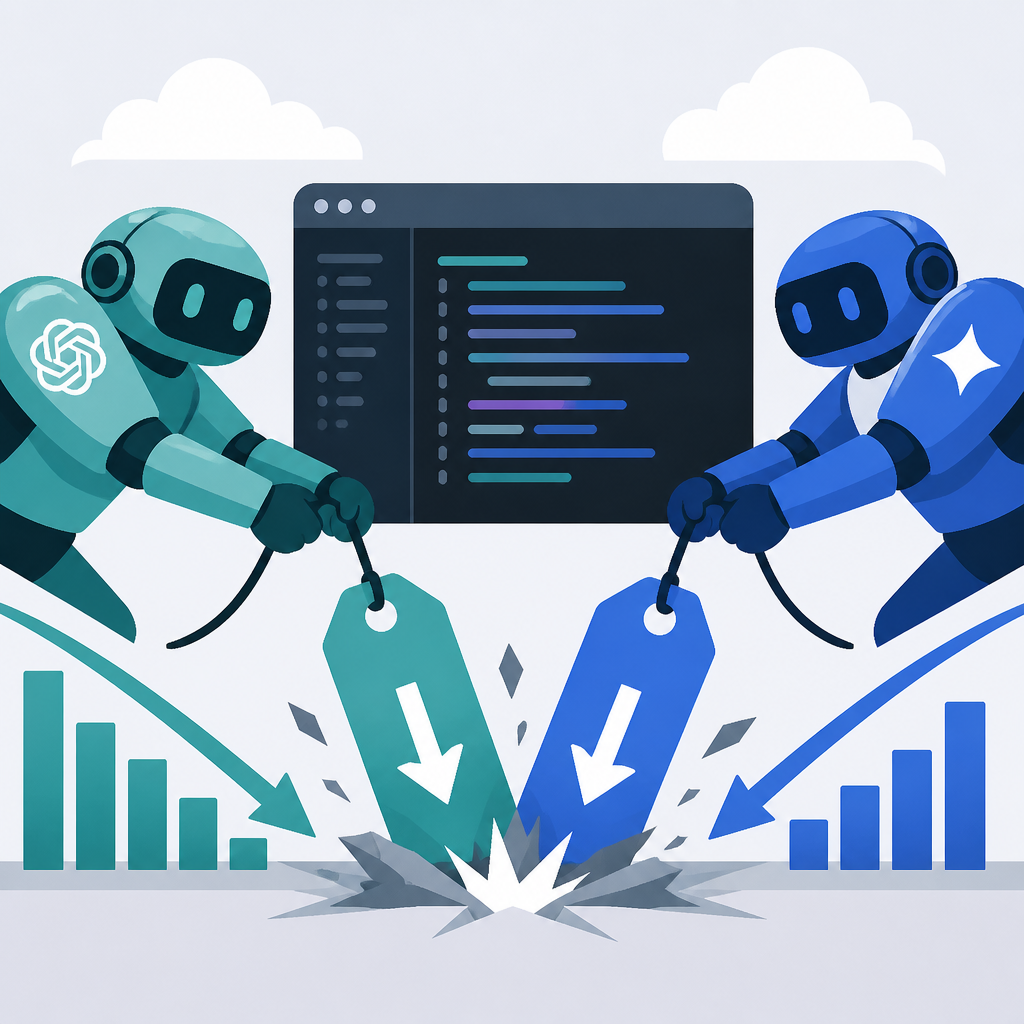
The more important detail is compatibility. By supporting OpenAI and Anthropic SDK formats, Meta removes a major switching cost. Developers do not need to rebuild their stack to test a new model. They change the base URL and keep moving. In a market where adoption is often blocked by integration pain, that is a serious strategic advantage.
Multi-agent design is becoming the real product
Muse Spark 1.1 is positioned less as a single brilliant coder and more as a workhorse for agentic tasks. Its primary-agent and subagent structure reflects where the field is actually heading: complex work gets decomposed, parallelized, and checked by separate roles instead of being forced through one monolithic prompt.
The benchmark story supports that shift. Meta claims strong results on tool-use evaluations such as JobBench and MCP Atlas, while still trailing top rivals on pure coding accuracy. That tradeoff matters. For many production systems, the winning model is not the one that writes the prettiest function in isolation, but the one that can gather context, call tools, coordinate substeps, and finish the job with fewer human interventions.
AI coding is no longer only about code quality
The market has moved past the old assumption that the best coding model automatically wins developer mindshare. Today, teams care about latency, orchestration, context handling, and cost per task. A model that is slightly weaker on a benchmark can still win if it is cheaper, easier to integrate, and better at long-running workflows.
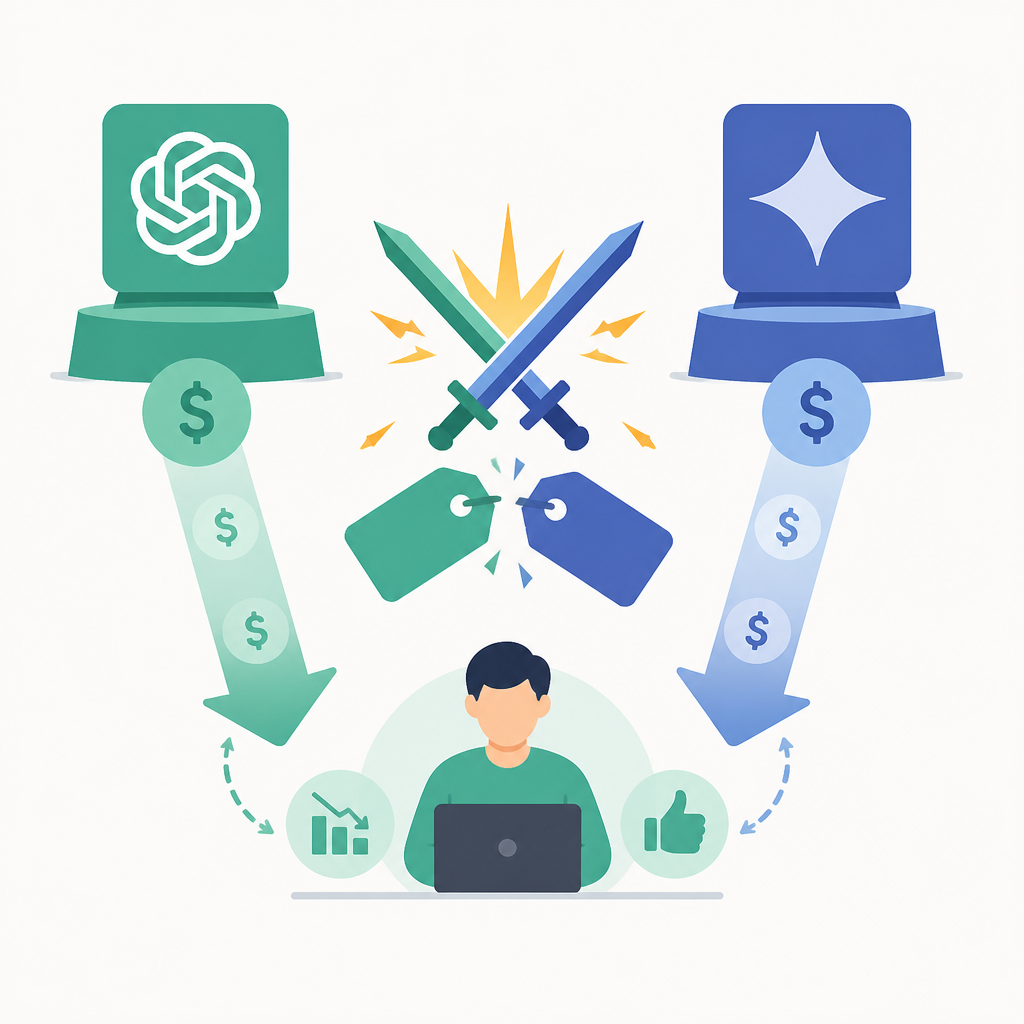
That is why Meta’s move matters beyond Meta. It confirms that the center of gravity in AI coding has shifted from isolated generation to system design. The real competition is now between agent stacks, not just model weights. Whoever makes the full workflow cheaper and more reliable will capture the next wave of developer spend.
The counter-argument
The strongest objection is simple: benchmark leadership still matters, and a cheaper model that trails on core coding accuracy can become a false economy. If the model makes more mistakes, teams spend the savings on review, retries, and debugging. In that view, price cuts are only useful once a model is already good enough on the hard tasks.
There is also a second concern: Meta’s own figures are self-reported, and the public preview is limited. Until independent testing confirms the claims, the pricing headline may be louder than the actual product advantage. In a field where vendor benchmarks are often selective, skepticism is healthy.
That objection is valid, but it does not overturn the larger point. AI coding adoption is not decided by one benchmark alone. It is decided by the total cost of getting useful work done. If a model is cheaper, easy to swap in, and strong enough at orchestration, it can win real workloads even before it tops every leaderboard.
What to do with this
If you are an engineer or PM building on AI coding tools, stop optimizing for a single score and start measuring task completion cost, tool-call reliability, and migration friction. Run side-by-side trials with your current stack, test multi-agent workflows, and treat SDK compatibility as a product feature, not an implementation detail. The next winner will be the platform that makes agents cheaper to operate at scale.
// Related Articles
- [AGENT]
Claude Code turns chat into terminal work
- [AGENT]
Decentralized AI compliance should be built into agent rails, not bol…
- [AGENT]
Open-Source AI Agent Frameworks Compared
- [AGENT]
Codex Micro turns a macropad into an AI control deck
- [AGENT]
Automate Web3 Grant Screening With AI Scoring
- [AGENT]
Anthropic Models: Build Better Agent Endurance