Top 10 AI Vector Databases for 2026 Compared
A 2026 comparison of the top vector databases for production RAG, search, and agent workloads.

This comparison helps you choose the right vector database for production AI retrieval in 2026.
If you are choosing between Pinecone, Weaviate, Qdrant, Milvus, Chroma, pgvector, Vespa, Redis, Elasticsearch, and LanceDB, this comparison is for teams deciding what to run for RAG, semantic search, or agent memory in production. The right pick depends less on hype and more on ops burden, filtering patterns, scale, and whether you already own part of the stack.
At a glance
Get the latest AI news in your inbox
Weekly picks of model releases, tools, and deep dives — no spam, unsubscribe anytime.
No spam. Unsubscribe at any time.
| Dimension | Pinecone | Weaviate | Qdrant | Milvus / Zilliz | pgvector | Vespa | Redis | Elasticsearch | LanceDB |
|---|---|---|---|---|---|---|---|---|---|
| Starting price | Serverless usage, free tier available; paid cloud for scale | OSS free; cloud from paid tiers | OSS free; cloud and enterprise paid | OSS free; Zilliz Cloud paid | Free with Postgres; infra cost only | OSS free; Vespa Cloud paid | OSS free; Redis Cloud paid | OSS free; Elastic Cloud paid | OSS free; cloud paid |
| Best fit | Zero-ops teams | Modular RAG apps | Filter-heavy, low-latency apps | 100M+ vector workloads | Postgres-first teams | Search + ranking systems | Cache-like retrieval | Existing Elastic users | Multimodal datasets |
| Hybrid search | Yes, sparse + dense | Yes, BM25 + dense | Yes, stable sparse + dense | Yes, sparse + dense | Yes, full-text + dense | Yes, best-in-class | Yes, BM25 + dense | Yes, BM25 + dense | Yes, FTS + dense |
| Operational complexity | Low | Medium | Medium | High | Low | High | Low to medium | Medium | Low |
| Scale profile | Strong to 10M+ vectors, then cost can rise | Strong for mid-scale RAG | Strong for latency-critical filtered search | Built for 100M to billion scale | Best under moderate scale | Strong at very large search workloads | Best for hot, low-latency layers | Strong if Elastic already exists | Good for embedded, local, and multimodal use |
| Typical latency | Fast, managed p95 | Competitive, but cold queries can vary | Very fast on filtered queries | Fast at scale, more tuning needed | Depends on Postgres tuning | Very strong for search and ranking | Ultra-low for cache-sized datasets | Good, but search stack overhead applies | Good for local and embedded workloads |
Pinecone, Weaviate, and Qdrant
Pinecone is the safest choice when the team wants managed infrastructure, predictable serverless billing, and minimal platform work. It is the easiest path to production if you do not want to run shards, tune compaction, or think about cluster failure modes every week.
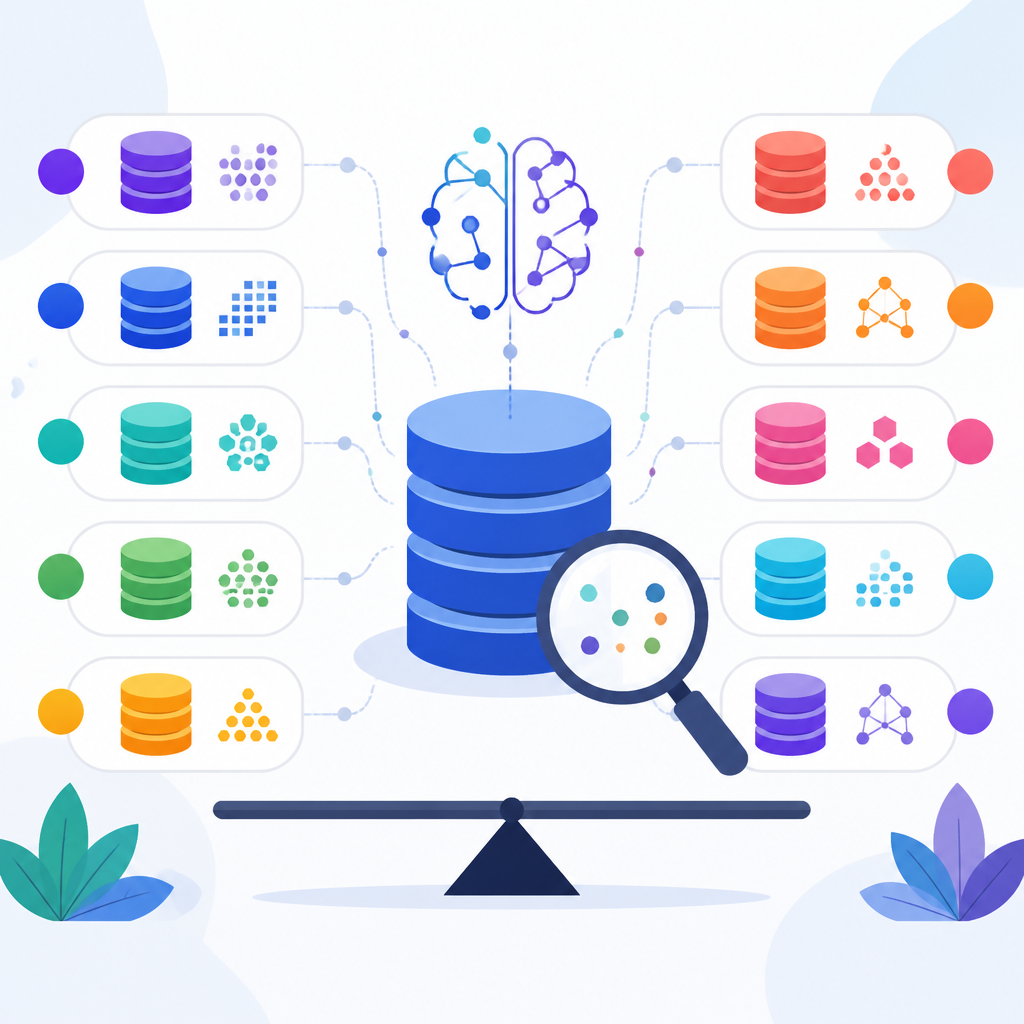
Weaviate is more flexible if your retrieval layer needs custom embedding modules, GraphQL-style querying, and a stronger open-source story. Qdrant is the better fit when your app lives or dies on metadata filters and p99 latency, because its filter-first design handles tenant, region, and document-type constraints more cleanly than many general-purpose systems.
Milvus, pgvector, and Vespa
Milvus is the heavyweight option for teams that expect the corpus to grow into the hundreds of millions or beyond. The trade-off is that distributed architecture gives you scale, but it also pushes more planning onto the engineering team, especially around sharding, storage separation, and operational ownership.
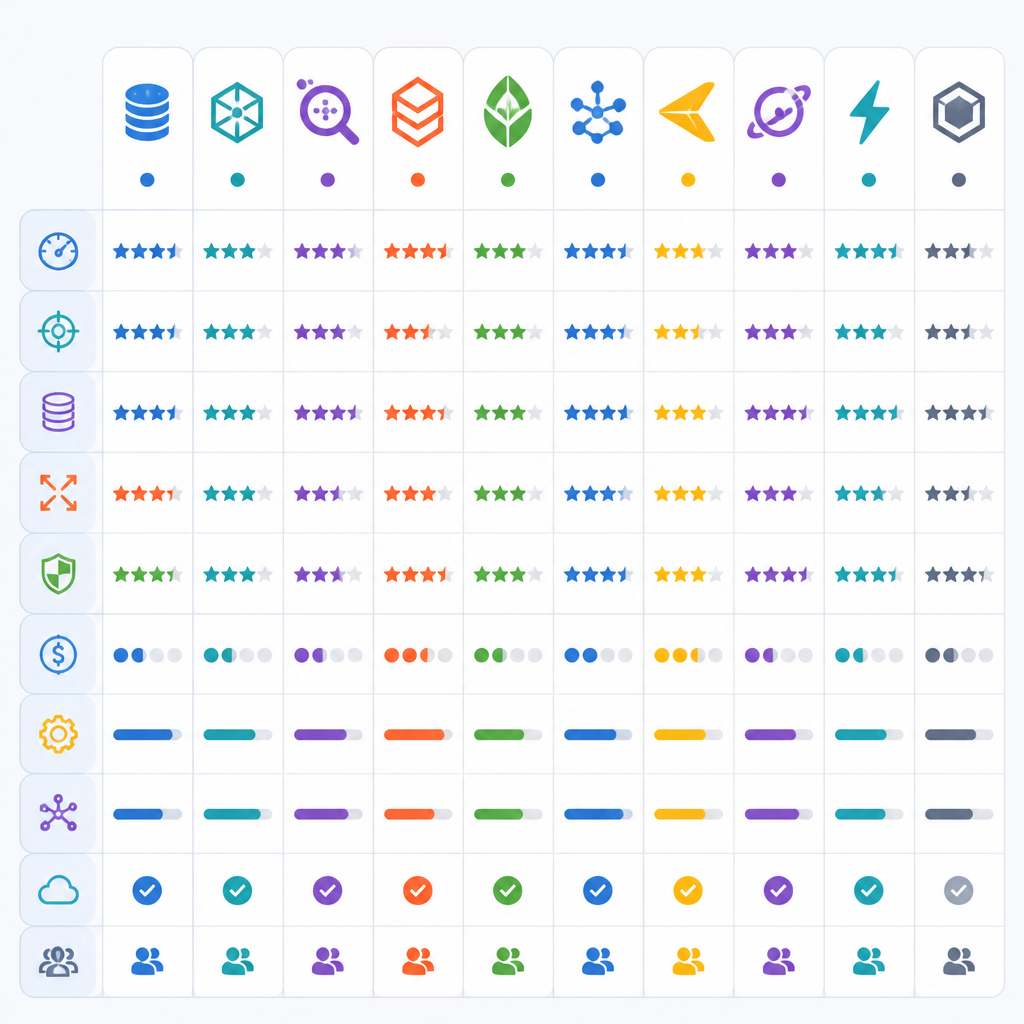
pgvector is the pragmatic choice when you already run Postgres and want one database instead of two. Vespa sits at the opposite end of the spectrum: it is the most capable of the group for search, ranking, and recommendation under one engine, but that power comes with a steeper learning curve and a heavier systems mindset.
Redis, Elasticsearch, and LanceDB
Redis works best as a fast retrieval layer or cache on top of another source of truth, not as the only store for a huge knowledge base. Elasticsearch makes sense when your team already has Elastic clusters and wants semantic search added to a mature BM25 stack without introducing a separate platform.
LanceDB is the most interesting choice for multimodal projects and local-first workflows because it stores embeddings alongside raw assets in a columnar format. That makes it attractive for notebooks, embedded apps, and data-heavy pipelines where the retrieval store also needs to stay close to the underlying files.
When to pick what
Pick Pinecone if you are a product team that wants the fastest route to a managed, production-ready vector layer with the least infrastructure work.
Pick Weaviate if you want open source, modular embeddings, and a developer-friendly RAG stack with strong hybrid search.
Pick Qdrant if your queries are filter-heavy, latency-sensitive, or likely to run on-prem or in a private cloud.
Pick Milvus if you expect very large scale and have the engineering maturity to operate a distributed system.
Pick pgvector if your team already lives in Postgres and the simplest architecture is the one you will actually maintain.
Pick Vespa if search relevance, ranking, and recommendation are core product features, not side effects.
Pick Redis, Elasticsearch, or LanceDB when you are fitting vector search into an existing system, not starting from scratch.
Pinecone is the default pick for most teams, but Qdrant becomes the better answer when low-latency filtered search and self-hosting matter more than convenience.
Why the table matters more than the brand
The biggest mistake in vector database selection is treating “vector database” as a single category. Pinecone, Qdrant, and pgvector can all store embeddings, but they solve different operational problems. One is a managed service, one is a filter-optimized engine, and one is a Postgres extension. They are not interchangeable once real traffic, real filters, and real SLOs show up.
That is why the decision usually comes down to three questions: do you want to operate infrastructure, how much filtering do you do, and how large can the corpus get before cost or latency becomes painful. If you answer those honestly, the shortlist gets much smaller very quickly.
// Related Articles
- [IND]
Anthropic is building custom AI chips for Claude
- [IND]
Moka AI Is a Stronger HRMS Choice for Growing Teams
- [IND]
August 2026 Market Review: AI Stocks Flipped Fast
- [IND]
Pixel 11 launch live: every Google reveal
- [IND]
Anthropic’s invisible watermark is the right move
- [IND]
Docker’s latest releases now center security and Compose