Arm servers top 45% of data center revenue in Q1 2026
IDC says Arm-based servers took over 45% of data center revenue in Q1 2026 as AI racks and GPU clusters pushed non-x86 systems to 47.9%.

Arm-based servers took over 45% of data center revenue in Q1 2026 as AI racks drove the shift.
Arm-based machines now account for more than 45% of server revenue, according to IDC’s Q1 2026 data. The broader server market hit $122.6 billion in the quarter, with AI infrastructure and accelerator-heavy systems doing most of the work.
| 項目 | 數值 |
|---|---|
| Global server market revenue | $122.6 billion |
| Year-over-year growth | 30.4% |
| Non-x86 revenue | $58.7 billion |
| Non-x86 market share | 47.9% |
| Accelerated server revenue share | Over 70% |
| Dell Q1 2026 server revenue | $20.3 billion |
What changed
Get the latest AI news in your inbox
Weekly picks of model releases, tools, and deep dives — no spam, unsubscribe anytime.
No spam. Unsubscribe at any time.
IDC’s figures show that the market is no longer defined by x86 alone. While x86 systems still held 52% of revenue, non-x86 platforms reached $58.7 billion, up 107.6% year over year, and nearly all of that was Arm-based hardware.
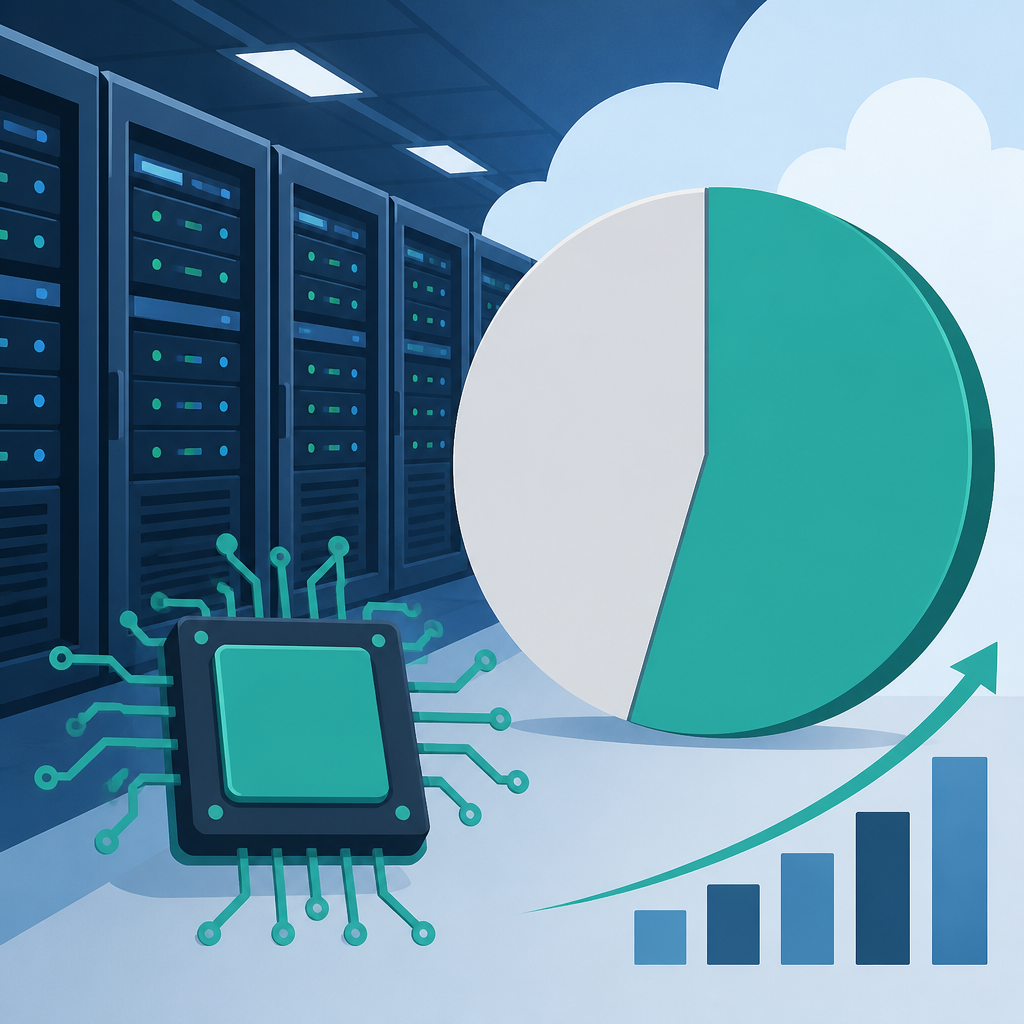
The biggest driver is AI server spend. GPU- and ASIC/FPGA-accelerated systems generated more than 70% of global server revenue in Q1 2026, with rack-scale deployments such as Nvidia’s NVL72 pushing up average selling prices fast.
- Dell led server revenue with a 16.5% share and $20.3 billion, up 244.1% year over year.
- Supermicro followed with $9.3 billion, up 128.9%.
- Lenovo posted $5.6 billion, while HPE reached $3.7 billion.
- ODM Direct still took 50.2% of revenue, but its share fell from 64.1% a year earlier.
IDC also said branded vendors gained ground as enterprise AI rollouts and sovereign AI projects bought more from established suppliers. That shift helped vendors like Dell and Supermicro grow far faster than the market as a whole.
Why it matters
For developers and infrastructure teams, the headline is not just Arm adoption. It is that AI clusters are changing what “server demand” means: the value is moving toward systems optimized for memory bandwidth, GPU interconnects, and custom CPU designs rather than general-purpose x86 boxes.
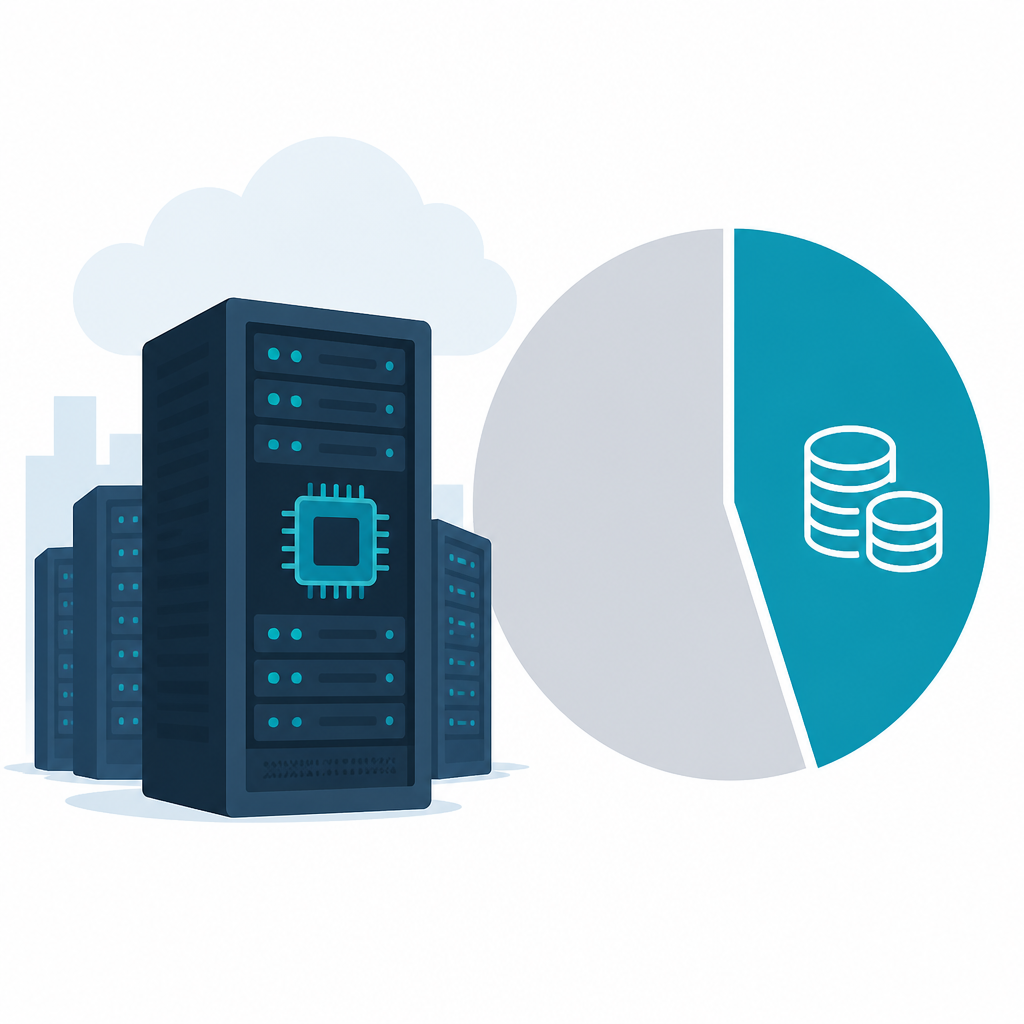
The pricing gap is also widening. A single NVL72 can cost up to $6.5 million, which means a few deployments can outweigh hundreds of conventional servers in revenue terms. That makes procurement, power planning, and rack design more important than raw unit counts.
For the market, this is a warning shot for x86 incumbents. Unit leadership no longer guarantees revenue leadership, and cloud buyers are increasingly willing to standardize on Arm when the software stack and workload fit.
The key question now is whether Arm’s revenue lead holds once AI infrastructure spending normalizes, or whether this quarter marks the high-water mark for accelerator-driven server sales.
// Related Articles
- [IND]
CBDC Governance: Standards and Stakeholder Roles
- [IND]
Invisible AI watermarks are the right move for Claude
- [IND]
pgvector is enough for small datasets, not your default
- [IND]
OpenAI’s Astra pause shows safety now shapes model releases
- [IND]
Anthropic is building custom AI chips for Claude
- [IND]
Moka AI Is a Stronger HRMS Choice for Growing Teams