GitHub’s last30days skill is the right model for AI research
GitHub’s last30days skill is the right model for AI research because it ranks live human signals over stale web pages.

GitHub’s last30days skill is the right model for AI research because it ranks live human signals over stale web pages.
GitHub’s last30days-skill should be the default pattern for AI research tools: gather live signals from the places people actually argue, then synthesize them into a grounded brief. The repository is explicit about the bet. It pulls from Reddit, X, YouTube, Hacker News, Polymarket, GitHub, and the web, then scores what it finds by engagement and money, not by page rank or editorial polish. That matters because the fastest-moving topics in AI, product, and culture are no longer best understood through search results. They are understood through the last month of comments, threads, transcripts, commit history, and prediction-market odds.
First, it captures reality faster than traditional search
Get the latest AI news in your inbox
Weekly picks of model releases, tools, and deep dives — no spam, unsubscribe anytime.
No spam. Unsubscribe at any time.
Google and static web search are built to find pages, not to measure current belief. The README makes that limitation concrete: Google aggregates editors, while /last30days searches people. That distinction is not cosmetic. A blog post can be indexed quickly and still say nothing about what users are complaining about right now, what developers are shipping this week, or what a community has already rejected. When a tool can ingest Reddit upvotes, X replies, YouTube transcripts, and HN points in one run, it stops being a search engine and becomes a live opinion map.

The strongest evidence is the repository’s own use cases. It describes a meeting prep workflow where a plain Google search returns a LinkedIn profile from 2023, while /last30days surfaces recent tweets, podcast transcripts, GitHub PRs, and Reddit debate from the current month. That is the difference between stale identity and active signal. For founders, PMs, and engineers, the question is rarely “what has this person ever said?” It is “what are they doing now, what do they believe now, and what is the market saying back?” A month-long window is short enough to stay fresh and long enough to reveal a pattern.
Second, it uses better ranking signals than SEO ever will
The tool’s core thesis is that engagement is a better proxy for relevance than keyword optimization. Reddit upvotes, HN points, X likes, YouTube view counts, and Polymarket volume all represent different forms of human commitment. A 1,500-upvote Reddit thread, a 3.6 million-view TikTok, or a market with $66K in volume says more about what people care about than a polished company blog. The README does not treat those signals as noise. It treats them as evidence, because they are produced by real attention and real disagreement.
Polymarket is the clearest example of why this matters. The repository explicitly contrasts opinion with odds: not what someone says will happen, but what people are willing to stake money on. That is a stronger filter than sentiment analysis alone. It is also the right antidote to the current AI tooling problem, where summaries often flatten the difference between hype, belief, and price. By weighting sources according to how users actually engage, the skill produces a synthesis that is harder to game and easier to trust. SEO can be manufactured. Attention and money are much harder to fake at scale.
The counter-argument
The best objection is that this approach can overfit to loudness. Reddit is not the world. X is full of performative certainty. YouTube rewards long-winded takes. Prediction markets are thin in many categories. Even GitHub stars are an imperfect proxy for quality. A system that elevates engagement risks mistaking popularity for truth, especially when the audience is skewed toward early adopters, developers, or highly online communities. If you use it to decide everything, you will build for the loudest people in the room.
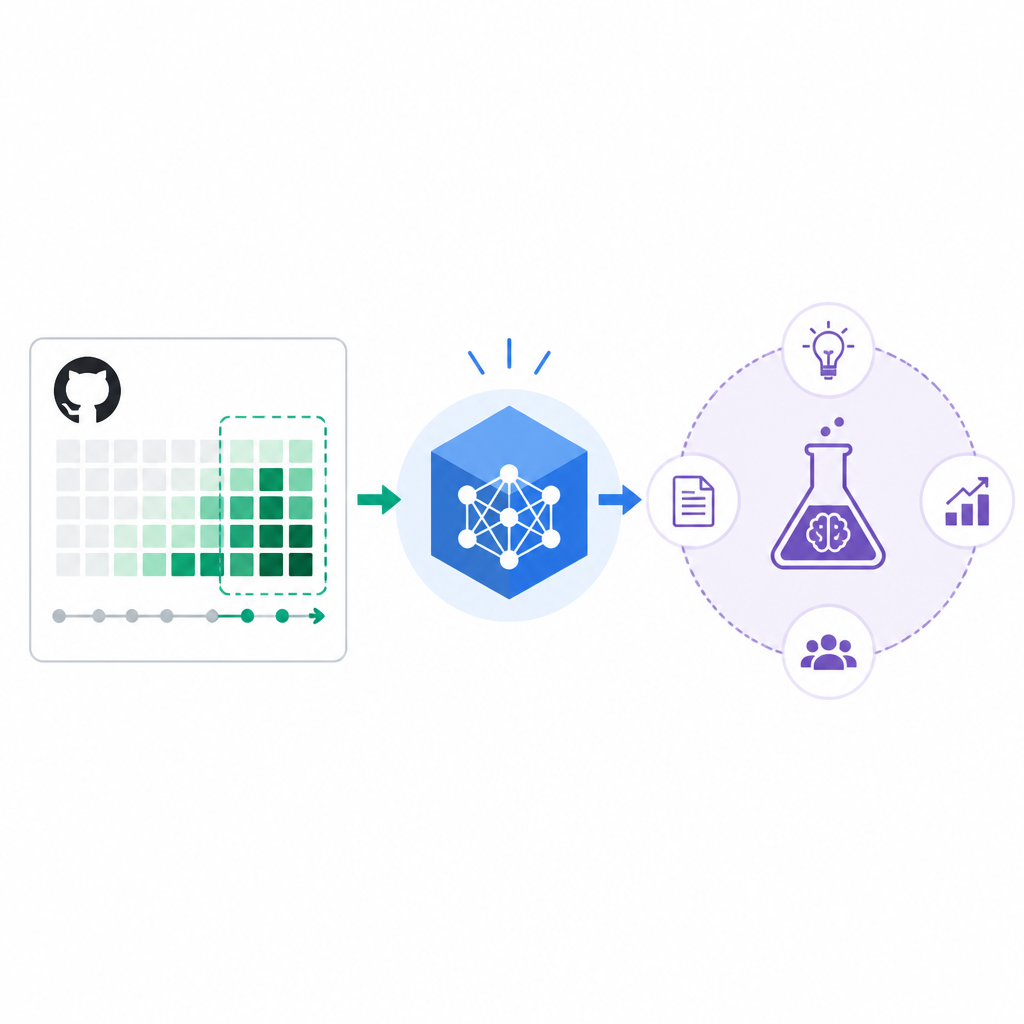
That critique is real, and the repository itself gives the right answer: it does not claim one source is truth. It claims a synthesis across sources is better than any single channel. The tool is strongest when it triangulates. A Reddit thread, an HN debate, a YouTube transcript, a GitHub release, and a Polymarket line together can expose the difference between chatter, consensus, and conviction. The limit is not that engagement signals are useless. The limit is that they are partial. Used as a composite, they are far more reliable than search ranking or editorial summaries alone.
So the counter-argument fails on the central point: this is not a popularity contest, it is a structured cross-check. The tool is only dangerous if you read one source in isolation. Its design explicitly avoids that by pulling from multiple systems with different incentives and then forcing a summary layer to reconcile them. That is the right constraint, not a weakness.
What to do with this
If you are an engineer, PM, or founder, build your research stack around live, multi-source signals instead of generic web search. Use a last-30-days workflow before meetings, launches, hiring decisions, and product bets. Ask for the recent reality: what users are complaining about, what builders are shipping, what communities are arguing over, and what people are willing to pay or bet on. Then treat the synthesized brief as a starting point, not an oracle. The winning habit is not reading more. It is reading the right month, from the right places, before everyone else catches up.
// Related Articles
- [AGENT]
SALA Boosts Long Context on Edge AI
- [AGENT]
Anthropic’s breach proves AI agents need hard security limits
- [AGENT]
GenAI.mil turns a scary prompt into a report
- [AGENT]
EPAM’s OpenAI deal turns pilots into production
- [AGENT]
Prompt engineering is overrated for Claude Code
- [AGENT]
Grok Build adds live previews and rewind fixes