Parallel-SFT aims to make code RL transfer better
Parallel-SFT uses equivalent code across languages to improve zero-shot transfer in code RL, especially when moving to lower-resource programming languages.
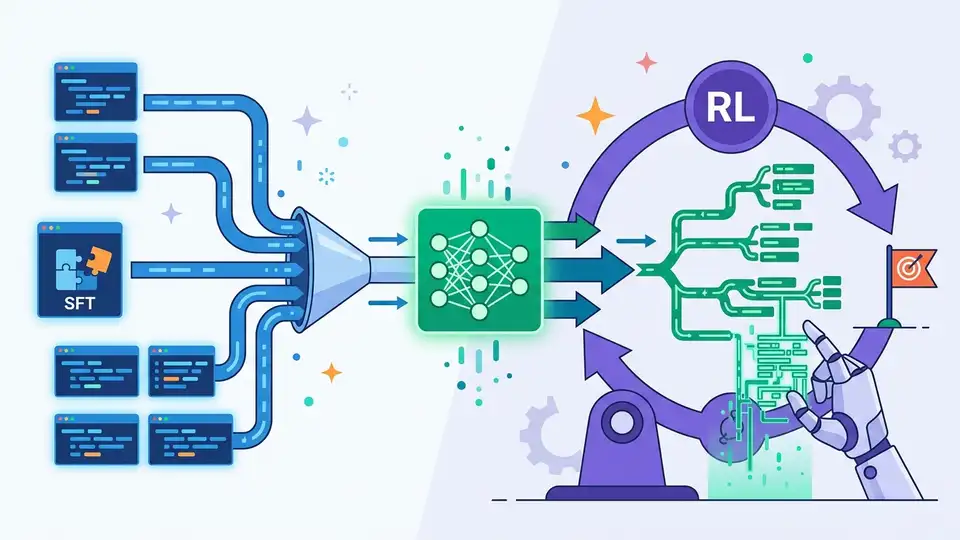
Code models often look strong in Python or C++, then fall apart once you ask them to work in a lower-resource programming language. Parallel-SFT: Improving Zero-Shot Cross-Programming-Language Transfer for Code RL argues that the problem is not that programming skills are language-specific, but that the model’s training setup is not encouraging those skills to generalize.
The paper’s core idea is simple: if a model can learn from functionally equivalent programs written in multiple languages, it may build a more language-agnostic internal representation before reinforcement learning starts. That, in turn, should make later RL training transfer better to languages the model has not been optimized for directly.
What problem this paper is trying to fix
Get the latest AI news in your inbox
Weekly picks of model releases, tools, and deep dives — no spam, unsubscribe anytime.
No spam. Unsubscribe at any time.
The authors focus on zero-shot cross-programming-language transfer for code RL. In plain English, that means training a model with reinforcement learning on code generation in one source language, then checking whether the gains carry over to other target languages without extra target-language RL.
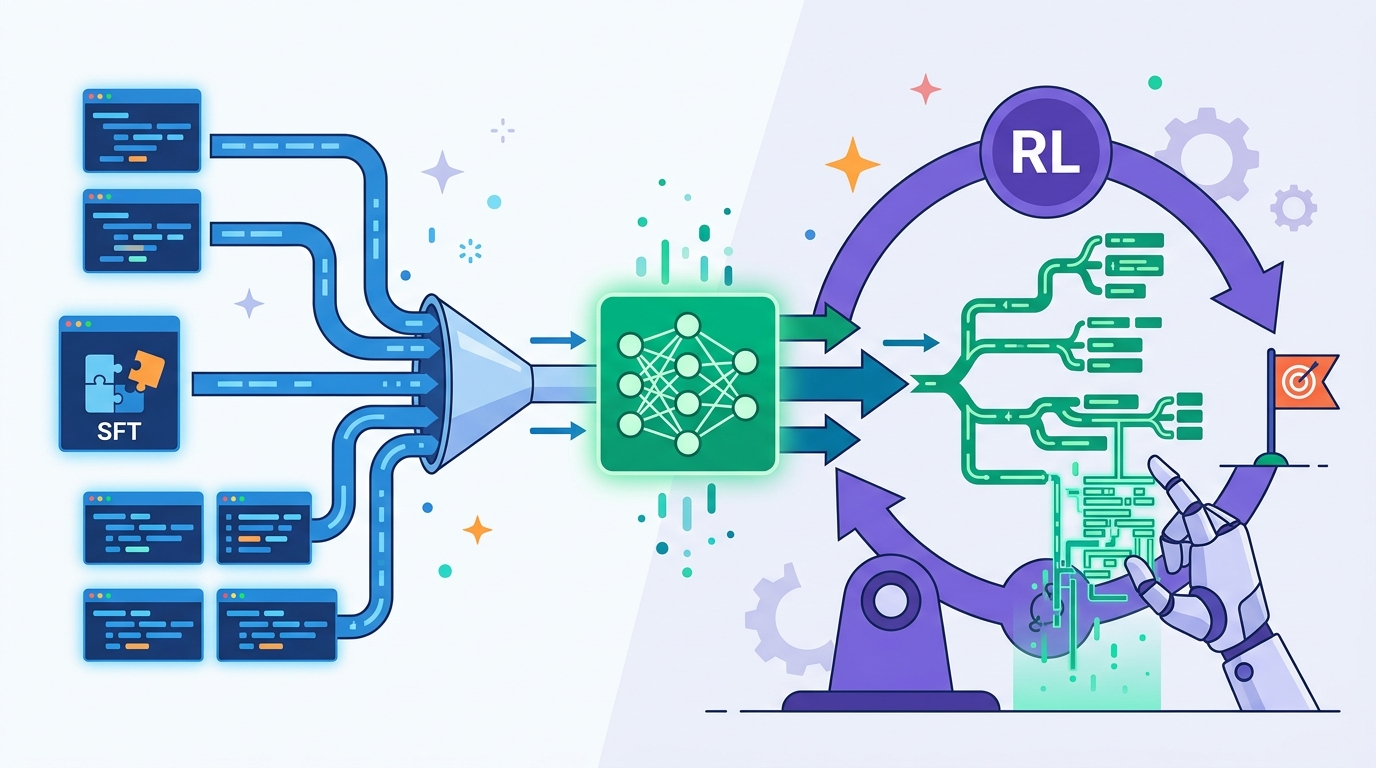
That matters because modern language models are much better in common languages such as C++ and Python than in lower-resource programming languages. The paper frames this as a data problem: the model has seen less training data in those languages, even though many of the underlying programming skills are shared across languages.
The surprising finding is that RL on a source language does not automatically help elsewhere. For Llama-3.1, the authors say RL training for code generation in a source programming language fails to improve, and sometimes even degrades, performance on other target languages. That is the central gap Parallel-SFT is meant to address.
How Parallel-SFT works in plain English
The proposed fix is to change the supervised fine-tuning stage before RL. The authors hypothesize that RL transfer works better if the model starts from an SFT initialization that already generalizes across languages.
Parallel-SFT does that by mixing in “parallel programs” during SFT. These are functionally equivalent programs implemented in multiple programming languages. Instead of only showing the model one version of a task, the training data includes aligned implementations across languages so the model can connect the same behavior to different syntax and surface forms.
That is a practical design choice for code systems: rather than treating each language as a separate skill silo, the model is nudged toward the shared structure underneath the syntax. The paper’s claim is not that the model learns a universal compiler-like representation, but that this SFT setup makes later RL more transferable.
In other words, Parallel-SFT is not the RL method itself. It is the initialization strategy that comes before RL and is designed to make the RL stage less language-bound.
What the paper actually shows
The main result reported in the abstract is directional rather than numeric: when the authors perform RL on their Parallel-SFT model, they observe better generalization to unseen programming languages than with the baseline setup. The abstract does not provide benchmark numbers, so there is no scorecard to compare here.
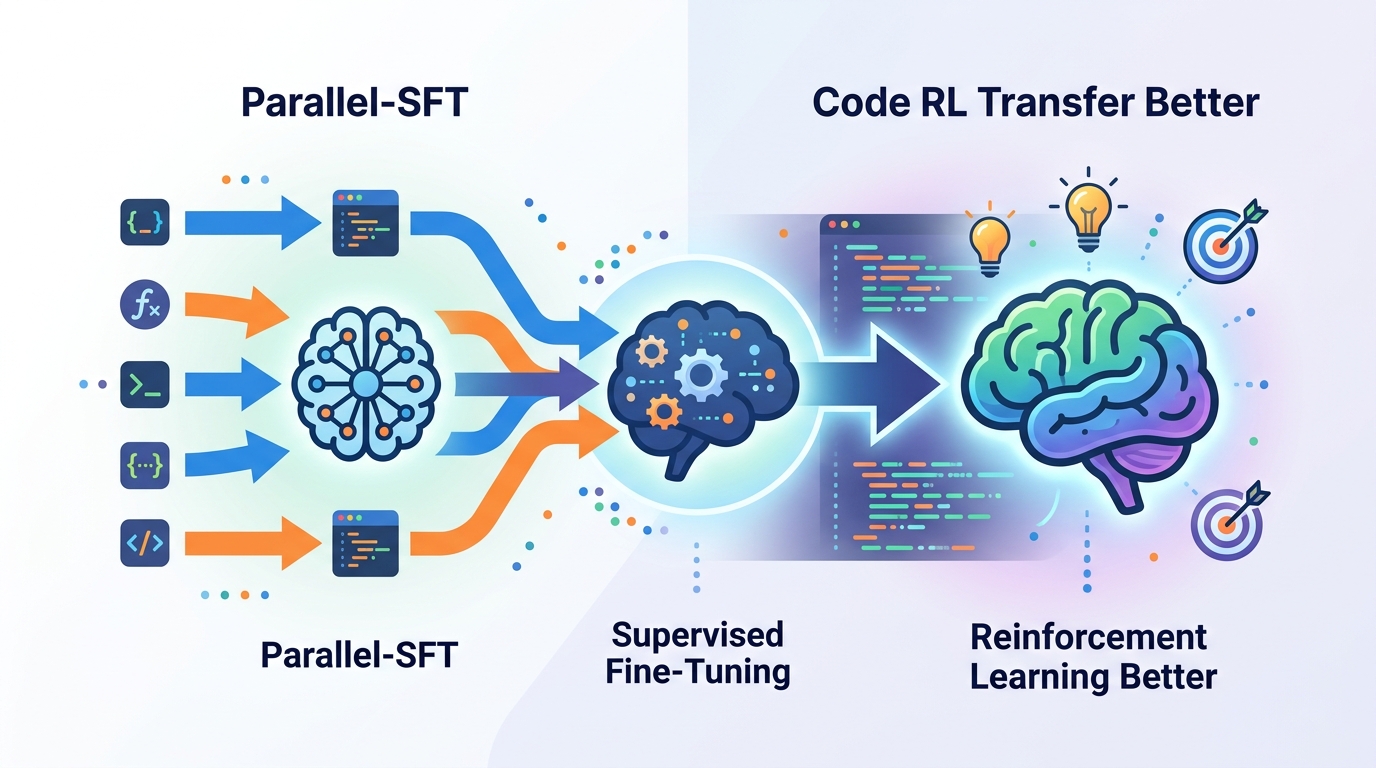
The paper also includes an internal representation analysis. According to the authors, Parallel-SFT leads to a more functionality-centric latent space, where equivalent programs across languages are more tightly clustered. Their interpretation is that this tighter clustering may help explain why the model transfers better after RL.
That is an important detail because it suggests the improvement is not just a surface-level tuning trick. The model appears to organize code more by what it does than by what language it is written in. For cross-language code tasks, that is exactly the kind of bias you would want.
Still, the evidence presented in the abstract is limited. We know the method improves transferability in their setup, but we do not get the exact evaluation tasks, the magnitude of the gains, or how broadly the result holds across different model sizes, languages, or RL objectives.
Why developers should care
If you build or fine-tune code models, this paper points to a useful lesson: the pre-RL SFT stage may matter more than you think for downstream transfer. It is tempting to focus only on the RL recipe, but this work suggests that the model’s starting representation can decide whether RL gains stay trapped in one language or spread to others.
That has practical implications for teams working on multilingual coding assistants, code generation tools, or agents that need to support long-tail languages. If you have limited data in a target language, training on aligned parallel programs could be a way to extract more value from source-language supervision.
- Use aligned implementations to teach shared semantics, not just syntax.
- Expect RL gains in one language to transfer poorly unless the base model is already generalized.
- Think of SFT as representation shaping, not only instruction following.
The paper also hints at a broader engineering pattern: if your model needs to generalize across formats, dialects, or languages, you may want to expose it to parallel examples before optimization gets aggressive. That can make later adaptation less brittle.
Limitations and open questions
There are still plenty of open questions. The abstract does not say how many languages were involved, which source and target languages were used, or whether the method helps equally across all programming language families. It also does not report benchmark numbers, so the size of the improvement is unknown from the provided material.
Another limitation is that the method depends on parallel programs, which are not always easy to collect. For lower-resource languages, aligned functionally equivalent code may itself be scarce, so the practicality of building such a dataset could become the bottleneck.
Finally, the paper’s representation analysis is suggestive, not definitive. A tighter latent cluster around equivalent programs is consistent with better transfer, but it does not prove causation on its own. The authors say they hypothesize that this functionality-centric space contributes to the improved transferability, which leaves room for further validation.
Even with those caveats, the paper is a useful reminder that code RL is not just about reward design or rollout quality. If you want transfer across programming languages, you may need to shape the model’s semantics before RL ever begins.
// Related Articles
- [RSCH]
Test-Time Harnesses Transfer Skills Without Retraining
- [RSCH]
DreamFly improves aerial VLN with memory and planning
- [RSCH]
AVA-Encoder turns films into editable knowledge graphs
- [RSCH]
Sparse Autoencoders Don’t Behave Like Feature Bags
- [RSCH]
ConVAWG generates controlled VAWG dialogues
- [RSCH]
Surgical WAM uses video to train robot control