5 adoption gaps AI teams need to close
5 findings show why AI shipping faster than customers adopt it is now an adoption problem, not just a product problem.
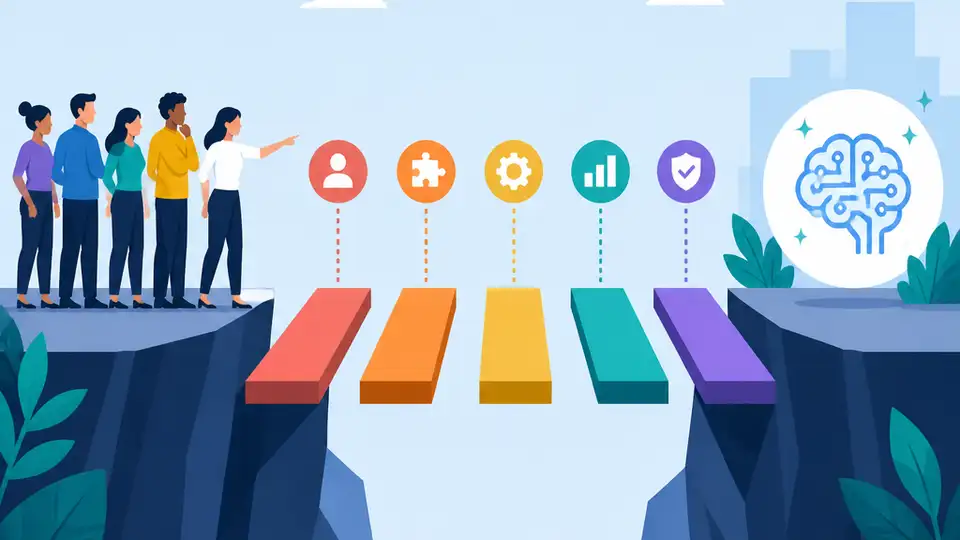
AI adoption is slowing because teams cannot keep customer education aligned with product release speed.
Instruqt’s 2026 report, based on 424 practitioners at North American software companies, says 92% face at least one major developer adoption challenge.
| Item | What the report says | Key number |
|---|---|---|
| Team misalignment | Marketing, sales, and education often build separate experiences | 27% |
| Technology complexity | New AI features are hard to explain and demo | 26% |
| Fresh content pressure | Release cycles make docs and demos stale fast | 25% |
| Hands-on labs | Interactive labs improve time to productivity | ~50% more likely |
| Developer adoption challenges | At least one major issue reported by respondents | 92% |
1. Misalignment across teams
Get the latest AI news in your inbox
Weekly picks of model releases, tools, and deep dives — no spam, unsubscribe anytime.
No spam. Unsubscribe at any time.
The report’s biggest signal is not a product flaw. It is an operating flaw. Marketing, sales, and education often create separate demos, proof-of-concepts, and onboarding flows, so the customer keeps restarting the learning process at each handoff.
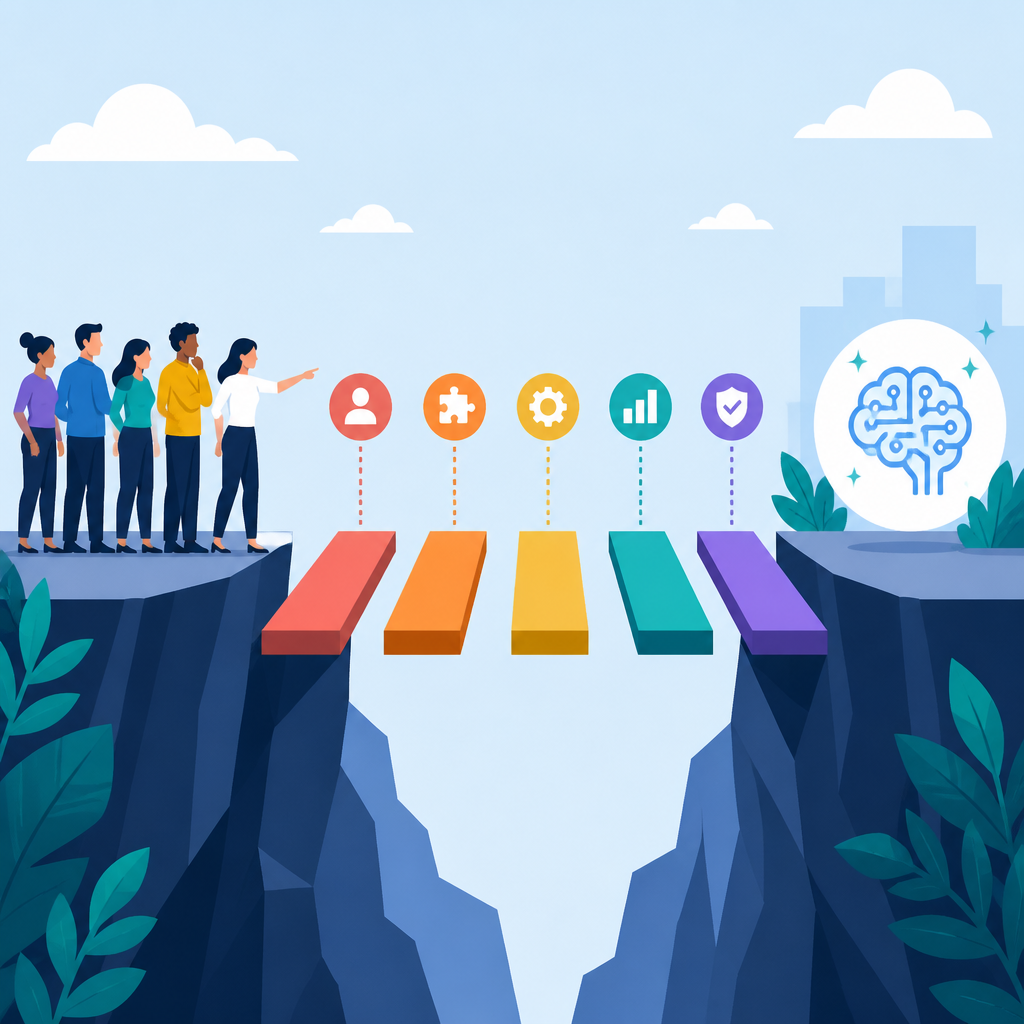
That split matters more when AI features ship weekly. A demo built for sales may not match what education needs for onboarding, and both can drift away from the live product before the next quarter ends.
- Marketing: lead generation demos
- Sales: proof-of-concept environments
- Education: onboarding and certification
2. Technology complexity
AI products are harder to explain than standard software because the value often depends on context, data quality, and workflow fit. The report says 26% of respondents named technology complexity as a top challenge, which puts the burden on adoption teams to simplify the first experience.
This is where static assets fail. A slide deck can describe a feature, but it cannot show how the feature behaves inside a realistic workflow. Buyers need to touch the product, not just read about it.
- Production-like environments help users understand real behavior
- Guided labs reduce setup friction
- Live examples beat abstract feature lists
3. Content that goes stale too fast
Keeping training, demos, and docs accurate is now a release-management problem. In the survey, 25% of practitioners said the hardest part is maintaining content as products ship weekly. That means the content team is chasing the roadmap, not supporting it.
For AI companies, stale content creates a trust problem. If a customer sees one flow in a demo and a different one in the product, confidence drops fast. The report says more than one-third of practitioners plan to reduce AI use because of accuracy and freshness concerns.
Common failure points:
- Demo screenshots no longer match the UI
- Onboarding steps reference retired features
- Workshop labs break after a release
- Sales and education use different narratives
4. Hands-on labs that shorten time to value
One of the clearest findings is that hands-on learning works better than passive content. Organizations using hands-on labs were about 50% more likely to report developers reaching productivity within two months than those that did not. That is a strong signal for any team trying to convert interest into adoption.
The logic is simple: people learn software faster when they can use it in a realistic environment. The report also notes that the teams pulling ahead are not just shipping more features. They are aligning around a single hands-on experience customers can actually use.
- Interactive labs for evaluation
- Self-paced environments for onboarding
- Workshop sandboxes for live training
5. Community and pre-sales as underused channels
The report says developer community spaces are the most underused adoption lever, even though respondents rated them highly effective. Proofs of concept also appear more effective than their actual use suggests, which points to a gap between what teams know works and what they fund.
That gap is important because adoption is not only a post-sale job. Community can help buyers learn from peers, while pre-sales experiences can reduce uncertainty before a purchase. Together, they can make AI feel less like a promise and more like a working system.
- Community spaces for peer learning
- POCs that mirror real customer workflows
- Shared experiences that support marketing, sales, and education
How to decide
If you are a product marketer or developer education lead, start with the content problem: make one hands-on experience that can be reused across demo, trial, and onboarding. If you are in sales, focus on realistic environments that show the product in action. If you run a broader go-to-market team, the report suggests the biggest win comes from aligning everyone around the same customer experience.
In short, the companies that convert AI investment into growth are not just shipping faster. They are making adoption faster too.
// Related Articles
- [IND]
Anthropic's IPO rumor turns into a market watch
- [IND]
Anthropic should not become dependent on Meta for compute
- [IND]
Mistral's robotics model cuts indoor navigation costs
- [IND]
Mistral missile: France’s short-range air defense workhorse
- [IND]
Apple Reclaims No. 1 by Market Cap as AI Costs Spike
- [IND]
Kimi K3 could pressure the middle tier of AI models