5 ways WindsurfAPI speaks OpenAI and Anthropic
5 ways WindsurfAPI exposes Windsurf models through OpenAI and Anthropic APIs, with 100+ models and Node.js setup details.
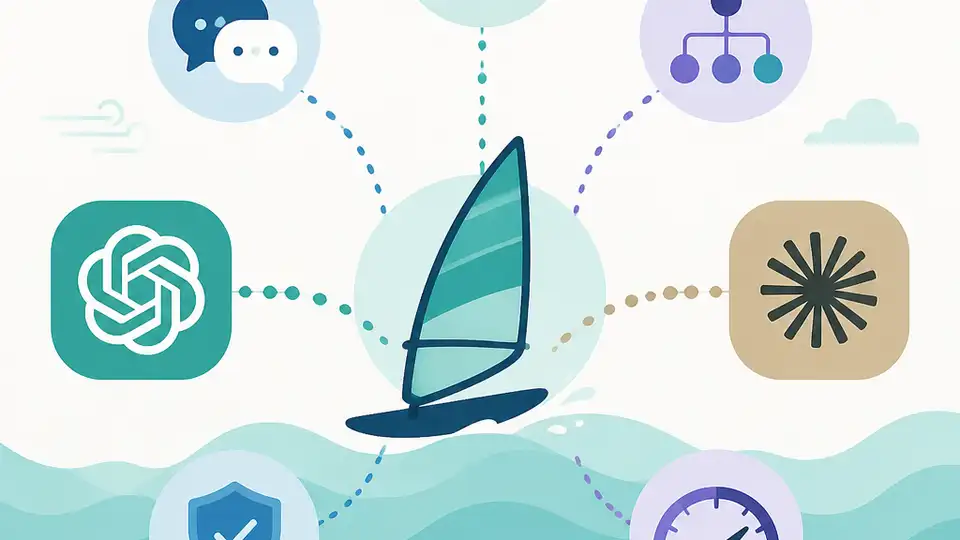
WindsurfAPI exposes Windsurf models through OpenAI and Anthropic-compatible endpoints.
This project turns Windsurf’s model access into two API styles at once, with support for 100+ models and a plain Node.js runtime. If you want to plug the same backend into OpenAI SDKs, Claude Code, Cline, or Cursor, these five parts explain how it works and how to run it.
| Item | Endpoint or mode | Notable detail |
|---|---|---|
| OpenAI-compatible chat | /v1/chat/completions | Works with OpenAI SDKs and JSON or SSE |
| Anthropic-compatible messages | /v1/messages | Connects Claude Code, Cline, and Cursor |
| Model support | 100+ models | Includes Claude, GPT, Gemini, Grok, Qwen, and more |
| Runtime | Node.js | No npm dependency required |
| Service port | 3003 | Dashboard and API run on the same service |
1. Dual API endpoints
Get the latest AI news in your inbox
Weekly picks of model releases, tools, and deep dives — no spam, unsubscribe anytime.
No spam. Unsubscribe at any time.
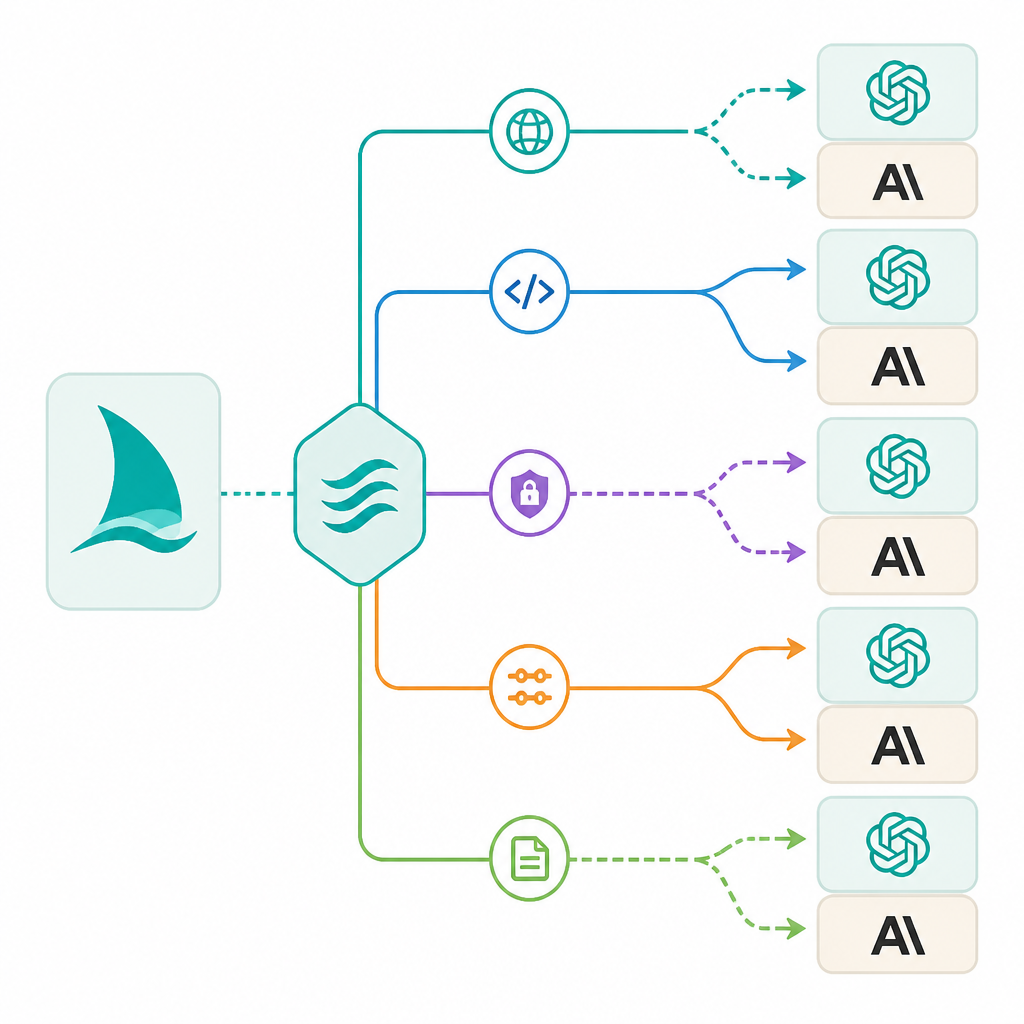
WindsurfAPI’s main trick is simple: one service exposes both OpenAI-style and Anthropic-style endpoints. That means the same backend can satisfy tools that expect /v1/chat/completions and tools that expect /v1/messages, without making you run two separate proxies.
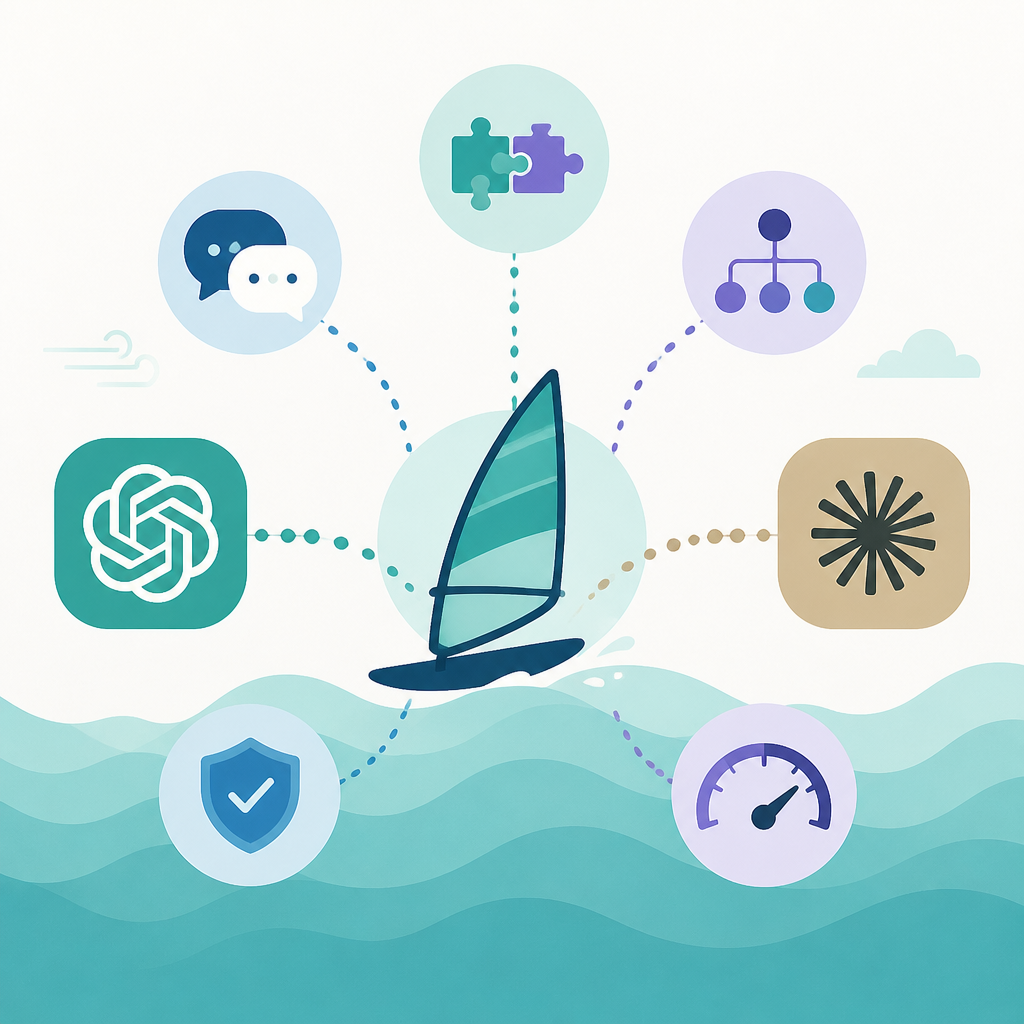
The repo describes this as a single HTTP service on port 3003 that translates requests before sending them upstream. In practice, that gives you one place to configure auth, model access, logging, and account rotation.
POST /v1/chat/completionsfor OpenAI SDKsPOST /v1/messagesfor Anthropic clients- OpenAI JSON plus SSE streaming support
- Anthropic SSE support for Claude-style tools
2. Broad model access
The project advertises 100+ models across several families, including Claude, GPT, Gemini, Grok, Qwen, Kimi, GLM, MiniMax, SWE, and Arena. That matters if you want one proxy for a mixed toolchain instead of a separate gateway for each vendor.
It also notes that newer model availability depends on the Language Server binary. If you want the latest entries, the repo suggests using the Windsurf desktop app’s binary when the public release lags behind.
- Claude 4.5, 4.6, Opus 4.7
- GPT-5, 5.1, 5.2, 5.4
- Gemini 2.5, 3.0, 3.1
- Cursor-friendly aliases like
opus-4.6andsonnet-4.6
3. Client compatibility
One reason this repo is useful is that it targets real clients, not just generic API consumers. The README calls out OpenAI SDKs, Claude Code, Cline, and Cursor as direct consumers of the proxy.
It also explains a practical Cursor workaround: some model names are blocked by the client before the request reaches the backend. The repo suggests aliasing those names so the request can pass through.
Base URL: http://your-ip:3003/v1
API Key: your key
Model: opus-4.6 or sonnet-4.6
4. Local setup and deployment
The setup path is intentionally low-friction. You can clone the repo, run bash setup.sh, and start the service with node src/index.js. For Docker users, the repository ships with docker-compose.yml and a persistent data layout under ./.docker-data.
There is also a separate Language Server install step, because the proxy depends on Windsurf’s binary to talk to the cloud backend. The repo supports auto-download, local binary paths, and Docker-first deployment.
bash install-ls.shto fetch the Language Serverdocker compose up -d --buildfor containerized useDATA_DIRto move persistent state elsewhereLS_BINARY_PATHandLS_DATA_DIRfor binary control
5. Account pooling and routing
WindsurfAPI is not only a translation layer. It also manages a pool of Windsurf accounts, with auto-rotation, rate-limit separation, and failover. That gives the proxy a way to spread load and keep requests moving when one account slows down or hits limits.
The README says the service strips upstream Windsurf identity details before returning results, so the client sees the expected model identity instead of the internal source. It also supports dashboard login, token import, and bulk account loading.
- Dashboard login at
/dashboard - Token-based account import from Windsurf
- Batch account upload via JSON
- Account pool rotation and failover
How to decide
Pick WindsurfAPI if you want one backend that can satisfy both OpenAI-shaped and Anthropic-shaped clients, especially if you already use Claude Code, Cline, or Cursor. It is a good fit when you need model variety, local control, and a single service that can sit in front of Windsurf accounts.
If you only need a basic OpenAI proxy, this may be more than you need. But if you want dual compatibility, account pooling, and a path to 100+ models from one Node.js service, this repo gives you a lot in one place.
// Related Articles
- [IND]
Anthropic's IPO rumor turns into a market watch
- [IND]
Anthropic should not become dependent on Meta for compute
- [IND]
Mistral's robotics model cuts indoor navigation costs
- [IND]
Mistral missile: France’s short-range air defense workhorse
- [IND]
Apple Reclaims No. 1 by Market Cap as AI Costs Spike
- [IND]
Kimi K3 could pressure the middle tier of AI models