AI should govern the SDLC before it writes code
AI belongs in PRD and review governance before it belongs in code generation.

AI should govern requirements and reviews before it writes code.
AI is moving up the software lifecycle, and that is the right direction. The most valuable use of these systems is not churning out more code, but catching bad assumptions earlier, when a flawed PRD is still cheap to fix and a noisy review is still easy to reject. Uber’s first-pass PRD review, DoorDash’s high-signal code review, and Cloudflare’s specialized review agents all point to the same conclusion: AI is best used as a governance layer, not a replacement for engineering judgment.
AI creates more value when it intercepts bad decisions early
Get the latest AI news in your inbox
Weekly picks of model releases, tools, and deep dives — no spam, unsubscribe anytime.
No spam. Unsubscribe at any time.
Requirements are where teams lose the most time, because ambiguity compounds as work moves downstream. Uber’s PRD validation flow is a strong example of why AI belongs here first: the system checks clarity, completeness, and execution risk before engineers build anything. That is not a cosmetic improvement. It is a direct attack on rework, the most expensive tax in software delivery.
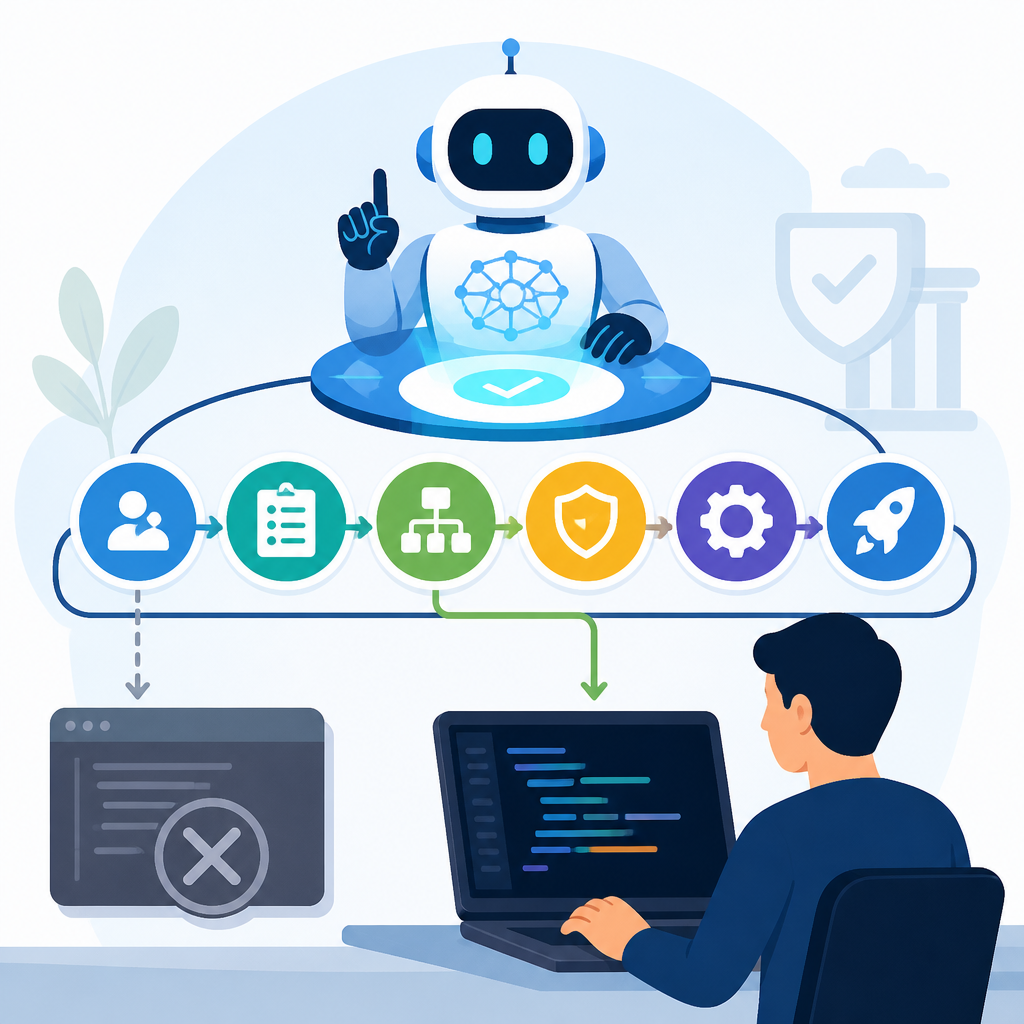
Anyone who has shipped a feature from a vague spec knows the pattern. A product document says one thing, design infers another, implementation makes a third choice, and review becomes a debate about what the request meant in the first place. AI can surface missing dependencies and inconsistent assumptions before that chain starts. That is a real governance win, because it reduces the number of false starts that never show up in a metrics dashboard but dominate team velocity.
Code review works only when the system earns trust
DoorDash’s internal reviewer matters because it focuses on usefulness, not volume. The company explicitly designed it to earn trust with fewer comments and more actionable feedback, which is the opposite of the usual automation trap. In code review, a flood of generic warnings does not improve quality. It trains engineers to ignore the tool.
That is why the best AI reviewers behave like disciplined teammates, not eager interns. They should fit into the existing workflow, point to the specific issue, and stop short of pretending they own the merge decision. DoorDash’s approach shows the right operating principle: if the tool changes behavior before code ships, it is working. If it only increases comment count, it is noise dressed up as productivity.
Specialization beats one giant model pretending to know everything
Cloudflare’s multi-agent review setup is the clearest sign that the future of AI governance is modular. Instead of asking one model to judge security, performance, and correctness at once, it assigns narrow roles and aggregates the results. That mirrors how strong engineering organizations already work: different reviewers catch different classes of risk, and no single person is trusted to be perfect across all dimensions.
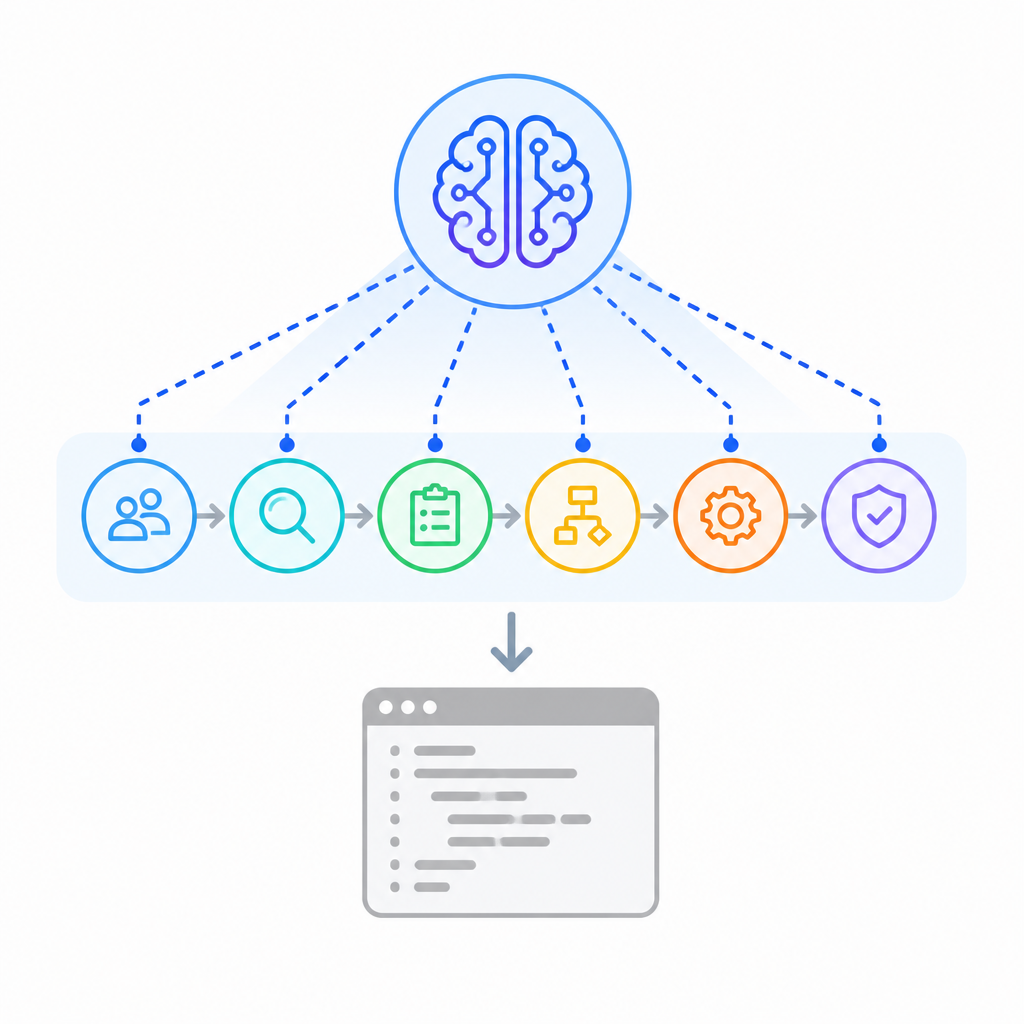
This matters because software review is not one problem. Security analysis, performance analysis, and semantic correctness demand different priors and different failure modes. A specialized agent can be tuned to flag a narrower set of issues with higher precision, while the coordination layer decides what rises to the surface. Cloudflare’s emphasis on defining what not to surface is especially important. Precision is not a nice-to-have; it is the entire game when the cost of noise is developer distrust.
The counter-argument
The opposing view is straightforward: AI belongs in code generation because that is where the measurable output is, and moving it earlier risks turning the software process into a bureaucracy of machine checks. Teams already struggle with too many gates, too many reviewers, and too much process overhead. Adding AI to PRDs and design reviews sounds like another layer of friction before engineers can start building.
There is also a legitimate concern about false confidence. A model can miss context, overfit to internal jargon, or flag the wrong risks with impressive wording. If teams treat AI output as authoritative, they will create a new failure mode: approval theater. The tool will look rigorous while quietly laundering weak requirements and shallow review habits.
That critique is valid, but it does not overturn the case for upstream AI. It sets the boundary conditions. AI should not become an extra approval authority; it should become a first-pass filter that reduces obvious defects before humans spend expensive attention on them. The answer is not to keep AI at the end of the lifecycle. The answer is to keep humans in charge and use AI where it can prevent the most waste, which is at the point where requirements and review still have room to change.
What to do with this
If you are an engineer, PM, or founder, stop asking how AI can write more code and start asking where it can remove the most rework. Put it on PRDs, design notes, and review workflows first. Measure whether it reduces ambiguity, shortens review cycles, and improves the quality of decisions, not whether it produces more output. The winning pattern is clear: use AI as a governance layer that sharpens human judgment before implementation, not as a substitute for it.
// Related Articles
- [IND]
DailyArxiv turns arXiv keywords into a daily paper feed
- [IND]
Claude vs ChatGPT (2026): Is Claude Better?
- [IND]
CBDC Governance: Standards and Stakeholder Roles
- [IND]
Invisible AI watermarks are the right move for Claude
- [IND]
pgvector is enough for small datasets, not your default
- [IND]
OpenAI’s Astra pause shows safety now shapes model releases