Anthropic's partner network gets enterprise-ready
A practical breakdown of Anthropic’s Claude Partner Network updates and a copy-ready way to structure enterprise AI partner work.

A copy-ready way to structure enterprise AI partner work from Anthropic’s Claude network updates.
I've been watching partner programs around AI for a while now, and most of them feel like they were built by people who have never had to actually ship with a customer in the room. They look nice in a blog post. They sound strategic in a slide deck. Then you try to use them and it's all vague tiers, fuzzy responsibilities, and a lot of “we support the ecosystem” language that doesn't help when a procurement team asks who owns deployment, who handles training, and who gets blamed when the model answers something weird.
Anthropic has been especially interesting to me because Claude keeps showing up in enterprise conversations, but the operational side has always been the part people hand-wave away. So when PYMNTS.com reported that Anthropic updated its three-month-old Claude Partner Network, I paid attention. The source piece says the company announced two updates, but the article excerpt I have here doesn't include the full list of changes. That matters, because I'm not going to invent details just to make the story feel complete. What I can do is break down what an update like this usually means in practice, and how I’d structure it if I were building partner motion for an enterprise AI product.
Partner programs fail when they are too pretty and not operational enough
Get the latest AI news in your inbox
Weekly picks of model releases, tools, and deep dives — no spam, unsubscribe anytime.
No spam. Unsubscribe at any time.
Anthropic has announced two updates to its three-month-old Claude Partner Network.
What this actually means is that Anthropic thinks the partner layer is now important enough to formalize, not just improvise. A three-month-old program getting updated this fast tells me the first version was probably too loose for enterprise buyers, or the company learned quickly that partners need clearer rules before real deals move.

I’ve run into this pattern over and over. The first version of a partner program is usually written for optimism. Everyone gets excited about integrations, referrals, implementation help, and co-selling. Then the first serious customer asks basic questions: who is certified, what is supported, what’s the escalation path, and what happens when the partner-built workflow touches sensitive data? Suddenly the “program” is just a paragraph and a logo wall.
When I look at Anthropic’s move through that lens, I don’t read it as a press-friendly update. I read it as a sign that enterprise adoption is forcing structure. If Claude is being sold into real companies, the partner network has to stop being a marketing accessory and start acting like an operating model.
How to apply it: if you run a partner program, define the boring stuff first. Not the shiny stuff. Write down who can sell, who can implement, who can support, and what proof someone needs before you trust them with a customer. If you can't explain that in one page, your program is still a draft.
Enterprise AI needs fewer partners and better boundaries
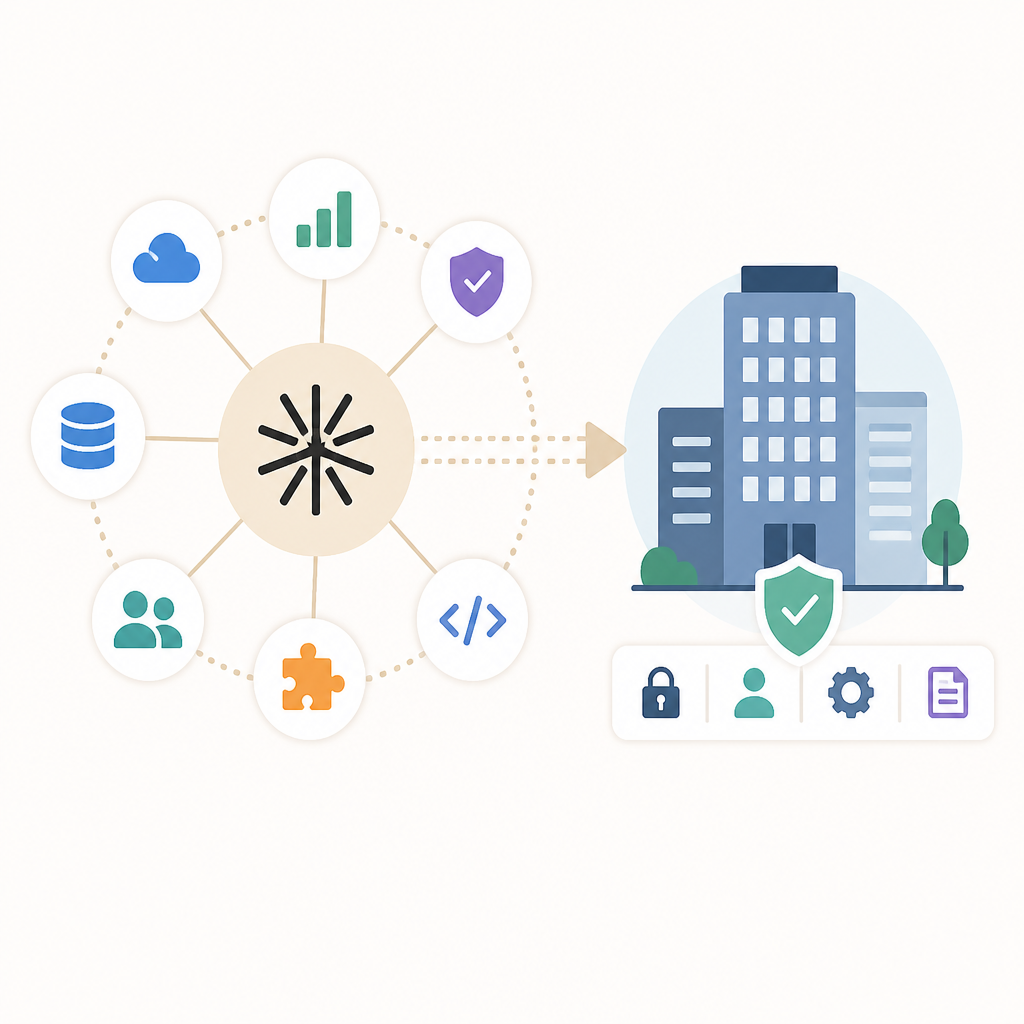
The part people miss is that enterprise AI is not app-store software. A partner can’t just build something and hope it works in a vacuum. They need guardrails around security, model behavior, data handling, and customer support. Without those boundaries, every partner becomes a custom integration with a different failure mode.
That’s why updates to a partner network matter more than they sound. They usually mean the company is trying to reduce ambiguity. In my experience, ambiguity is the enemy of enterprise adoption. Sales teams hate it, legal teams hate it, and customers really hate it when a pilot turns into a support nightmare because nobody owns the handoff between vendor and partner.
I’ve seen this go sideways when a partner is allowed to promise too much. The customer buys the platform expecting enterprise-grade controls, but the actual delivery comes from a partner whose process is half documented and half tribal knowledge. Then the base product gets blamed for a partner mistake. That’s not fair, but it happens constantly.
How to apply it: set partner boundaries in plain English. Tell partners what they can customize, what they cannot touch, and what requires vendor approval. If you want people to build on top of your AI product, you need rules that protect the core product without turning the whole thing into bureaucracy.
- Define partner roles separately: resale, implementation, training, support, and custom development.
- Spell out what counts as approved use versus experimental use.
- Require a named escalation path for customer incidents.
Three-month-old programs are basically beta tests with branding
Anthropic launched the Claude Partner Network in March, and now it’s already being updated. That timeline tells me the company is treating the program like a living system, not a fixed policy document. Honestly, that’s the right instinct. Partner programs in AI should be expected to change quickly because the market is changing quickly.
But I also think there’s a trap here. Fast updates can mean responsiveness, or they can mean the first version was undercooked. I’m suspicious of any partner framework that ships fully formed on day one. If it’s for enterprise AI, day one is usually too early to know what customers will need from the ecosystem.
I ran into this when helping a team structure a partner motion around internal AI tooling. We started with a broad “any qualified partner can help” approach. It sounded open and flexible. In practice, it created confusion. Some partners were doing strategy. Others were doing implementation. A few were trying to support end users directly. Nobody knew where the line was, and the customer felt it immediately.
How to apply it: treat the first version of your partner program like a controlled experiment. Publish it, measure what breaks, and revise it fast. Don’t wait for a perfect framework. Just don’t pretend the first draft is mature when it obviously isn’t.
- Start with a narrow partner scope.
- Track which partner requests repeat most often.
- Update the program when the same confusion shows up twice.
Enterprise adoption changes what “partner” even means
The phrase enterprise AI adoption gets tossed around a lot, but here it has a real operational meaning. Once companies start using a model inside actual workflows, the partner ecosystem becomes part of the product experience. That means the partner is no longer just a channel. They are part of the delivery chain.
That shift changes the whole game. A good consumer app can survive a loose ecosystem. An enterprise AI product usually cannot. Buyers want accountability. They want someone to answer when the model is embedded in a workflow that touches revenue, compliance, or customer communication. A partner network is one way to extend capacity without pretending the vendor team can do everything itself.
In practice, I think this is where Anthropic is trying to mature. If Claude is becoming a more serious enterprise platform, then partner quality becomes a product issue, not just a partnership issue. The wrong partner can make the product feel unreliable. The right partner can make adoption feel much easier.
How to apply it: design your partner program around customer outcomes, not partner enthusiasm. Ask what the customer needs to finish the job, then map the partner roles to that workflow. If a partner does not improve time-to-value, reduce risk, or lower implementation friction, I would question why they’re in the program at all.
What I would copy from Anthropic, even with the missing details
I’ll be honest: the excerpt I have does not include the actual two updates, so I can't pretend to analyze the exact policy changes. But the move itself is still useful. It tells me Anthropic is likely tightening the mechanics around its Claude Partner Network because enterprise demand is forcing more structure. That’s the part worth copying.
If I were building this from scratch, I’d use the update as a chance to make the program legible to three groups at once: partners, sales teams, and customers. Partners need to know how to qualify. Sales needs to know when to bring them in. Customers need to know who is accountable when something breaks.
The biggest mistake I see is over-indexing on recruitment and under-indexing on governance. Everyone wants more partners. Fewer people want to define certification, support coverage, and escalation rules. That’s backwards. A smaller partner network with clear obligations usually beats a larger one that creates confusion.
How to apply it: write your partner program as if a customer lawyer is going to read it. Because eventually one will. If the language is vague, the trust problem shows up later in the sales cycle, and it costs more to fix there.
The template you can copy
# Enterprise AI Partner Network Template

## 1) Program purpose
We created this partner network to help customers adopt our AI product faster, with clearer implementation, support, and governance.

## 2) Partner roles
Partners in this program may be approved for one or more of the following roles:
- Resale
- Implementation
- Training
- Workflow design
- Custom development
- Support escalation

## 3) What partners can do
Approved partners may:
- Sell the product where authorized
- Implement approved workflows
- Train customer teams on approved use cases
- Build integrations that follow our technical and security rules

## 4) What partners cannot do
Partners may not:
- Promise unsupported features
- Override security or data-handling rules
- Represent themselves as the vendor
- Provide support outside their approval scope

## 5) Qualification requirements
To join the network, a partner must provide:
- Company profile
- Relevant customer references
- Technical capability summary
- Security and compliance documentation
- Named delivery and support contacts

## 6) Support and escalation
Each partner must maintain:
- A primary technical contact
- A customer escalation path
- A response-time commitment
- A process for reporting incidents to the vendor

## 7) Customer handoff
Before launch, the partner and vendor must agree on:
- Scope of work
- Success criteria
- Support ownership
- Escalation contacts
- Data access boundaries

## 8) Review and renewal
We review partner status on a regular schedule and may remove partners that:
- Miss support commitments
- Violate product or security rules
- Misrepresent capabilities
- Fail customer expectations repeatedly

## 9) Internal use rule
Sales, solutions, and customer success teams must use the same partner directory and the same approval process.

## 10) One-line summary
A partner is approved to help customers adopt the product without creating security, support, or accountability gaps.
This is the part I’d actually paste into a working doc and refine with legal, sales, and support. It is intentionally boring. That’s the point. Enterprise AI partner programs do not fail because they lack ambition. They fail because nobody wrote down the rules in a way real teams can use.
Anthropic’s update, as reported by PYMNTS.com, is a reminder that ecosystem design is part of product design now. If the partner layer is messy, the enterprise story gets messy too.
Source: https://www.pymnts.com/artificial-intelligence-2/2026/anthropic-updates-partner-program-as-enterprise-ai-adoption-grows/. The breakdown above is my own interpretation of the excerpted reporting, not a claim about the full article details that were not included here.
// Related Articles
- [IND]
Anthropic's IPO rumor turns into a market watch
- [IND]
Anthropic should not become dependent on Meta for compute
- [IND]
Mistral's robotics model cuts indoor navigation costs
- [IND]
Mistral missile: France’s short-range air defense workhorse
- [IND]
Apple Reclaims No. 1 by Market Cap as AI Costs Spike
- [IND]
Kimi K3 could pressure the middle tier of AI models