Big Tech is borrowing to pay for AI buildout
Meta, Alphabet, Amazon, and Microsoft are tapping debt to fund a 2026 AI capex plan that tops $725 billion.

Meta, Alphabet, Amazon, and Microsoft are raising debt to fund a $725 billion AI spending plan.
Big Tech’s AI bill is getting larger, and the financing mix is changing with it. Meta, Alphabet, Amazon, and Microsoft are on track to spend $725 billion on capital expenditures in 2026, up 77% from $410 billion last year.
That kind of spending does not fit neatly inside quarterly cash flow anymore. So the biggest cloud and AI buyers are turning to bond markets, including investment-grade and high-yield issuance, to keep data centers, chips, and power capacity moving.
| Company | 2026 capex plan | Debt detail | Notable figure |
|---|---|---|---|
| Alphabet | $175B-$185B | Issued a 100-year bond | Raised $31.51B in February |
| Amazon | $200B | Part of AI-related bond wave | Capex plan is the largest in this group |
| Meta | $115B-$135B | Total debt rose sharply | Debt climbed from $36B to $84B |
| Microsoft | $190B | Also part of the debt-funded buildout | Included in the $725B total |
Debt is now part of the AI playbook
Get the latest AI news in your inbox
Weekly picks of model releases, tools, and deep dives — no spam, unsubscribe anytime.
No spam. Unsubscribe at any time.
For years, the biggest tech companies funded expansion mostly from internal cash. That model still matters, but the scale of AI infrastructure spending is forcing a broader funding strategy. The latest numbers from the Kobeissi Letter show AI-related companies have issued about $140 billion in investment-grade bonds year to date, or 49% of all investment-grade issuance.
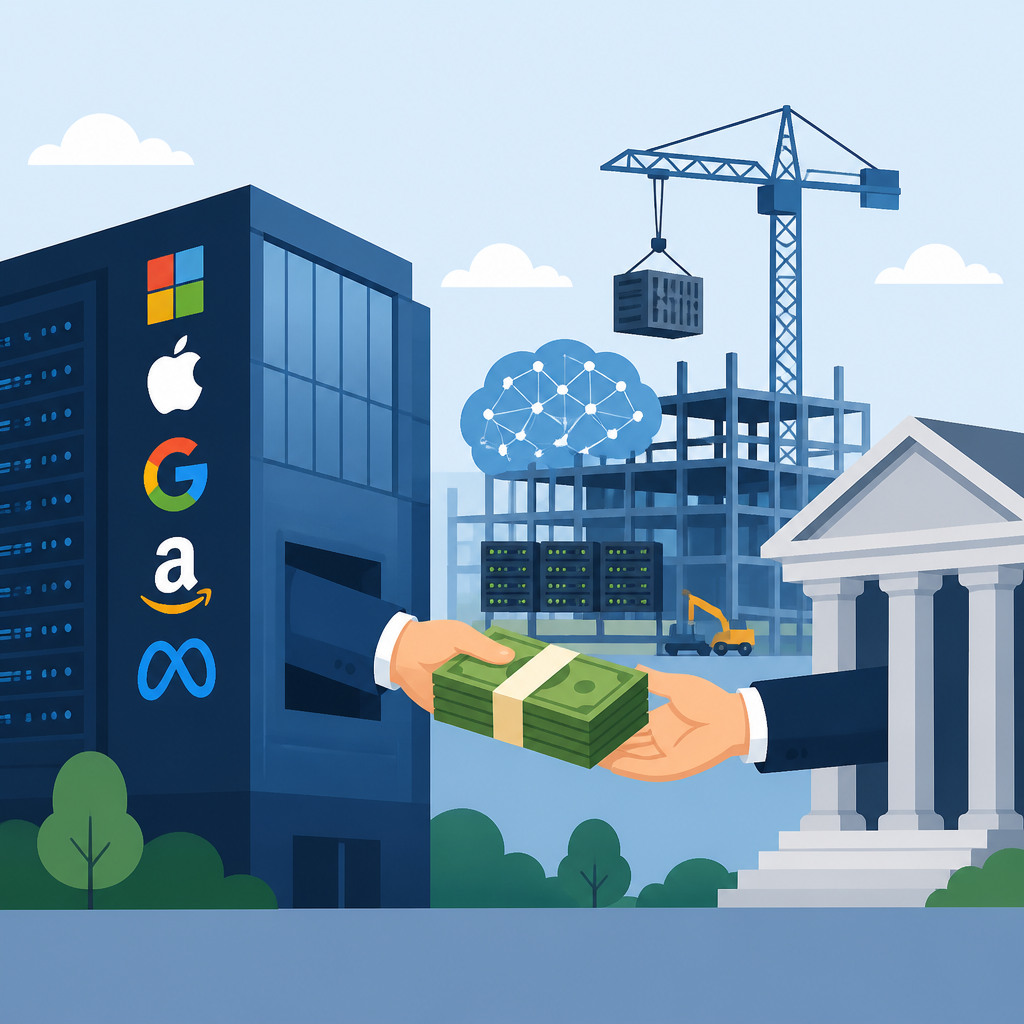
The high-yield market is seeing the same pressure. AI-related companies account for 38% of high-yield issuance this year, or about $21 billion. That is a big share for a sector that, until recently, was mostly known for cash-rich balance sheets rather than debt-heavy financing.
- Investment-grade AI issuance: about $140 billion year to date
- Share of total investment-grade issuance: 49%
- High-yield AI issuance: about $21 billion year to date
- Share of total high-yield issuance: 38%
Alphabet’s bond move changed the tone
The clearest signal came from Alphabet, which became the first tech company in decades to issue a 100-year bond. In February, it raised $31.51 billion across a global bond offering that included sterling, Swiss franc, and US dollar markets.
That is a very specific kind of message to investors: the company expects AI infrastructure spending to stay elevated long enough that locking in long-term borrowing makes sense. It also tells you how global the financing needs have become. This is no longer just a US dollar story tied to domestic corporate debt markets.
“The AI investment boom is reshaping how capital is allocated across the entire financial system,” researchers at the firm said.
That line matters because it gets to the real story here. The debt is not just funding a few server racks. It is helping finance a multi-year buildout that includes data centers, networking gear, GPUs, and the electricity needed to run them at scale.
Alphabet is not alone. Amazon, Microsoft, and Meta are all spending at levels that would have looked extreme even a few years ago. The financing choice is changing because the bills are changing faster than operating cash can comfortably absorb.
The capex numbers are the real pressure point
The 2026 capital spending plans explain why debt is showing up so quickly. Amazon is projecting $200 billion in capex, Microsoft is tracking toward $190 billion, Alphabet is targeting $175 billion to $185 billion, and Meta is guiding to $115 billion to $135 billion.
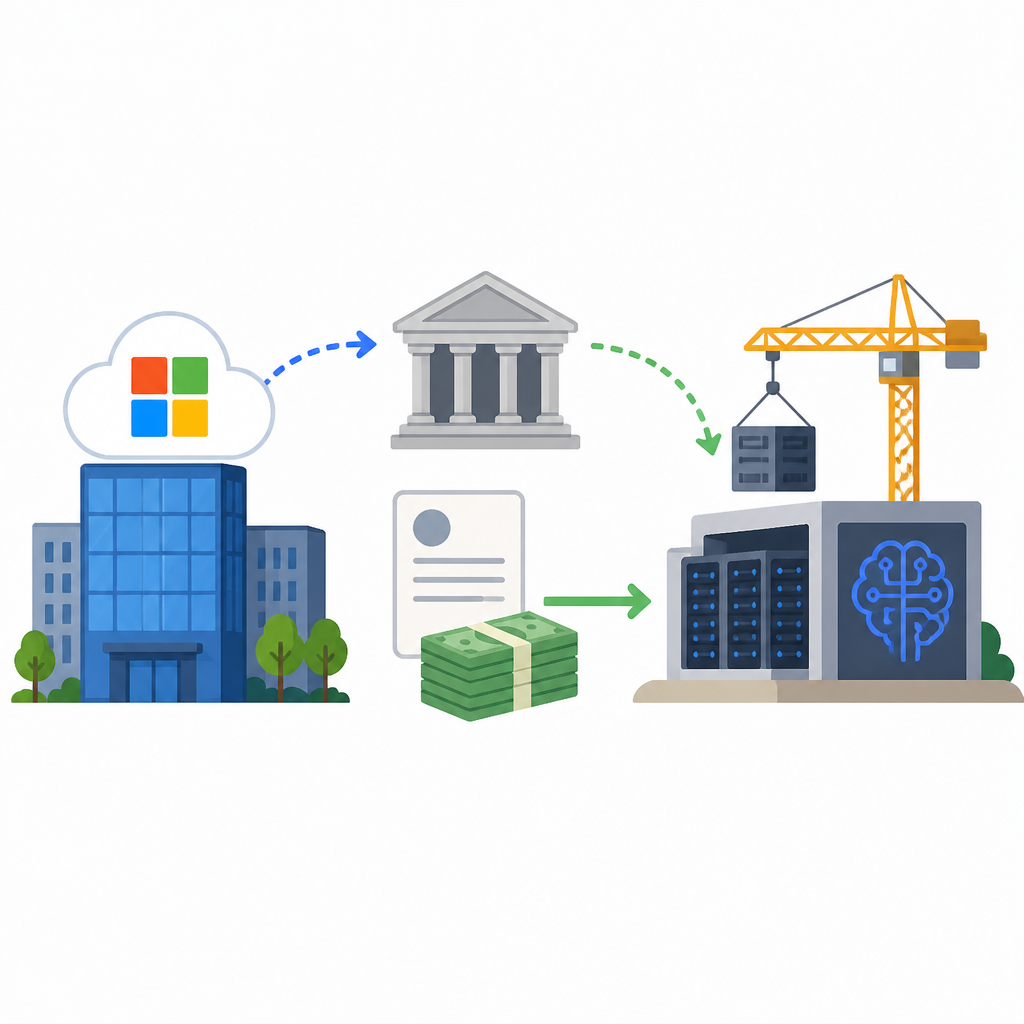
Put together, those four companies alone account for the $725 billion total. If you zoom out further, the five main hyperscalers are expected to add roughly $2 trillion in AI-related assets to their balance sheets by 2030. That is a huge amount of hardware, land, power contracts, and long-lived infrastructure to finance.
- Amazon capex: $200 billion
- Microsoft capex: $190 billion
- Alphabet capex: $175 billion to $185 billion
- Meta capex: $115 billion to $135 billion
- Five hyperscalers’ AI-related assets by 2030: about $2 trillion
Meta shows the shift most clearly. According to Yahoo Finance AlphaSpace, Meta’s total debt rose from about $36 billion in 2023 to $84 billion at the end of the first quarter. That is the kind of jump that tells you management is comfortable using the balance sheet to buy time and capacity.
Related reading on OraCore.dev can help frame how AI spending is hitting margins, but the basic point here is simple: the companies building AI infrastructure now need financing tools that match the size of the bet.
Investors will care less about the borrowing than the payoff
The debt itself is not the main issue. The real question is whether the spending produces enough revenue, margin expansion, or strategic advantage to justify the balance-sheet load. If AI products and cloud demand keep growing, the borrowing looks smart. If growth slows, investors will start asking why so much capital was tied up so quickly.
That is why the market will watch two things at once: free cash flow and the pace of monetization. A company can issue bonds and still look disciplined if the new assets generate strong returns. It can also look reckless if the returns lag the financing costs and depreciation schedule.
The next checkpoint is straightforward. Watch whether these companies keep funding AI with more debt in 2026, or whether capex growth starts to cool once the first wave of data center buildouts is complete. If borrowing keeps rising while revenue growth stays flat, the market will punish the mismatch fast.
For now, the message is clear: AI is no longer just an engineering race. It is a capital markets story, and the biggest winners will be the companies that can turn borrowed money into durable cash flow.
// Related Articles
- [IND]
Anthropic's IPO rumor turns into a market watch
- [IND]
Anthropic should not become dependent on Meta for compute
- [IND]
Mistral's robotics model cuts indoor navigation costs
- [IND]
Mistral missile: France’s short-range air defense workhorse
- [IND]
Apple Reclaims No. 1 by Market Cap as AI Costs Spike
- [IND]
Kimi K3 could pressure the middle tier of AI models