GPT-5.6 Sol, Terra, Luna arrive on DigitalOcean
OpenAI’s GPT-5.6 Sol, Terra, and Luna are now available on DigitalOcean Serverless Inference, with new reasoning modes and per-token pricing.

Developers using DigitalOcean can now call OpenAI’s GPT-5.6 family without managing their own inference stack. The rollout adds three model tiers, new reasoning modes, and pricing that matches OpenAI’s API rates on the platform.
OpenAI’s GPT-5.6 Sol, Terra, and Luna are now available on DigitalOcean Serverless Inference.
| 項目 | 數值 |
|---|---|
| Model tiers | 3: Sol, Terra, Luna |
| Sol pricing | $5 input / $30 output per 1M tokens |
| Terra pricing | $2.50 input / $15 output per 1M tokens |
| Luna pricing | $1 input / $6 output per 1M tokens |
| Release date | 2026-07-13 |
What changed
Get the latest AI news in your inbox
Weekly picks of model releases, tools, and deep dives — no spam, unsubscribe anytime.
No spam. Unsubscribe at any time.
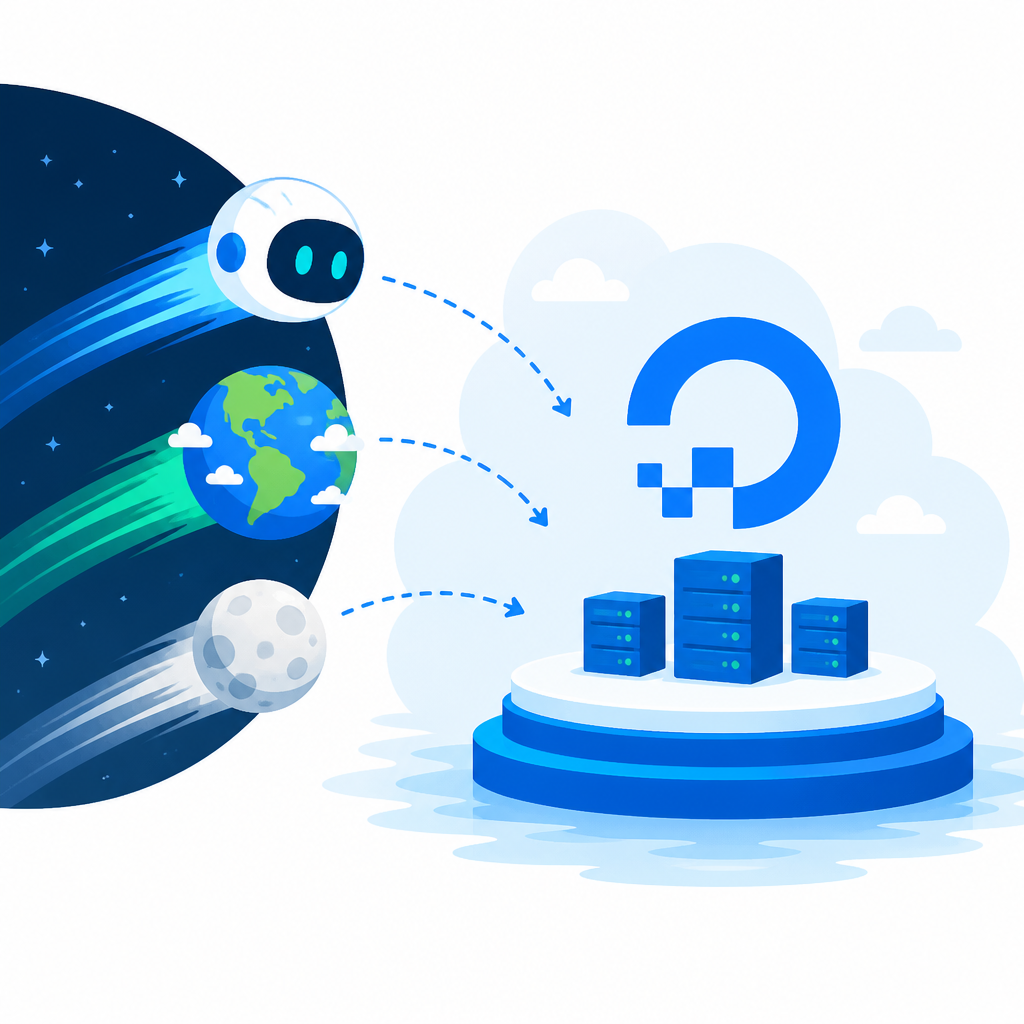
DigitalOcean says GPT-5.6 is now live through its Serverless Inference service, giving users access to Sol, Terra, and Luna from the same cloud environment used for apps, databases, and droplets. The company also added Max Reasoning and Ultra modes for harder, multi-step prompts.

According to the post, Sol is the top-end model for coding, knowledge work, cybersecurity, and scientific reasoning. Terra is aimed at everyday production workloads, while Luna is the fastest and lowest-cost option in the lineup.
- Sol: strongest performance tier for complex tasks
- Terra: balanced cost and quality for routine workloads
- Luna: fastest and cheapest model in the family
- Max Reasoning and Ultra: extra modes for deeper inference
Why it matters
For developers, the main appeal is operational simplicity. Serverless Inference removes server management, bills by usage, and keeps model calls inside the DigitalOcean stack, which can cut down on account sprawl and deployment friction.
It also gives teams a cleaner way to swap models as needs change. The post says DigitalOcean supports other major model families too, so teams can change a model name in code instead of rebuilding their integration each time a new option appears.
The timing matters for cost-sensitive teams as well. With three price points and routing options inside one platform, developers can match model choice to task complexity instead of paying flagship rates for every request.
The bigger question is whether more teams will treat inference as another cloud primitive, not a separate AI project. DigitalOcean is betting that many will prefer one bill, one IAM layer, and one deployment path.
// Related Articles
- [MODEL]
GPT-5.6 arrives in three variants with lower token costs
- [MODEL]
Grok 4.5’s rise comes down to 5 numbers
- [MODEL]
Grok 4.5 turns agent work into one prompt
- [MODEL]
Kimi API quickstart adds K2.7 Code and Highspeed
- [MODEL]
GPT-Live brings faster voice chat to ChatGPT
- [MODEL]
Anthropic extends Claude Fable access after GPT-5.6