Midjourney v8: 2K output, 10s video, $10/month
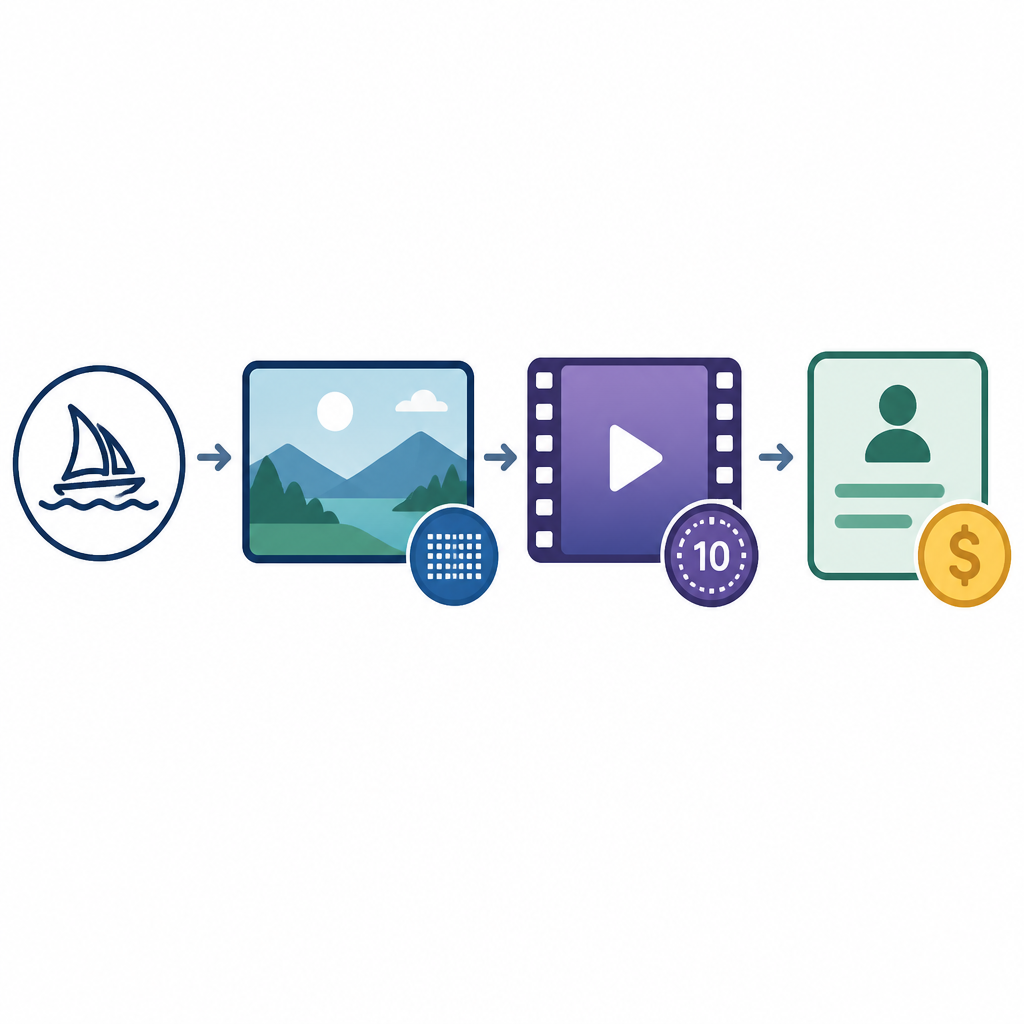
Midjourney v8.1 is now the default model, with 2K output, faster renders, 10-second video, and plans starting at $10/month.

Midjourney v8.1 is the default model, adding 2K output, faster renders, and short video.
Midjourney v8.1 became the default model on Midjourney on April 30, 2026, with the company’s v8 rollout centered on native 2K output, faster image generation, and a new short video mode. The subscription ladder starts at $10 a month and rises to $120 for high-volume studio use.
| 項目 | 數值 |
|---|---|
| v8 alpha launch | March 17, 2026 |
| v8.1 default date | April 30, 2026 |
| Video length | 10 seconds |
| Video frame rate | 60 fps |
| Render speed vs v7 | 4-5x faster |
| Basic plan | $10/month |
| Mega plan | $120/month |
What changed
Get the latest AI news in your inbox
Weekly picks of model releases, tools, and deep dives — no spam, unsubscribe anytime.
No spam. Unsubscribe at any time.
v8’s biggest shift is native 2K HD output, so users no longer need a separate upscale step for many jobs. The model also improves text rendering, which matters for posters, labels, and branded visuals that used to break in earlier versions.

Midjourney also added image-to-video and text-to-video in the v8 pipeline. The clips top out at 10 seconds at 60 fps, which puts the feature in a stylized short-form lane rather than full production video.
- Midjourney still runs as a closed model, with access through Discord, the web app, or a limited API.
- Discord remains the center of the user community, but the web app is now the default entry point for many new users.
- The --hd flag uses 4x GPU time per generation.
- The --q 4 flag also uses 4x GPU time, and the two stack to 16x when combined.
For workflow, the company now gives users three paths: Discord for the community-heavy experience, the web app for cleaner generation, and an API that is still rolling out in limited form. Most programmatic use still depends on third-party wrappers or web-app scripting.
Why it matters
For developers, the practical change is less about a new interface and more about output quality and cost control. If you are building image workflows, the model’s higher default quality and faster renders reduce post-processing, but the credit burn from --hd and --q 4 can make heavy use expensive fast.
For the market, v8 keeps Midjourney in a strong position for stylized still images even as competitors push harder on consistency and video. The article’s comparison is clear: Midjourney is still the better fit for art direction and mood boards, while tools such as DALL-E 3, Stable Diffusion, Flux, and Runway win on other workflows.
The tradeoff is still consistency. Midjourney’s character matching helps, but it does not lock identity across a long sequence the way some rivals do. That makes v8 a strong tool for single-image work and a weaker choice for comics, storyboards, and product sequences that need the same subject to stay identical.
The open question is whether Midjourney will keep winning on taste alone as video, identity control, and API maturity become bigger buying factors.
// Related Articles
- [MODEL]
August 2026 model rankings: Claude leads text, Kimi coding
- [MODEL]
Qwen3.8-Max pushes Alibaba into the top tier
- [MODEL]
Qwen3.8-Max proves that agentic work is the real frontier
- [MODEL]
Google Earth Should Not Ship AI Image Generation
- [MODEL]
Try Claude Opus 4.7 and read its benchmarks
- [MODEL]
Opus 5 lets you cut cost without losing quality