Open-source AI software is winning on infrastructure, not hype
Open-source AI software is winning because it now powers the core infrastructure for building, serving, and shipping models.

Open-source AI software now powers the core infrastructure for building, serving, and shipping models.
Open-source AI software is winning because it has become the default stack for serious AI work, not a side project for hobbyists. The Wikipedia list spans the full pipeline: llama.cpp, vLLM, and Ollama for inference; PyTorch, TensorFlow, and JAX for training; spaCy, OpenCV, and Whisper for application layers; plus LangChain and CrewAI for agent workflows. That breadth matters more than any single model release, because it shows where the real leverage sits: in the tools teams use every day to turn research into products.
The first reason: open source owns the middle of the stack
Get the latest AI news in your inbox
Weekly picks of model releases, tools, and deep dives — no spam, unsubscribe anytime.
No spam. Unsubscribe at any time.
The strongest evidence is infrastructural. A team building a production LLM app does not start with a model and stop there. It needs serving, optimization, vectorization, orchestration, and observability. The list reflects that reality with vLLM for high-throughput serving, llama.cpp for local inference, ONNX for portability, and OpenVINO and TensorRT-LLM for optimization. These are not niche utilities. They are the plumbing that determines whether an AI product is cheap enough, fast enough, and flexible enough to ship.
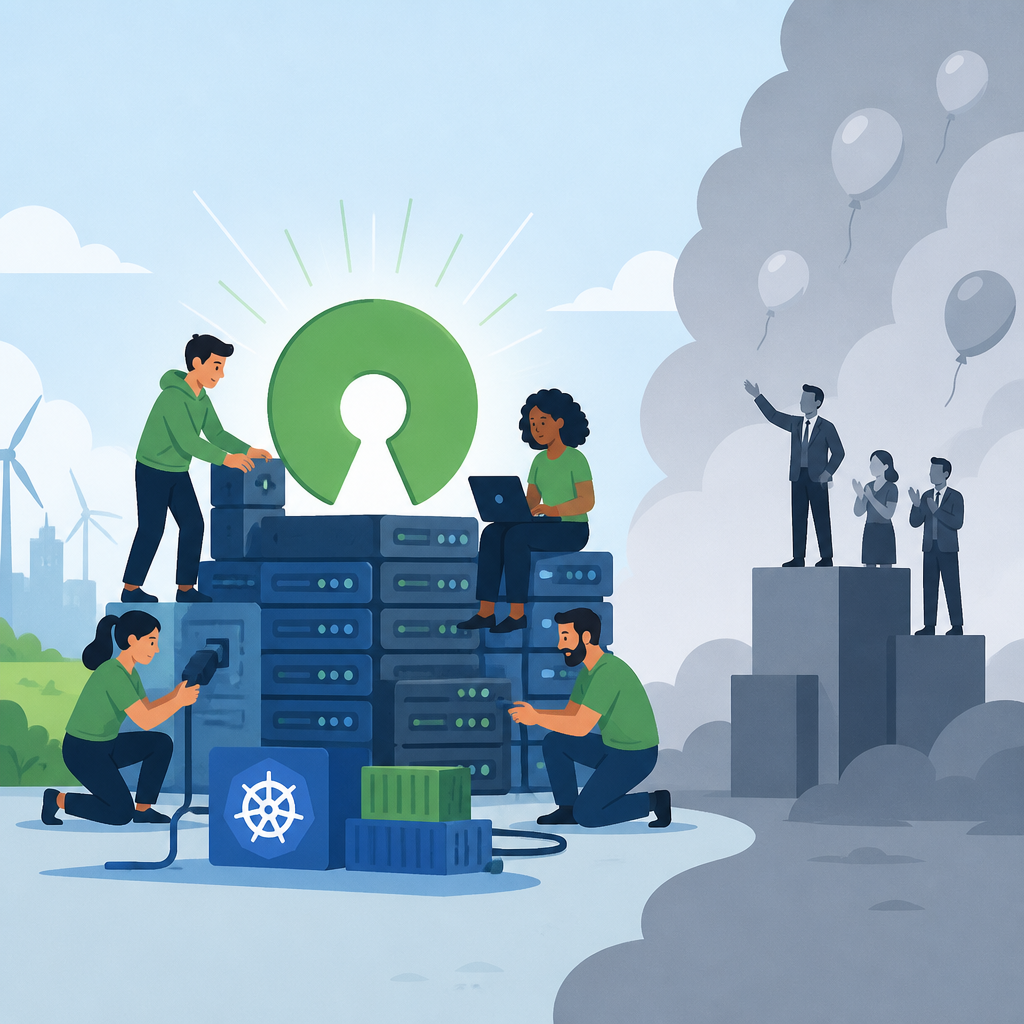
The market has already voted on this layer. PyTorch became the default research framework because it lowered friction for experimentation, and then it moved into production through the same open ecosystem. TensorFlow followed a similar path at scale. The lesson is blunt: open source does not just compete with closed AI; it sets the interface that everyone else must adopt. Once a tool becomes the common layer for training or inference, it shapes hiring, deployment patterns, and vendor expectations.
The second reason: open source compresses iteration cycles
Open source wins when the pace of change is high, and AI is changing faster than most software markets. The list includes fast-moving projects such as DeepSpeed, Horovod, Hugging Face transformers, and scikit-learn, each of which exists because teams need to test ideas quickly and reuse proven components. In AI, time to first prototype is not a vanity metric. It is the difference between learning from users in weeks and missing a product window entirely.
Consider the practical advantage for builders. A founder can combine Whisper for speech recognition, spaCy for NLP, and Stable Diffusion for generation without negotiating a platform contract or waiting for a vendor roadmap. An engineer can swap models, benchmarks, or backends with open formats like ONNX instead of rebuilding the whole stack. That modularity is the real moat of open source: it lets teams change direction without throwing away their previous work. Closed systems can be polished, but open systems are adaptable, and adaptability is what AI teams need most.
The third reason: open source spreads trust and control
AI software is not only a performance problem. It is also a governance problem. When models and tools are open, developers can inspect behavior, audit dependencies, and control where data flows. That matters for regulated industries, on-device deployment, and organizations that cannot send sensitive prompts to a black-box API. The presence of local and edge-friendly tools such as llama.cpp, Ollama, and OpenVINO shows that open source is solving for sovereignty, not just convenience.
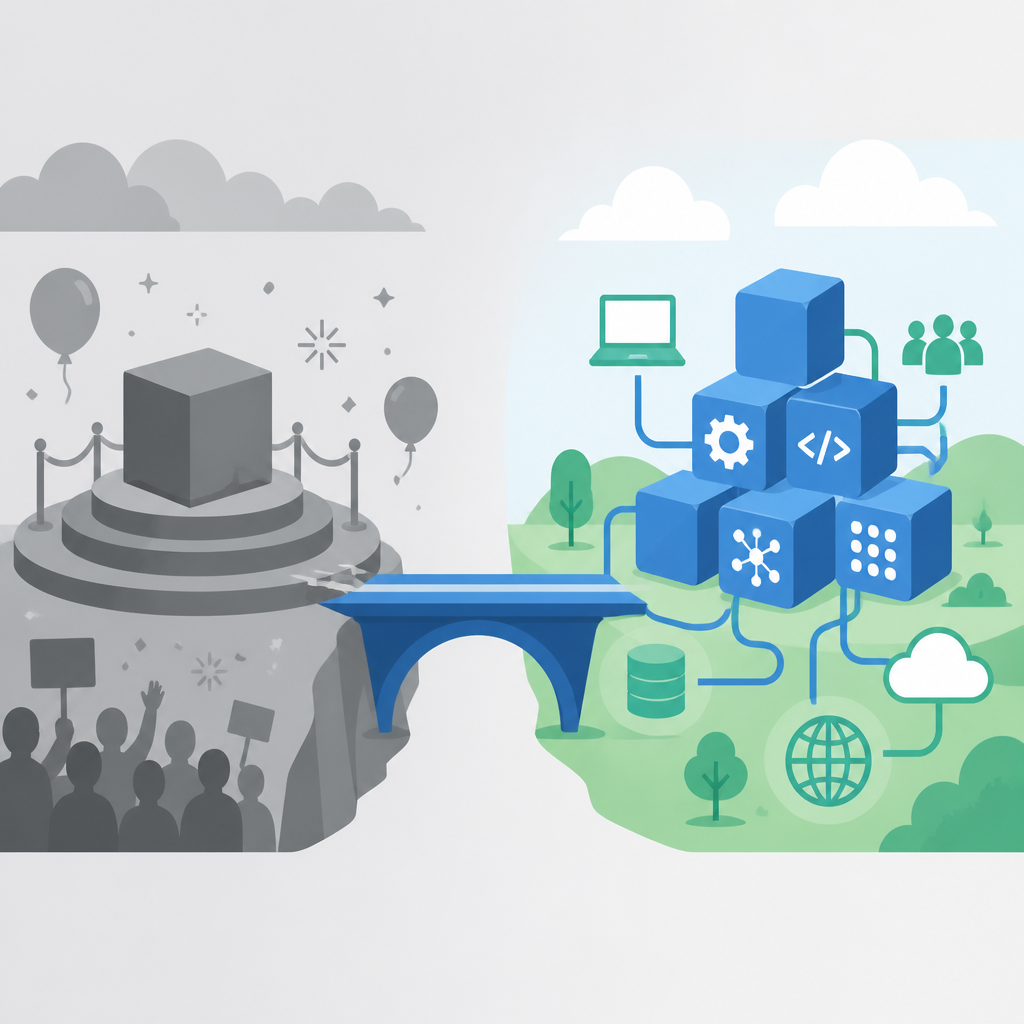
There is also a strategic reason this matters. Open source reduces platform lock-in at the exact moment vendors are trying to consolidate control over model access, inference pricing, and workflow tooling. If your application depends on a proprietary API, your product margin depends on someone else’s pricing power. If your stack is built on open components, you can move workloads, tune costs, and keep the option to self-host. That is not ideological purity. It is operational resilience.
The counter-argument
The best case against this view is simple: the most capable frontier models are still largely controlled by closed labs, and they often arrive first with the strongest benchmarks, the best tooling, and the most polished developer experience. That matters. A startup chasing distribution may prefer a managed API over assembling its own inference layer. A large enterprise may accept proprietary dependence if it buys reliability, support, and speed.
There is also a real maintenance cost to open ecosystems. The list is long because the ecosystem is fragmented. Different frameworks solve overlapping problems, and teams can waste time choosing between them. Open source can create more assembly work, not less, especially when an organization lacks strong platform engineering.
That counter-argument is valid, but it does not overturn the main point. Frontier model leadership and open-source infrastructure are not the same contest. Closed labs may win the headline race for model quality, yet open source still owns the production layer where most value is captured. The evidence from the ecosystem is clear: builders keep standardizing on open tools because those tools preserve choice, reduce cost, and make AI systems maintainable over time. The limits are real, but they are limits of convenience, not of strategic importance.
What to do with this
If you are an engineer, standardize on open formats, open serving tools, and open model wrappers wherever possible, then reserve proprietary APIs for narrow tasks that genuinely need them. If you are a PM, treat open-source AI as the default option for anything that affects cost, latency, or compliance. If you are a founder, build your product around open infrastructure so your roadmap is not hostage to a vendor’s pricing page. The winning move is not to reject closed models outright. It is to keep the parts of your stack that matter most under your control.
// Related Articles
- [TOOLS]
AWS Continuum turns AI coding into safer fixes
- [TOOLS]
Open-Generative-AI turns GitHub into a studio
- [TOOLS]
Why benchmark scores don’t predict your bill
- [TOOLS]
MCP Servers for Developers: 8 workflow gains in 2026
- [TOOLS]
Doubao turns a game prompt into a mini arcade
- [TOOLS]
Coding Plan turns Alibaba Cloud into IDE billing