OpenAI plans a $20B Georgia data center campus
OpenAI plans a data center near Savannah with 3.2 gigawatts of power delivered in phases from 2028 to 2032.

OpenAI plans a data center near Savannah with 3.2 gigawatts of power delivered in phases from 2028 to 2032.
OpenAI says it will build a large data center near Savannah, Georgia, in a project Axios says carries a $20 billion price tag. The site is planned to receive 3.2 gigawatts of power in phases between 2028 and 2032, which puts this squarely in the class of infrastructure projects usually associated with utilities, chip supply chains, and long-term power contracts.
The timing matters. A project of this size does not just add server racks; it signals that OpenAI is planning for much larger model training runs, heavier inference demand, and a long runway of compute needs. Savannah also gives the company access to a coastal logistics corridor and a region where power, land, and permitting can be stitched together at a scale that many metro areas cannot match.
| Project detail | Number | What it means |
|---|---|---|
| Estimated cost | $20 billion | One of OpenAI’s largest infrastructure bets |
| Power capacity | 3.2 gigawatts | Enough electricity to support a very large AI campus |
| Delivery window | 2028 to 2032 | Power will come online in phases, not all at once |
| Location | Near Savannah, Georgia | Places the build in a major Southeast logistics zone |
Why 3.2 gigawatts changes the scale of the story
Get the latest AI news in your inbox
Weekly picks of model releases, tools, and deep dives — no spam, unsubscribe anytime.
No spam. Unsubscribe at any time.
In data center terms, 3.2 gigawatts is the kind of number that forces people to stop thinking about a single building and start thinking about a campus, a grid connection, and years of construction. That amount of power can support a sprawling AI operation, but it also raises immediate questions about transmission, cooling, water use, and whether local infrastructure can keep pace.
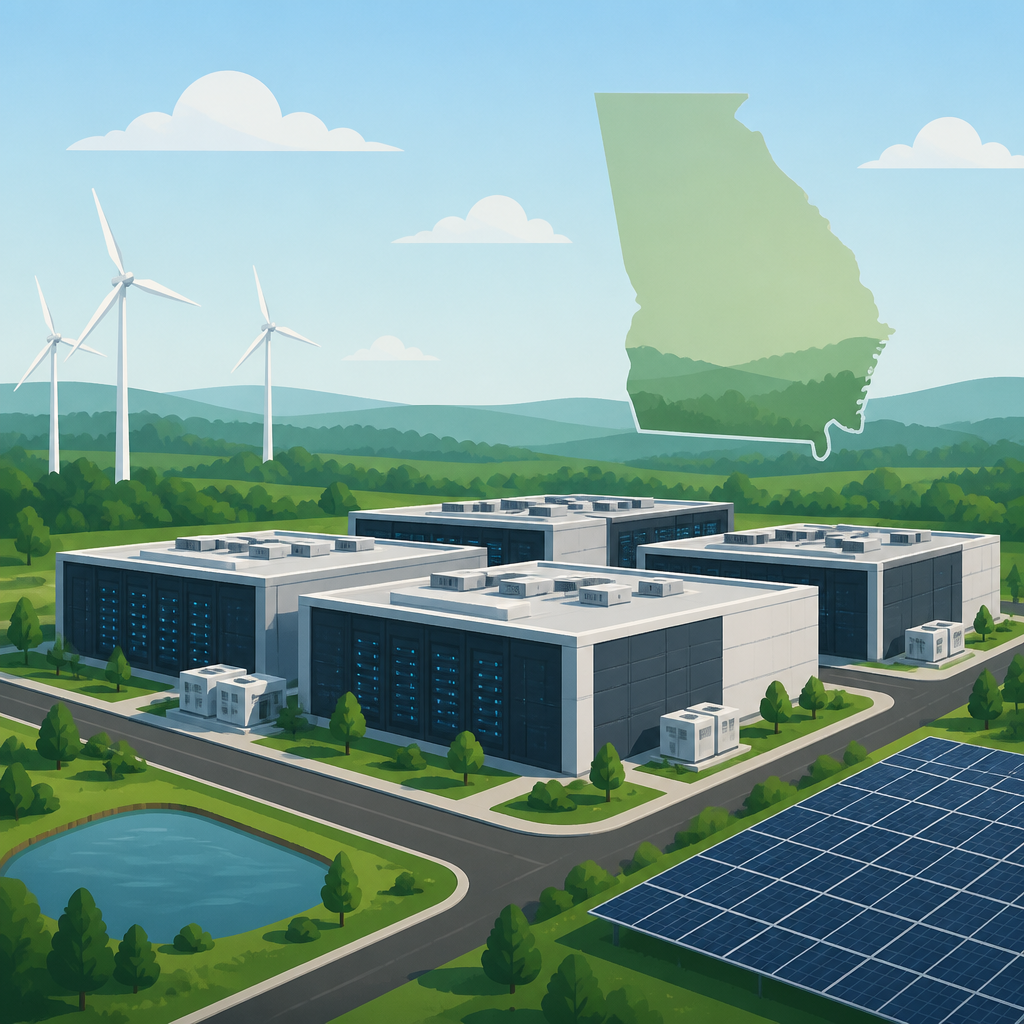
OpenAI has been talking for months about the need for far more compute. The Georgia project turns that need into a physical plan, and the scale suggests the company is preparing for models and services that consume far more electricity than today’s mainstream AI products.
- $20 billion is the reported project cost, which puts it in the same conversation as major industrial builds, not ordinary cloud expansion.
- 3.2 gigawatts is far beyond a typical enterprise data center and points to a multi-phase AI campus.
- 2028 to 2032 gives the company a long buildout window, which usually means grid work, permits, and phased equipment deployment.
- Near Savannah places the project in a port-connected region with industrial land and existing heavy infrastructure.
What OpenAI is really buying here
This is about control. Renting compute from cloud partners can get a company moving quickly, but it also means living with someone else’s capacity limits, pricing, and scheduling. Owning or anchoring a dedicated campus gives OpenAI more room to plan around its own training cycles and product launches.
That strategy lines up with the broader AI infrastructure race. Microsoft, Google Cloud, and AWS have all spent years building out massive compute footprints, while chip makers like NVIDIA keep shipping accelerators that make these sites worth building in the first place. OpenAI’s Georgia plan says it wants a bigger slice of that stack under its own control.
“The world is not running out of text. It’s running out of compute.” — Sam Altman, OpenAI CEO, speaking at the Sequoia AI Ascent event in 2024
That quote has aged well. The Savannah project is a direct answer to the bottleneck Altman was describing: if compute is the constraint, then the company has to buy time, land, and power years ahead of demand. The risk is obvious, too. If model growth slows or power costs spike, a giant campus can become an expensive bet that takes years to fully absorb.
How this compares with other AI infrastructure bets
The AI buildout race is already full of huge numbers, but OpenAI’s Georgia plan sits near the top end of the pack. What makes it stand out is not just the dollar figure. It is the combination of size, timing, and the fact that the power arrives in phases over four years.
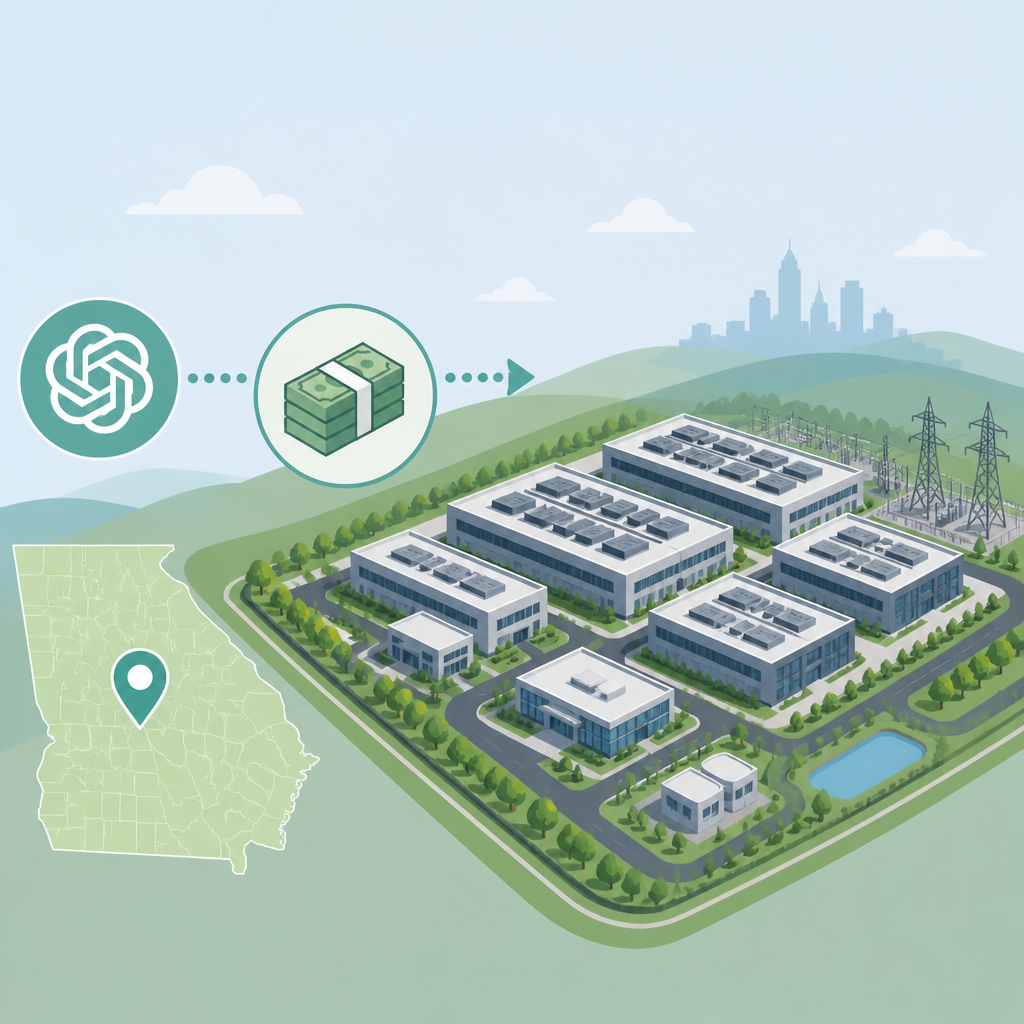
That phased approach usually means the company is trying to match infrastructure to demand instead of waiting for a single all-at-once launch. It also gives local utilities and contractors more room to spread out the work, though even then, a 3.2-gigawatt commitment is a heavy lift.
- Microsoft Azure has spent years scaling global cloud capacity, but OpenAI’s Savannah plan concentrates capacity around one dedicated site.
- Google Cloud and AWS spread data centers across many regions, while OpenAI’s project reads like a targeted industrial campus.
- NVIDIA GPU demand is one reason these projects keep getting larger, since model training and inference both need dense accelerator fleets.
- Phased delivery from 2028 to 2032 is a longer horizon than the typical cloud expansion cycle, which hints at a very large future workload.
The Georgia announcement also has a local angle that should not be ignored. A project this large can reshape hiring, land use, tax policy, and utility planning around Savannah. It can also trigger pushback if residents worry about water, grid strain, or whether the economic upside matches the public support needed to make it work.
What to watch next
The next useful details will be the ones that explain how OpenAI plans to power the site, who is building it, and whether state or local officials are offering incentives. Those details will matter more than the headline number, because a giant AI campus lives or dies on transmission, permitting, and long-term operating costs.
If OpenAI can keep the project on schedule, Savannah could become one of the most important AI infrastructure sites in the United States. If delays stack up, the announcement will still tell us something important: the company thinks future models will need far more power than today’s systems, and it is willing to commit years in advance to get it.
For now, the big question is simple: can the grid, the permits, and the supply chain all move fast enough to support 3.2 gigawatts by the early 2030s?
// Related Articles
- [IND]
Anthropic’s funding hits $132B in 18 rounds
- [IND]
Jensen Huang’s Japan Trip Recasts Nvidia’s AI Play
- [IND]
Anthropic's split from OpenAI, decoded
- [IND]
Open models beat safer ones when cyberattacks turn autonomous
- [IND]
OpenAI’s board adds bank CEOs for IPO prep
- [IND]
Anthropic’s $1.5B settlement is a warning, not a clean win